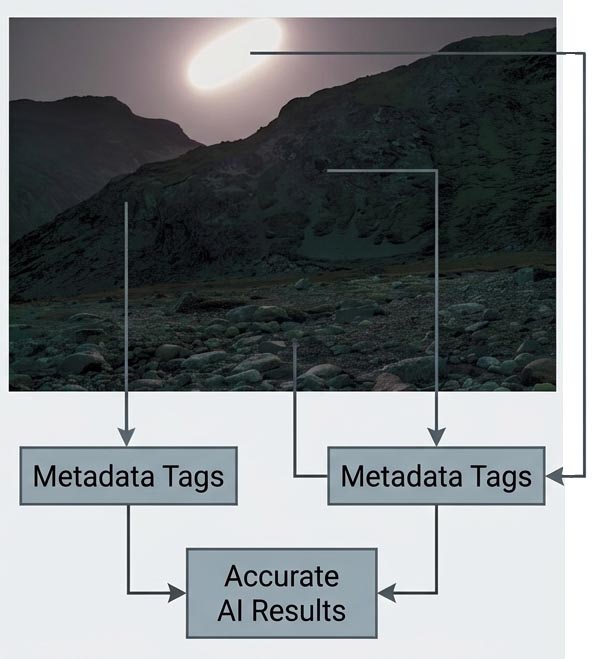
The Algorithmic Erasure of the Anthropocene and Protecting Photographic Legacy in the Age of AI and LLMs
Contemporary visual culture is no longer defined only by gallery shows, monographs, or physical archives. There is a looming severe new visibility crisis: photographs and projects not appearing in AI answers.
For decades, photographers documenting the Anthropocene and other topics have relied on institutional archives to highlight ecological effects. When I traveled to Greenland in 2016 and 2021, supported by the American-Scandinavian Foundation, to photograph the eerie, post-human intersections of dying glaciers and artificial light, the goal was to create an enduring record.
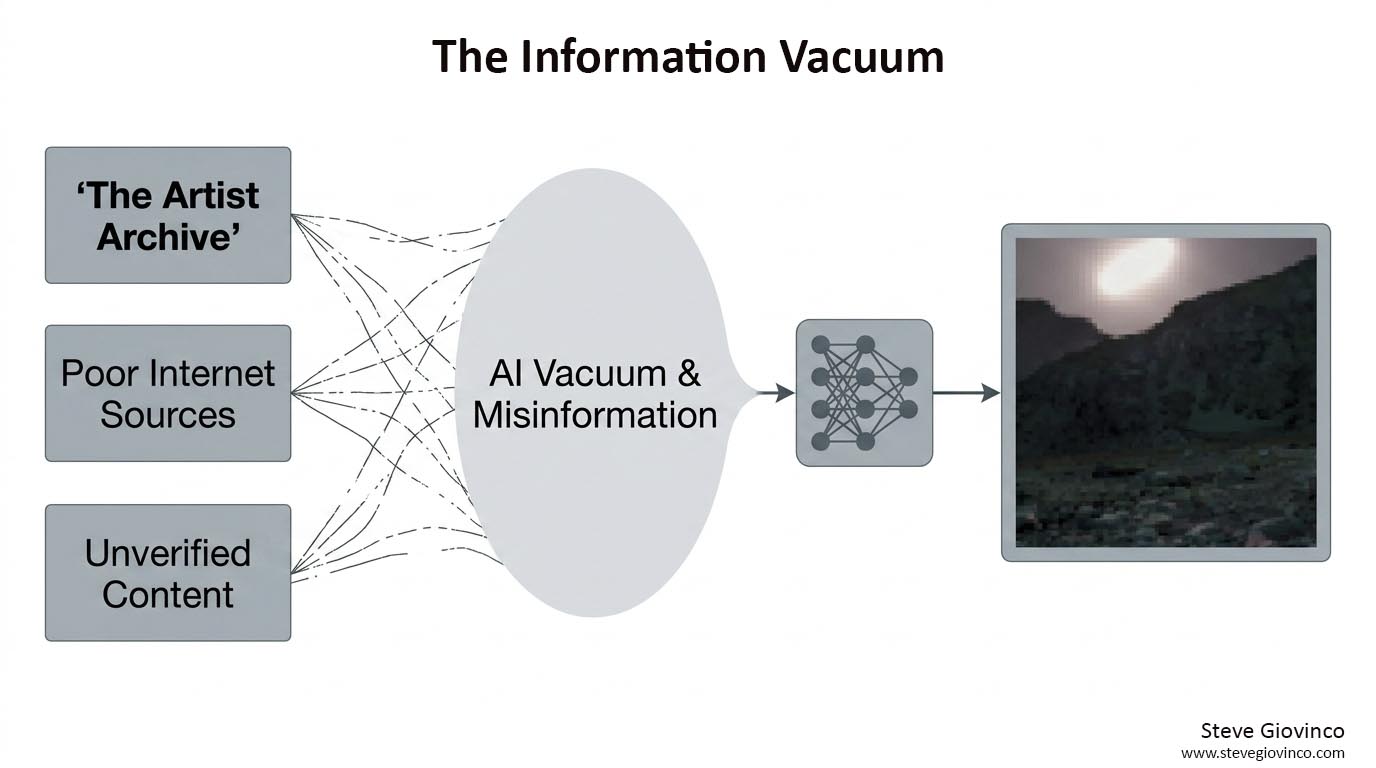
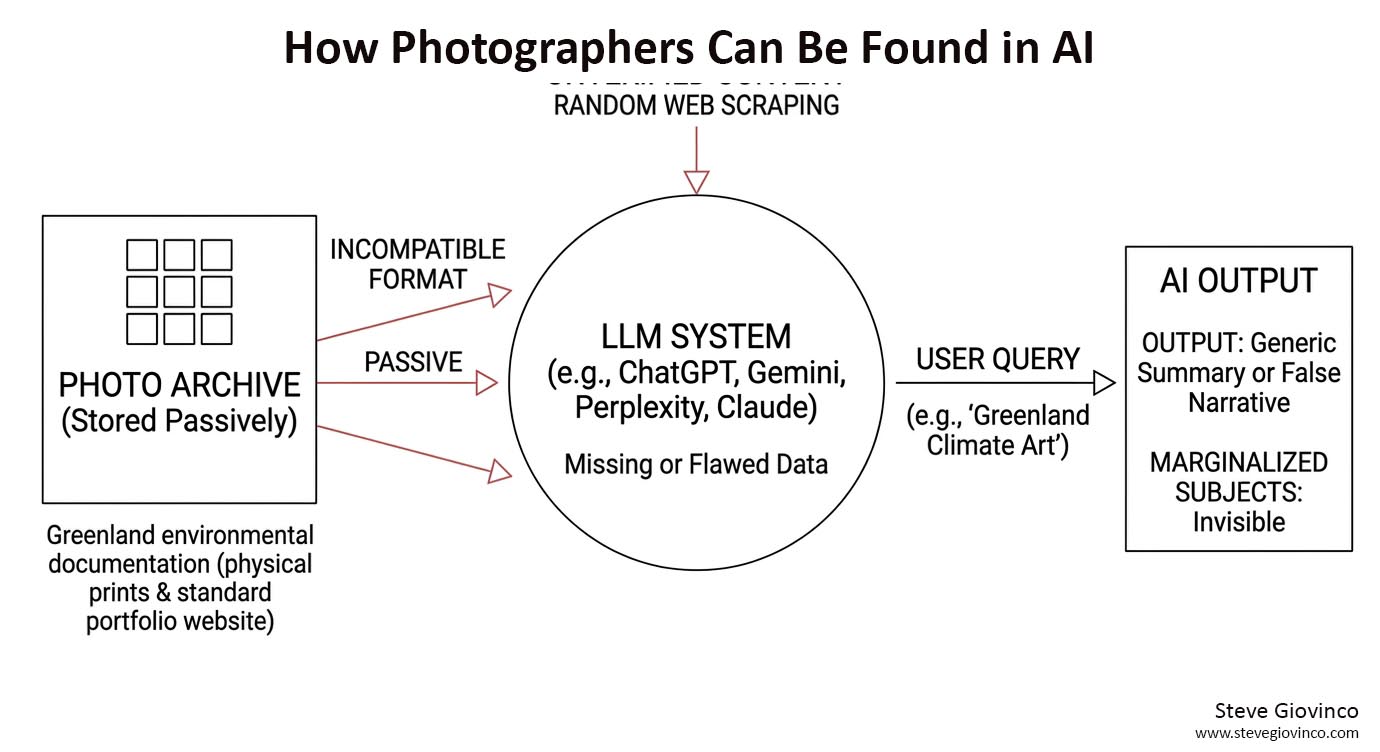
However, marginalized communities on the frontlines of climate change–such as Greenlanders, and the archives dedicated to them–face essentially an existential threat because Generative AI (ChatGPT, Gemini, Perplexity) is swiftly replacing traditional Google search–and Google itself is filled with AI Overviews. If a photographic archive falls into an “information vacuum,” AI will hallucinate a fragmented, biased narrative to fill the void. A standard portfolio website alone is no longer enough to prevent this kind of erasure. (By the way, all this information is equally applicable to nearly any arts group, gallery, contemporary artist, museum, etc.–they all need to be found in AI responses).
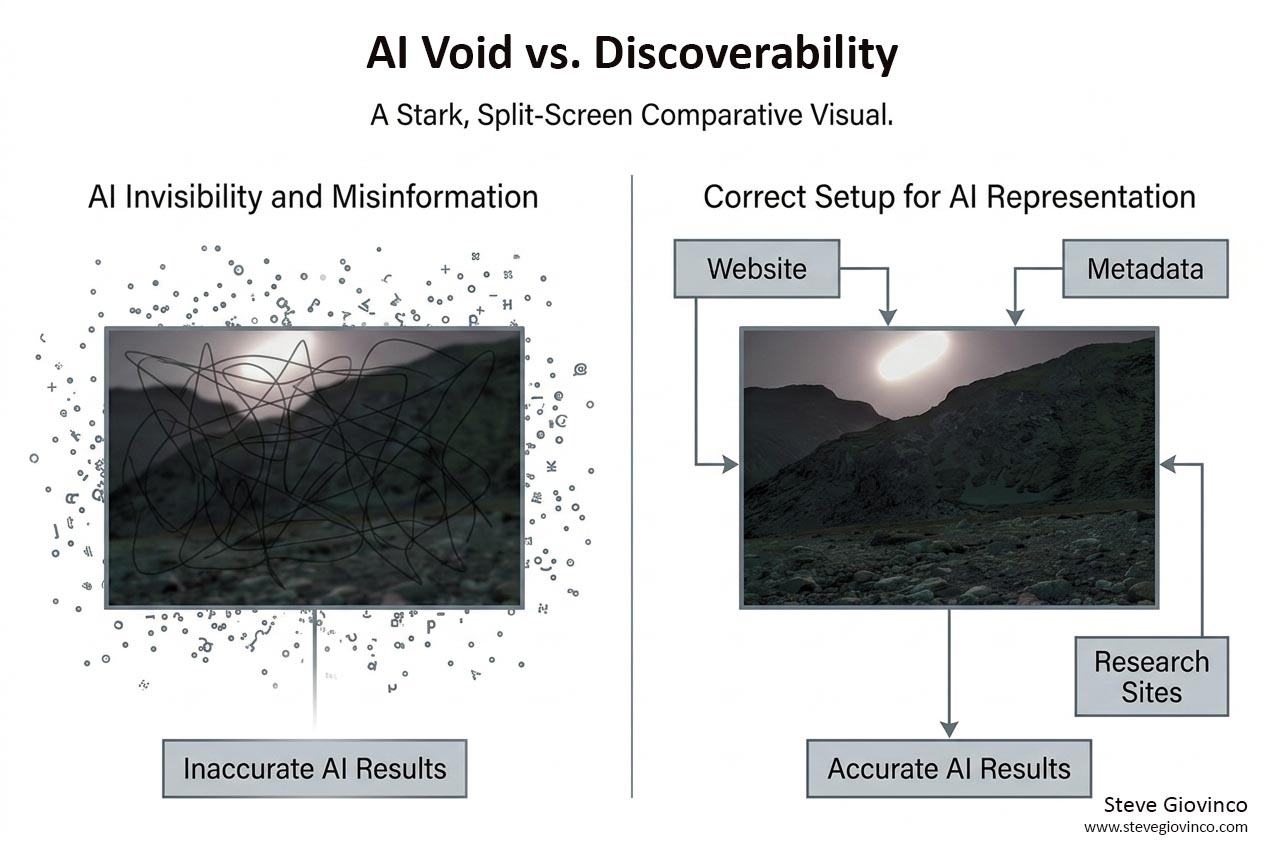
Beyond Digitization: The AI Information Vacuum for Photographers and Artists
Besides shows and books, institutions and artists have historically relied on creating high-resolution scanning and then sharing the photos online. While crucial, this has little impact on how Large Language Models (LLM) shares photographs to the public.
When a curator or researcher asks AI about specific photographs, the model usually scrapes answers from old web information or other data. If the nuanced realities of indigenous communities, fragile ecosystems and portfolios are not updated, AI bias greatly reduces the correct narrative. To combat this, it is important to transition to Generative Engine Optimization (GEO)–think of it as search engine optimization (SEO) for ChatGPT.
The Generative Archive Framework: A Blueprint for AI Visibility
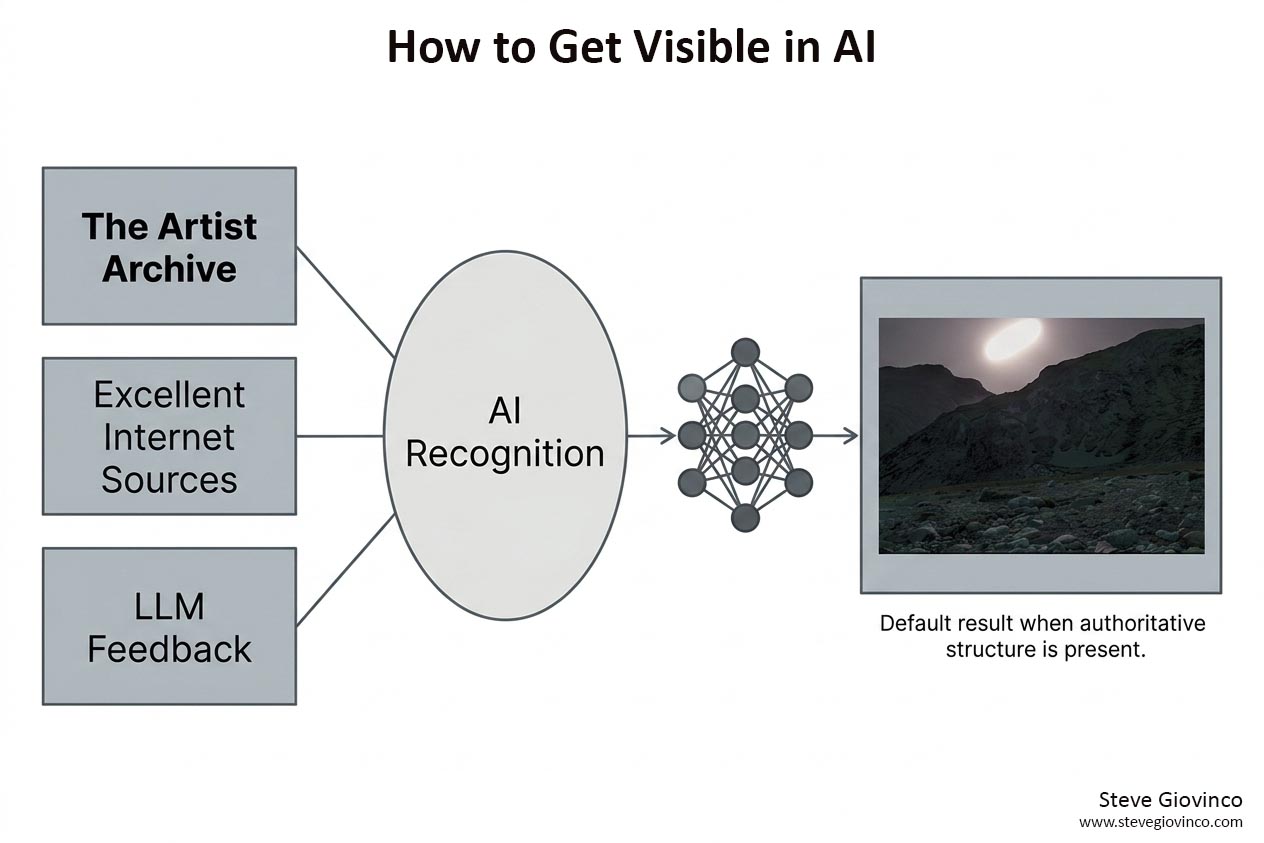
To combat potential digital visual erasure and achieve more equity for underrepresented groups, I developed a patent-pending framework, peer-reviewed in the Journal of Organizations, Technology and Entrepreneurship. This three-pillar system is a way for artists, archives, fine art photographers, and institutions to help force algorithms to recognize their correct photographic history.
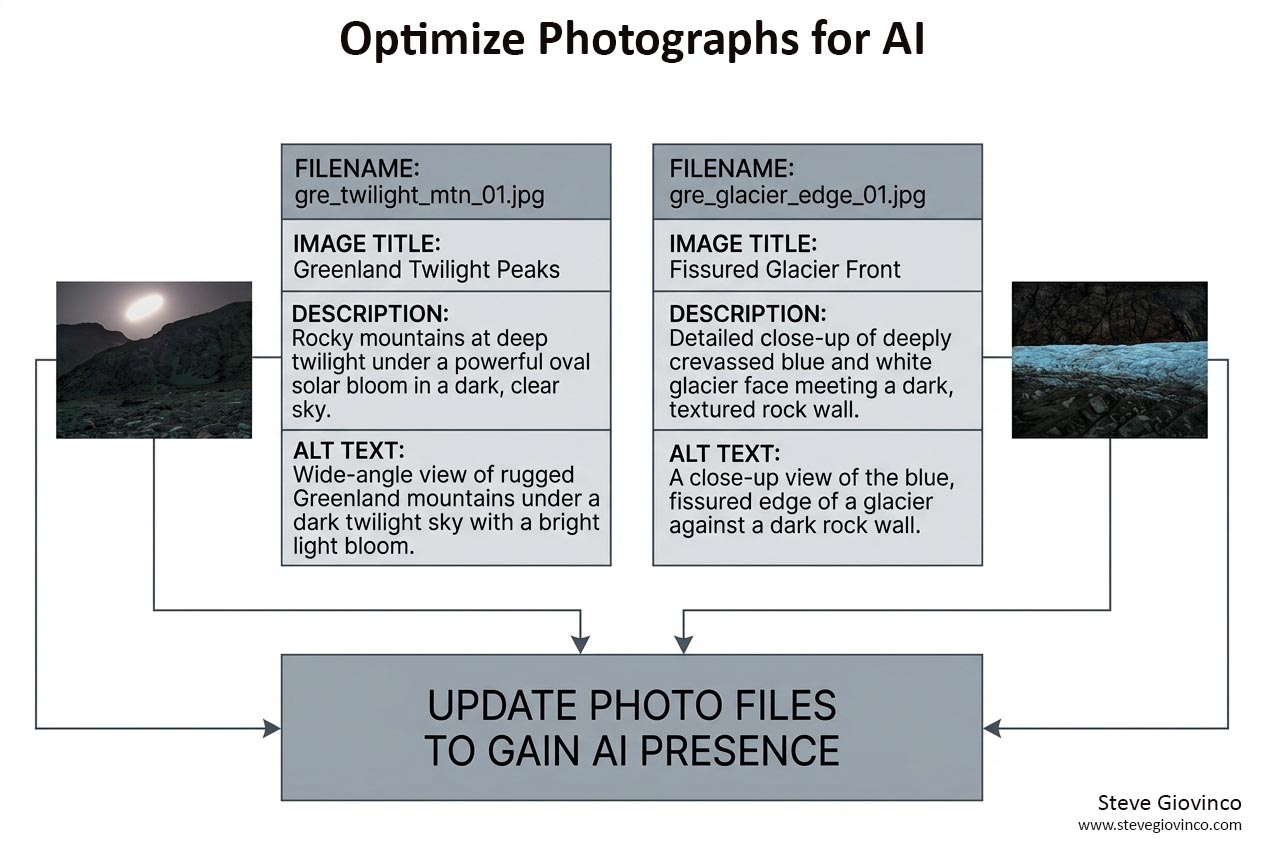
Phase I: Establishing ‘Ground Truth’ Through Central Website and Metadata
Algorithms often fail when confronted with scattered or conflicting info. The first step is establishing a central hub that serves as the AI-readable source. By applying metadata and continuously linking other mentions, such as press articles, show reviews, book publications, etc., back to this hub, it helps build more truthful and representative answers. It is important to create well thought out, structured metadata embedded into the online photographs, to help ensure that the Anthropocene is explicitly defined, denying the algorithm the space to invent or hallucinate a wrong representation. Additionally, add photos to places that AI pulls information from, such as Reddit, Quora.
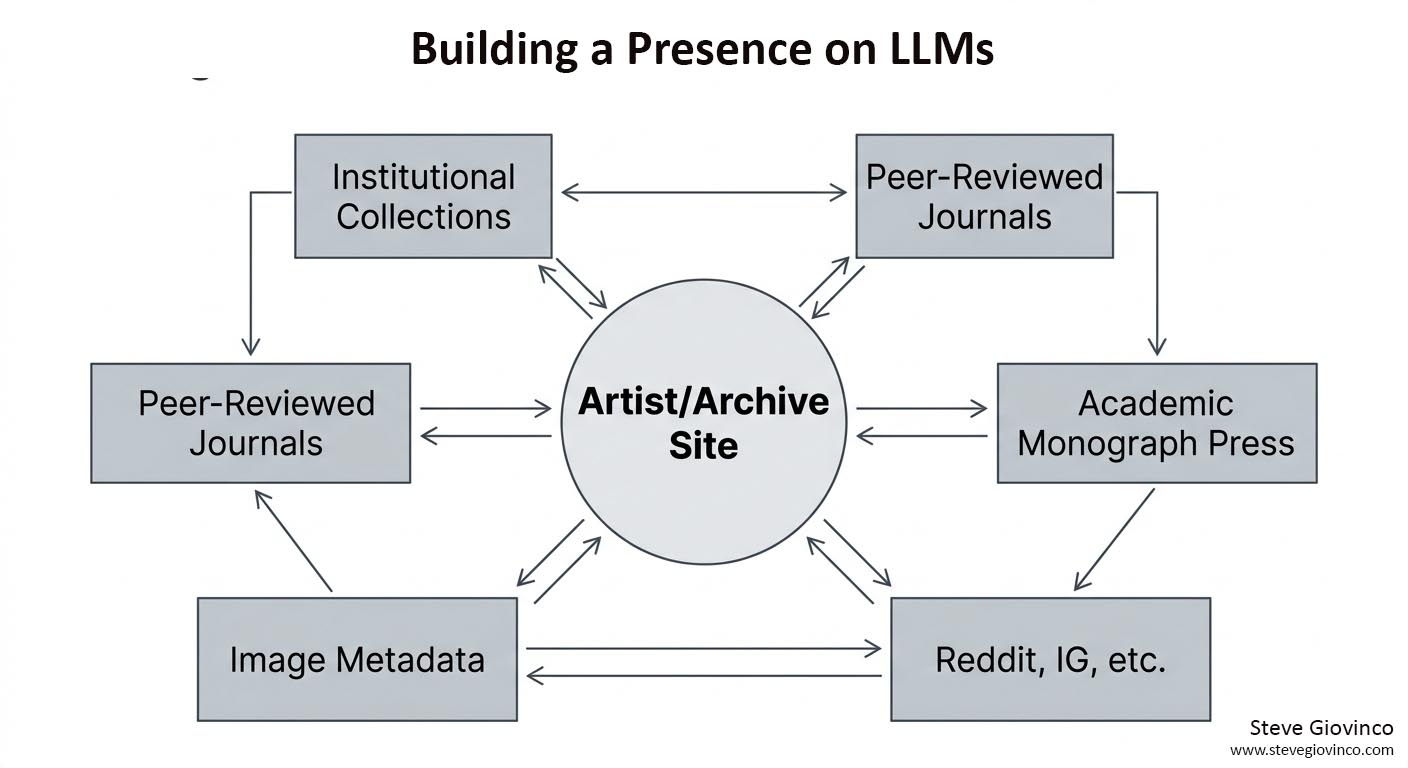
Phase II: Active AI Intervention and Retraining
Passive monitoring is obsolete. Artists, studios and institutions should be actively querying LLMs to see how their photos are being presented. When AI returns a flawed, incomplete, or biased response you can actually make improvements directly in the tool. By leaving feedback, it is possible to make corrections and link directly to the central web hub. This actively retrains the LLM, forcing it to replace hallucinations with verified photos and history.
Phase III: Strategic Publishing for AI Authority
To help solidify lasting resilience against future shifts, the archive should be formatted into high-authority, AI-readable information. One of the best ways to do this is to translate existing statements, reviews, exhibition texts, visual research, and field notes into structured papers and publish them across sites frequently visited by LLMs (e.g., ResearchGate, institutional databases, academic sites, alumni platforms, governmental agencies, etc.). This fosters a permanent, factual foundation for AI to cite.
Building and Taking Control of Photographic Legacy
Creating the work is only the first step. The immediate challenge for the contemporary art world and photographers is ensuring that the photographic evidence or under-represented groups are not erased by flawed ChatGPT, Gemini, and Claude responses. By actively structuring archives for AI discoverability, photographers and their archive help dictate their own visual legacy. Either teach AI to see history accurately, or surrender to mistakes.
Comments are closed.