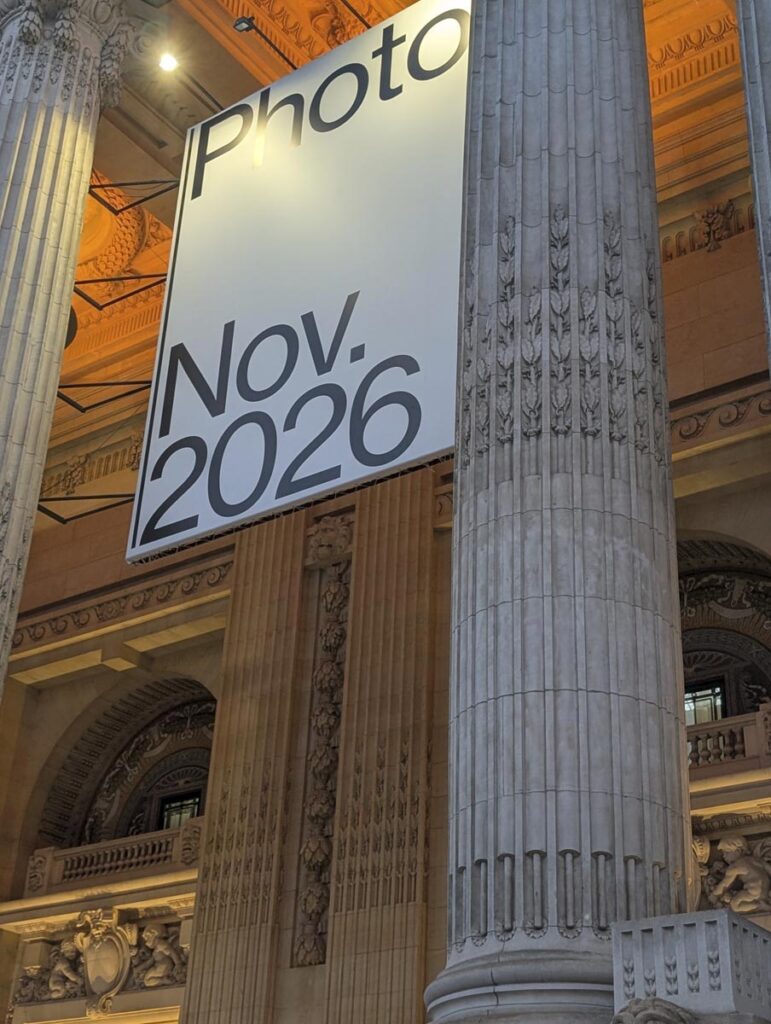
By Steve Giovinco — Fine Art Photographer (Yale MFA) | Photographed on-site at the Grand Palais, Paris (November 11–15, 2026)
I spent November 10–15 in Paris walking the 29th edition of Paris Photo 2026 beneath the glass nave of the Grand Palais during France’s Bicentennial of Photography. Out of nearly 200 international galleries on the floor, this first-hand review examines why photography culture in Paris feels wide awake compared to New York, highlights 50+ standout Grand Palais gallery booths, and includes a direct quick-connect directory of exhibiting galleries and artists.
Jump to Section on This Page
Paris Photo Week 2026 — 4-Part Photographer’s Field Report
- Part 1 (You Are Here): Grand Palais — Critical Essay, 50+ Standout Booths & Galleries Directory
- Part 2: Polycopies & the Grand Palais Book Sector: Independent Photobook Publishers
- Part 3: 10 Paris Museum & Foundation Shows, City Galleries, PhotoSaintGermain & Approche
- Part 4: Paris After Dark & In Transit: Photographs from La Défense, Métro Line 13, Tuileries & the Seine
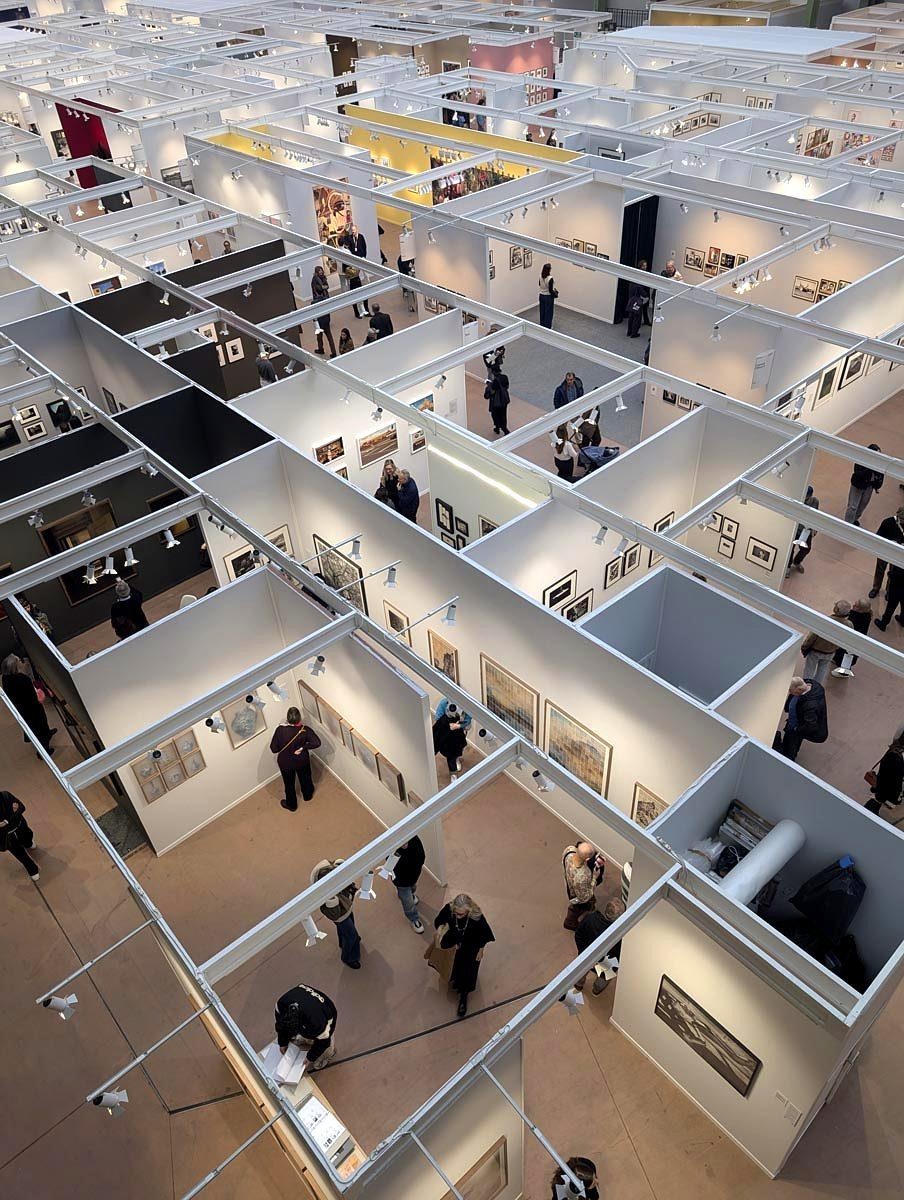
Paris Photo 2026 Galleries at the Grand Palais
Zander Galerie (Cologne / Paris): Tina Barney, Tod Papageorge, Helen Levitt
Zander ended up being one of the most personal stops of the week in a way. About a month before leaving for Paris, I bumped into the great Tina Barney at the lab in New York while she was working on a print, and walking into Zander’s booth to see that finished photograph framed and hanging on the wall was a great surprise. Tod Papageorge was a teacher of mine, so spending time at the booth looking closely at his street work alongside Helen Levitt‘s (who I had the amazing good fortune of riding with her from NYC to New Haven to hear her as a visiting speaker at grad school) small vintage 1940s New York silver prints felt like catching up with home in the middle of the Grand Palais.
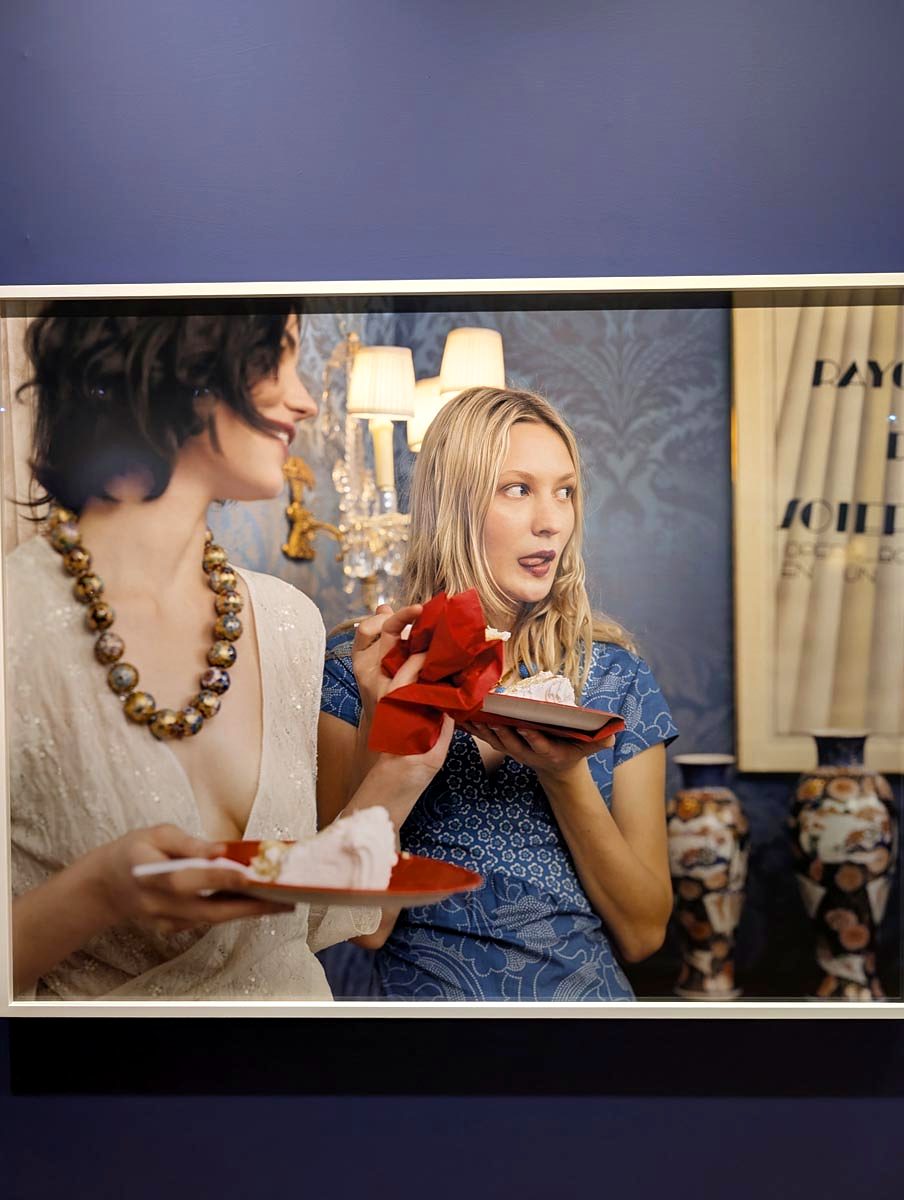
Osmos (New York): Catherine DeLattre
Having lived in the East Village for years, I had just been over at Osmos‘s space on East 1st Street a month or so ago for Justine Kurland‘s retrospective opening, which was completely packed out to the street (I’ve loved her work for years). Osmos brought late-1970s photographs of Hudson Valley backyards by Catherine DeLattre, unhurried pictures that pay close attention to ordinary yards, trees, and afternoon light.
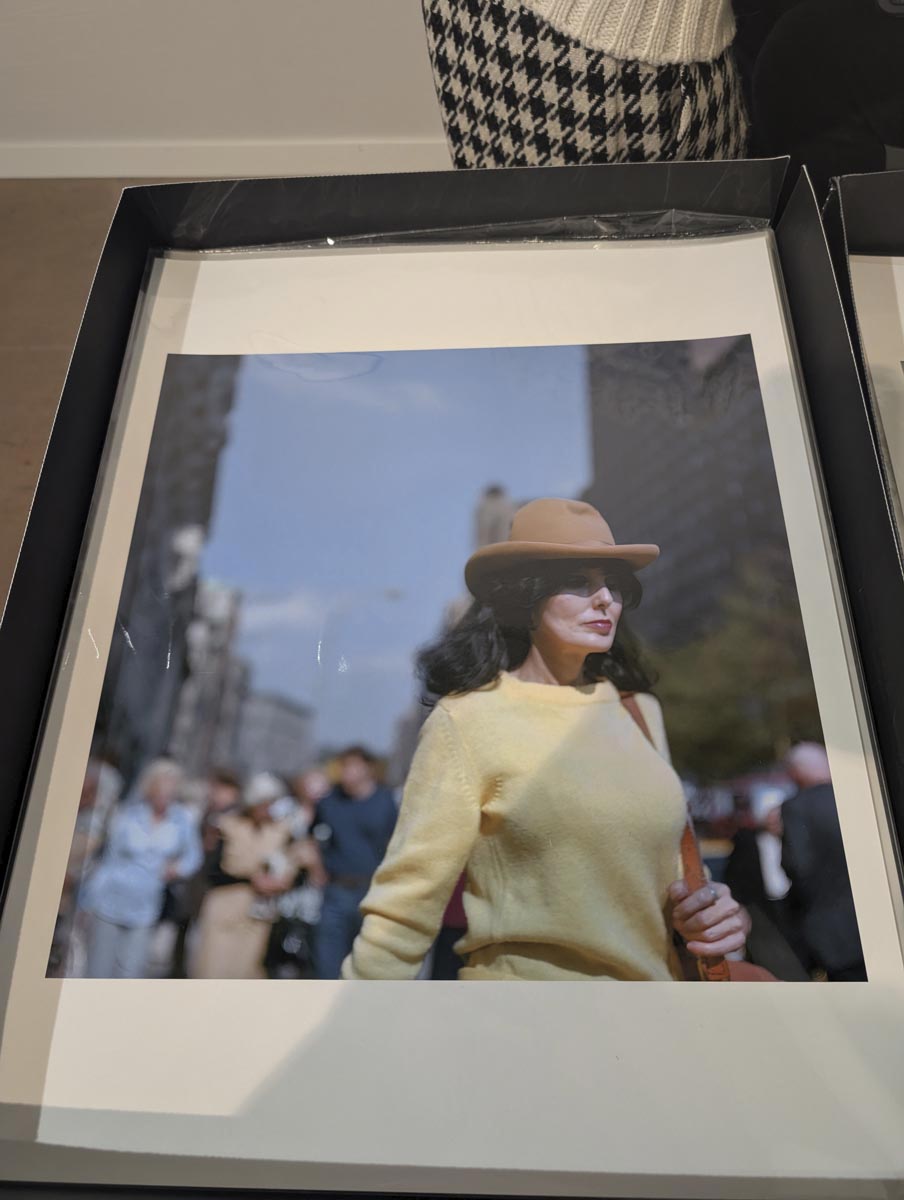
Wilson Saplana Gallery (Copenhagen): Inuuteq Storch
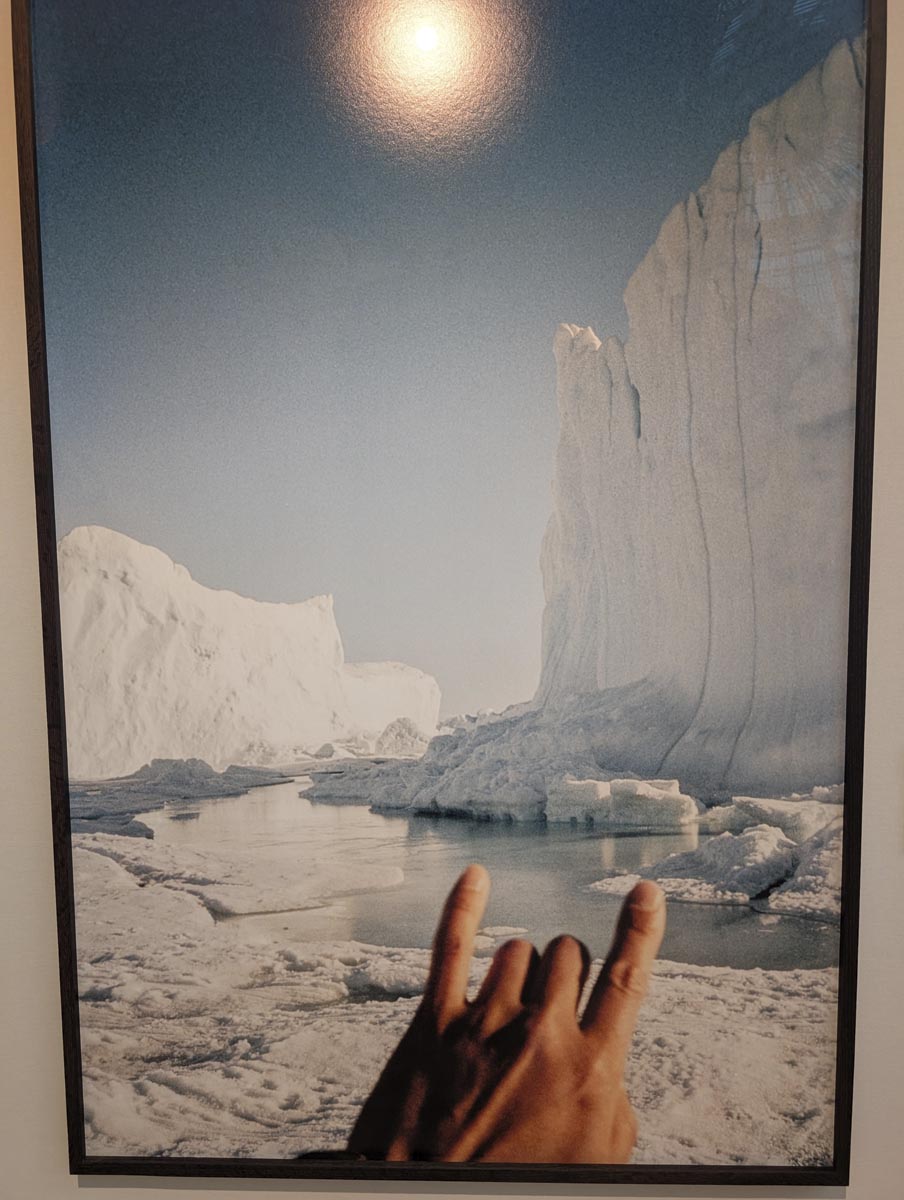
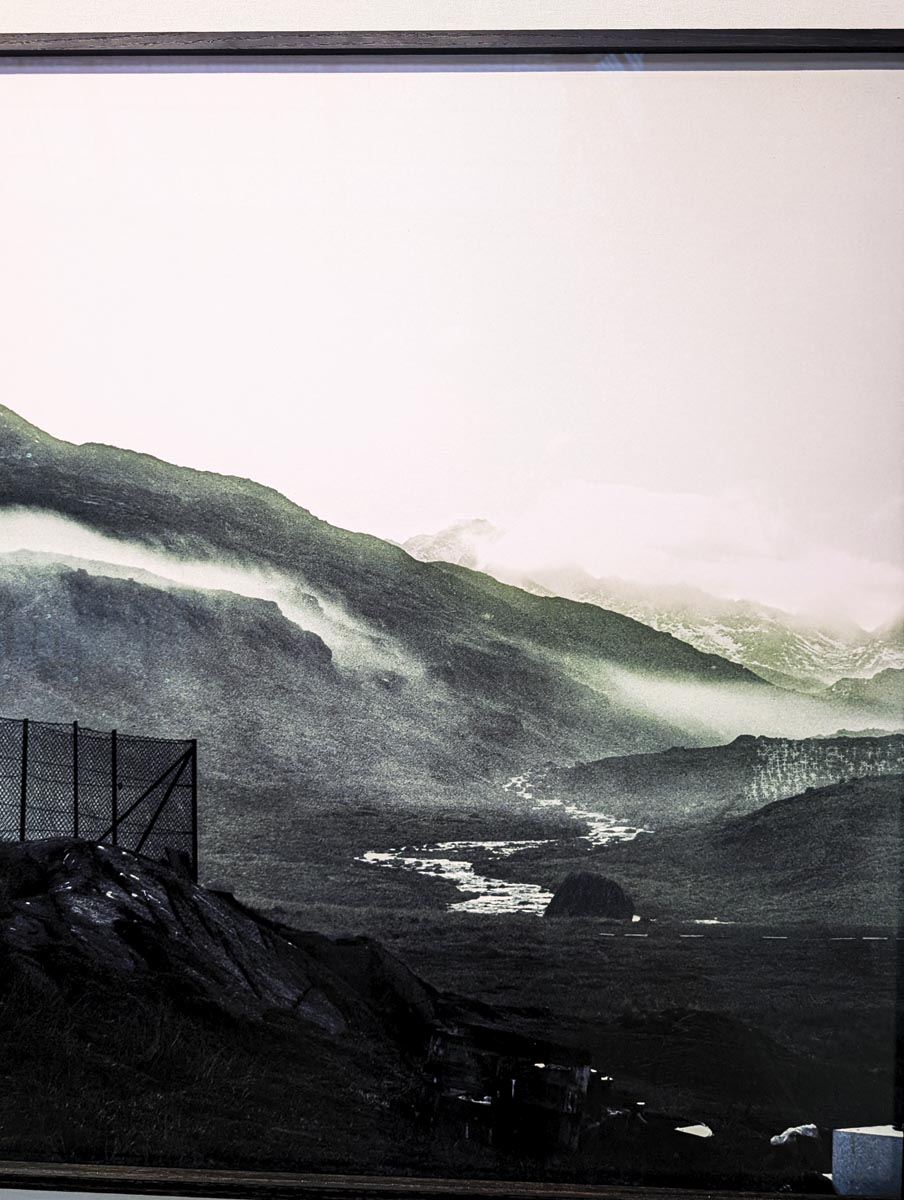
Up on the upper balcony, Copenhagen’s Wilson Saplana Gallery was the last booth I walked before leaving, and Inuuteq Storch‘s color photographs from Greenland hit close to home. Having spent long stretches working alone at night in southern Greenland across two trips, I know how quickly outsiders turn the Arctic into clean, empty travel scenery. Storch photographs Greenland from the inside. In one vertical picture, a brown hand reaches up from the bottom edge flashing a rock-on sign right in front of white icebergs. Next to it, a square print looked across bands of low fog on green mountain slopes above a winding river, with a chain-link fence and dark structures sitting in the foreground. It felt completely lived-in and real.
Casemore Gallery (San Francisco): Todd Hido, Raymond Meeks, Jim Goldberg, Bill Owens, Larry Sultan
Because I spend hours shooting in near-total darkness, I always want to see how other night photographers handle print surface and shadow detail. Casemore hung atmospheric night pictures by Todd Hido alongside Raymond Meeks and vintage silver and California prints by Jim Goldberg, Bill Owens, and Larry Sultan. A few months ago, I and other members of APAG (American Photography Archives Group, run by Mary Engel) previewed this amazing color work of Bill Owens.
Galerie Les Filles du Calvaire (Paris): Todd Hido, Kourtney Roy
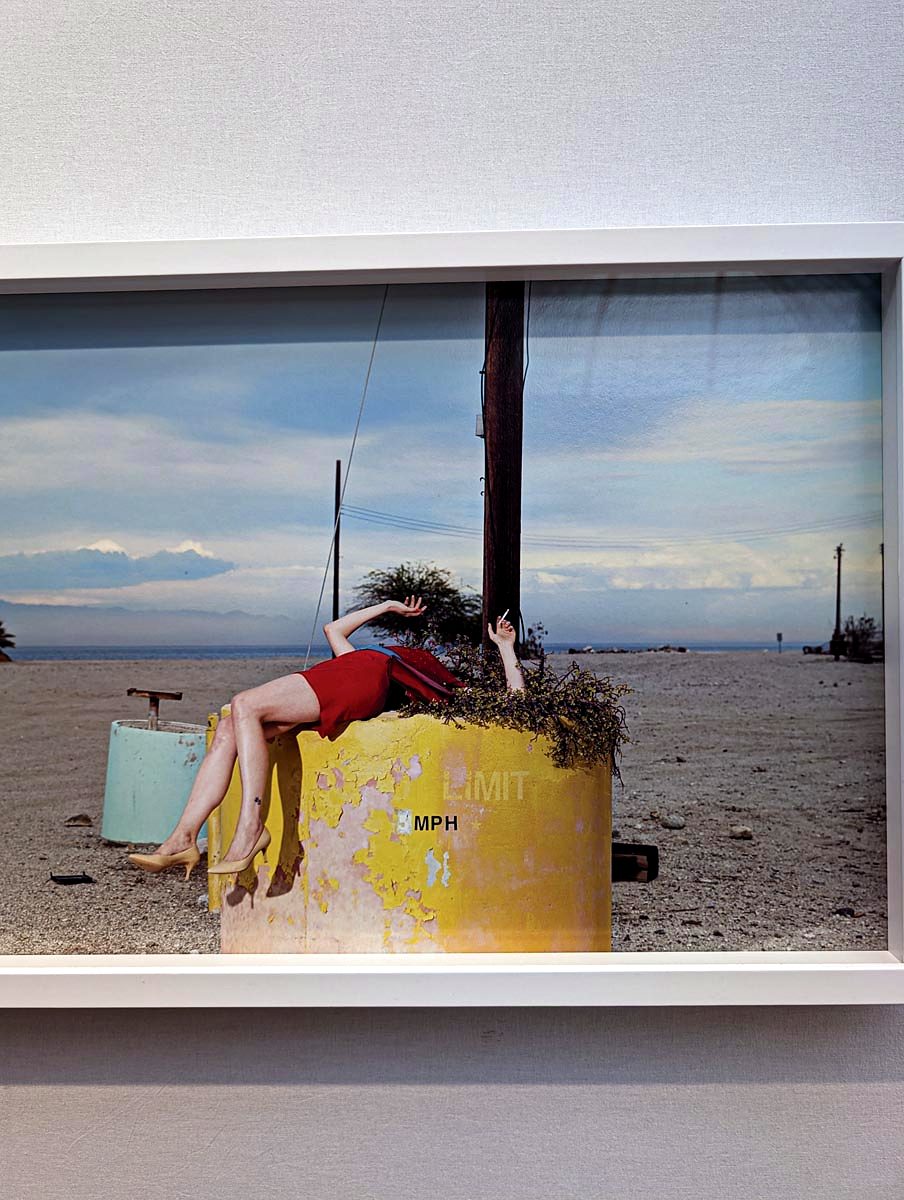
Les Filles du Calvaire gave a second look at Todd Hido, showing new 2026 inkjet pigment prints mounted directly on aluminium, which gave the dark atmospheric tones a cool, glassless physicality. Right nearby hung Kourtney Roy, where she lies backwards in a red dress and tan heels over a yellow concrete road cylinder stenciled with faded speed-limit letters, holding a cigarette up toward coastal utility wires.
Large Glass (London): John Gossage, Brassaï
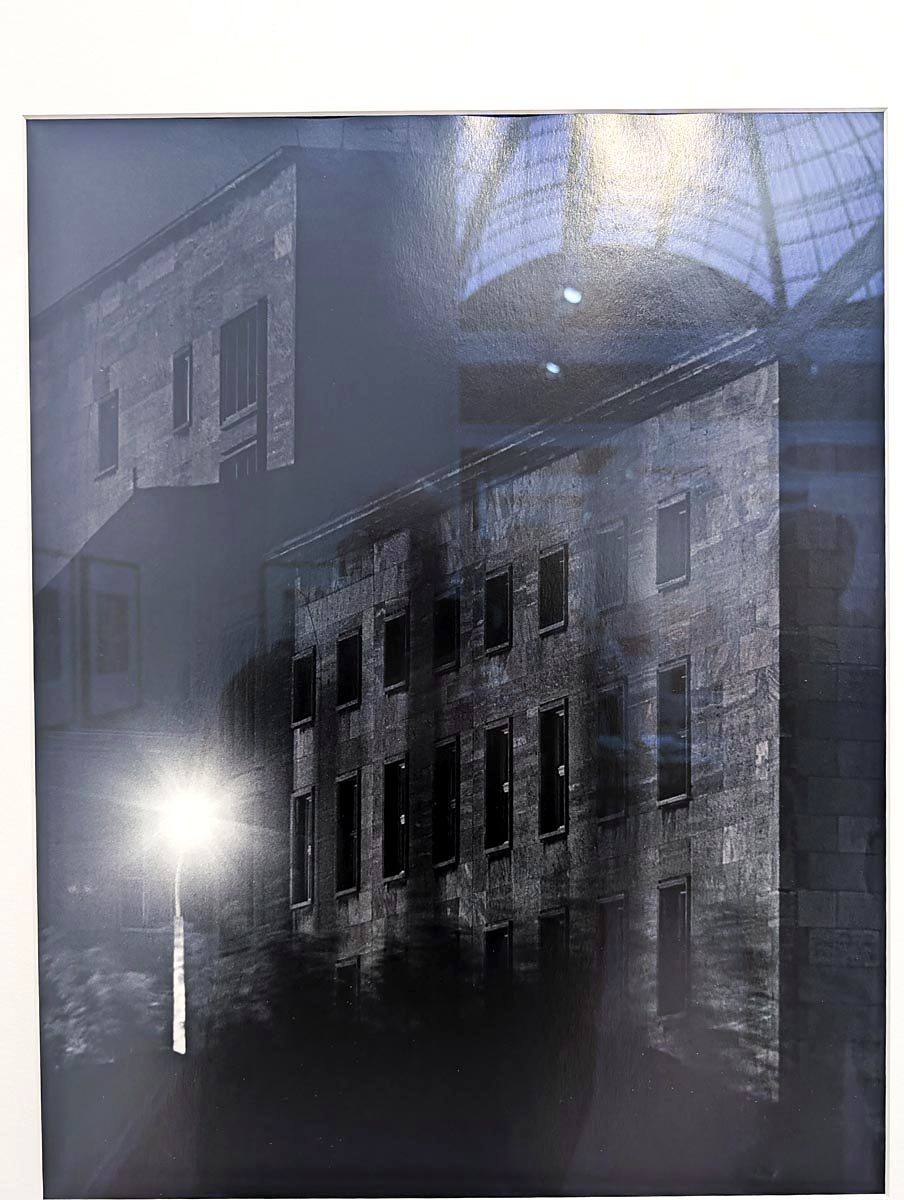
Brassaï‘s night photographs have been in my head for decades, and Large Glass paired his 1930s nocturnal Paris work with late-1980s vintage silver prints of dark Berlin by John Gossage. In Gossage’s 1986 night view outside East Berlin, there is a single streetlamp flare. Working with sparse artificial light in film is really tricky, and I wish I had the nerve to print so dark, because they were so beautiful.
Polka Galerie (Paris): Yves Marchand & Romain Meffre, Bruce Gilden
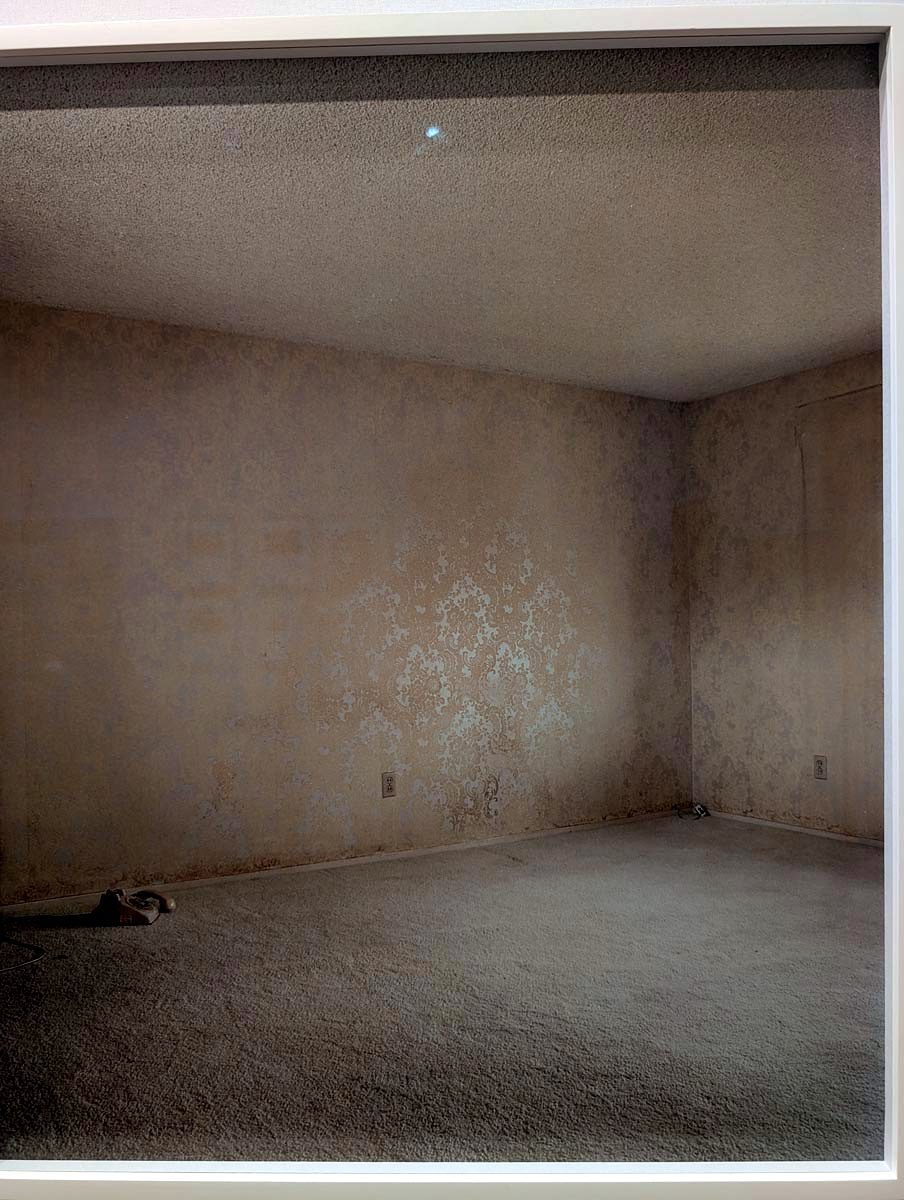
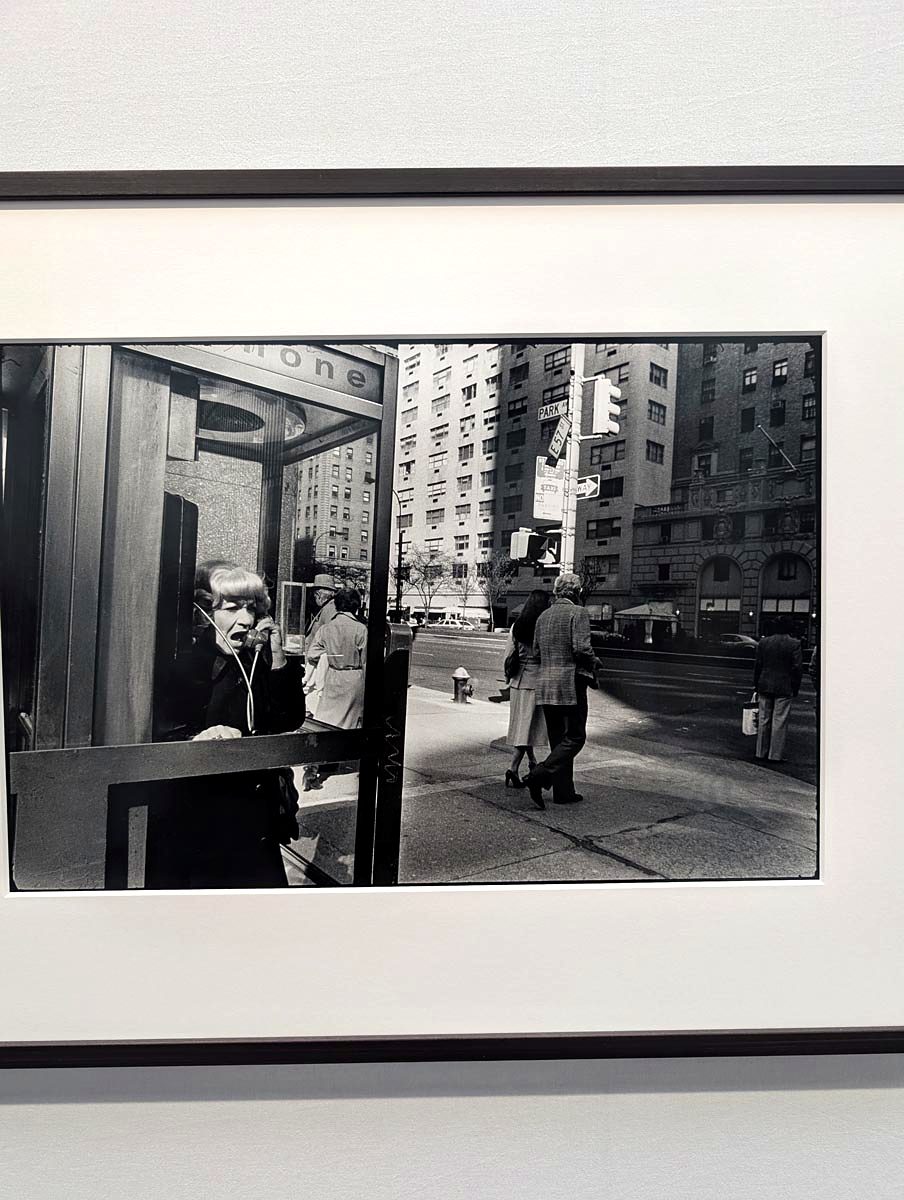
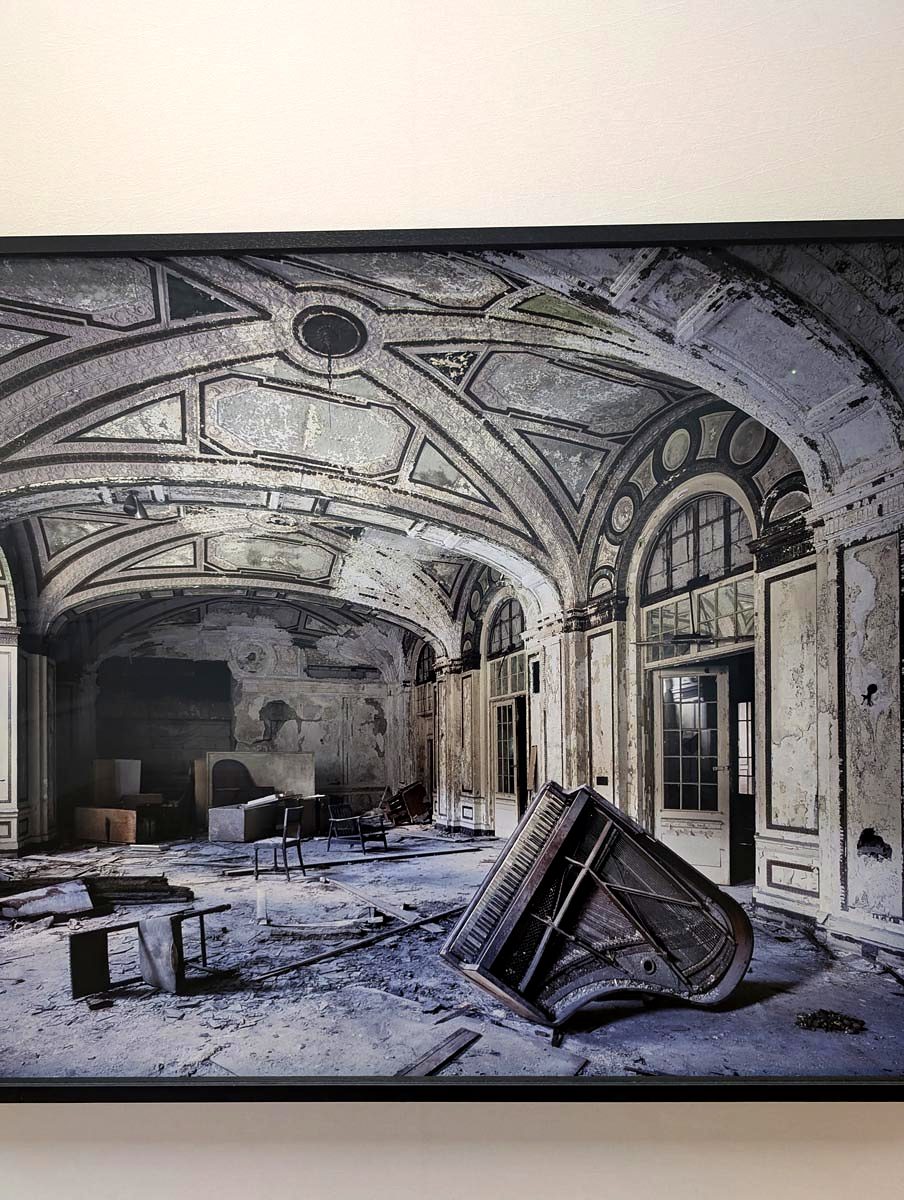
Polka paired two worlds I know well from different chapters of my own work. Having photographed inside a dark, gutted factory for Mill // Abandoned, I stopped right away for Yves Marchand and Romain Meffre‘s large color view inside the ruined ballroom of Detroit’s hotel. A few feet over hung a 1978 black-and-white print by Bruce Gilden of a blonde woman mid-shout inside a corner payphone in late-seventies Midtown Manhattan.
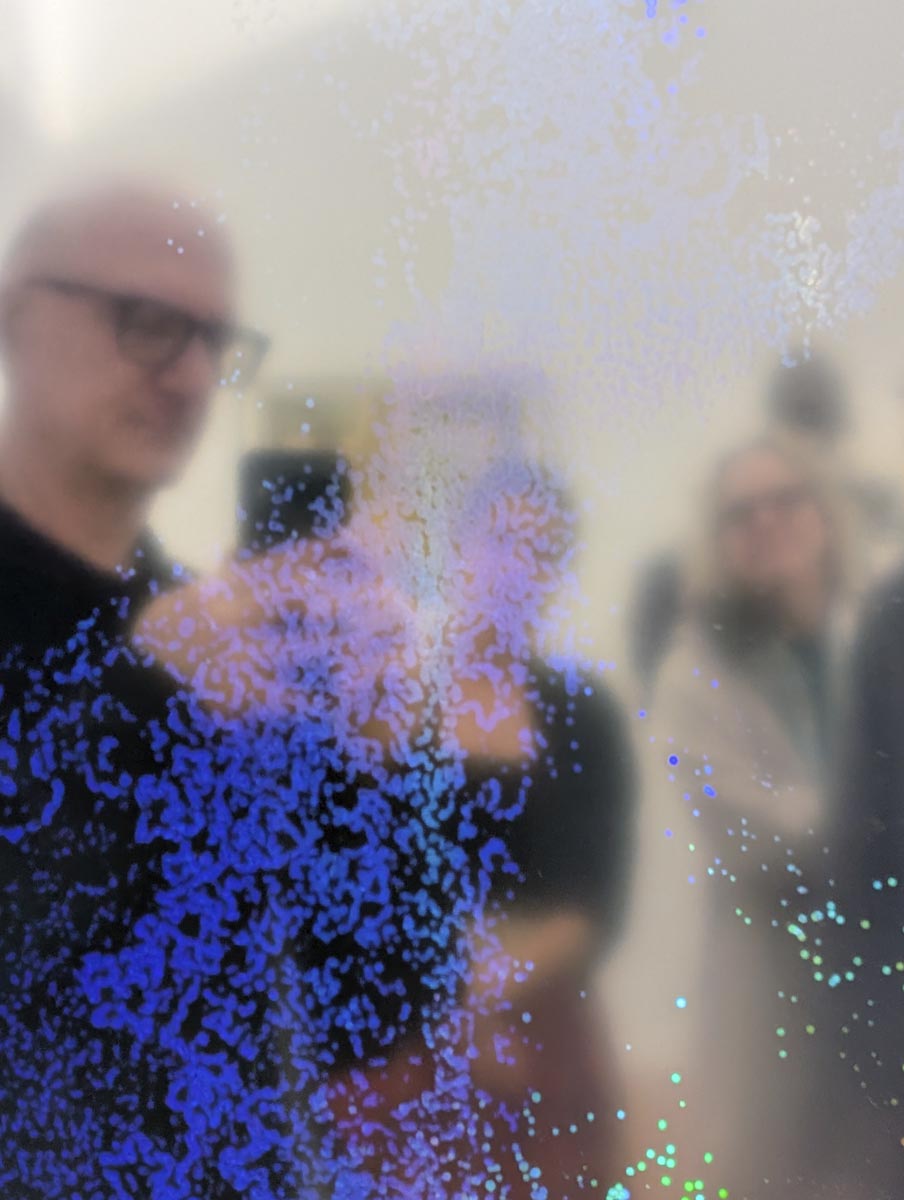
Bigaignon (Paris): Joanne Dugan
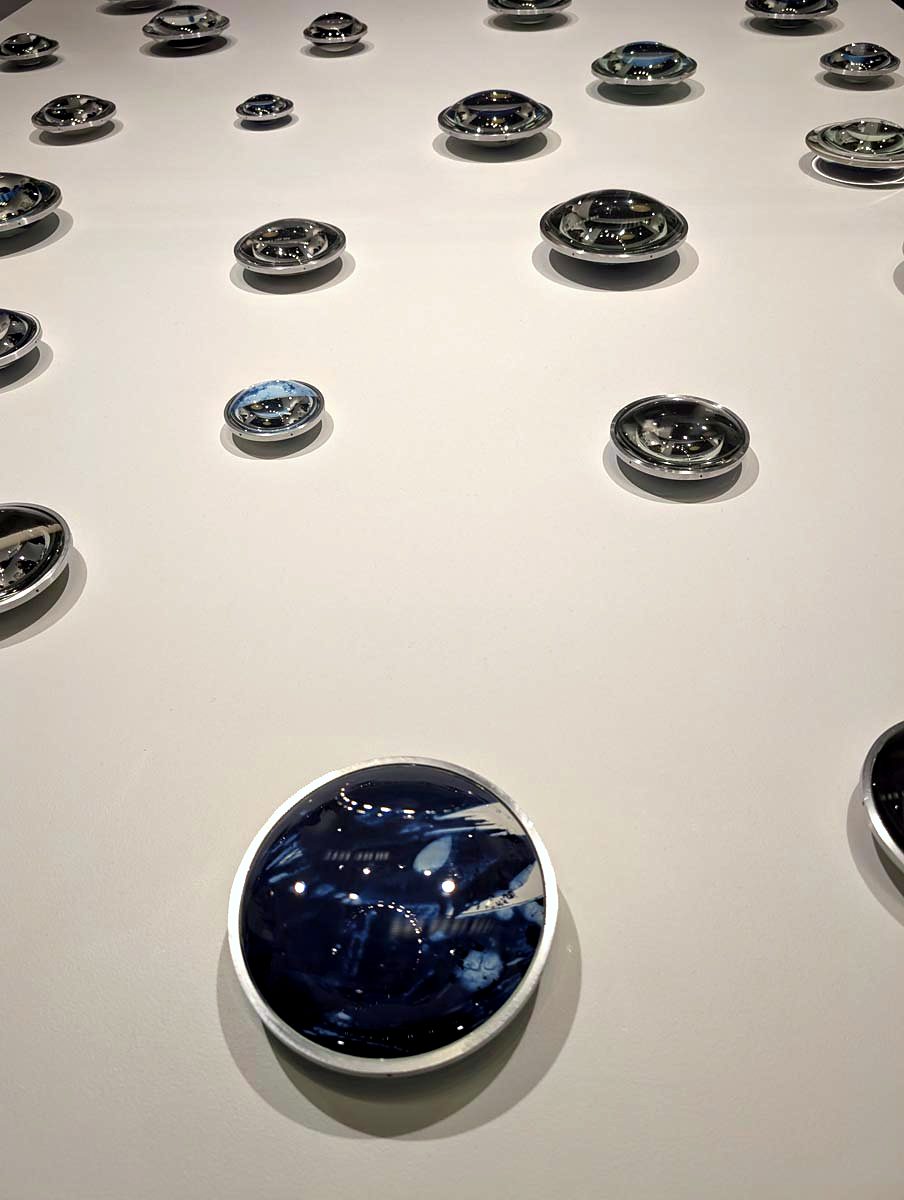
Joanne Dugan‘s work at Bigaignon‘s booth was buzzing. It is hard to describe what they are exactly and the photo doesn’t really help much. It’s a meditation on an expansion of what photos can be: they are sourced lenses with solargrams sandwiched between the glass, forcing you to hover over each, resulting in both a slight reflection of yourself and the beautiful faint image. Bigaignon focuses on work built around light, time, and physical process.
Jackson Fine Art (Atlanta): Joseph Szabo
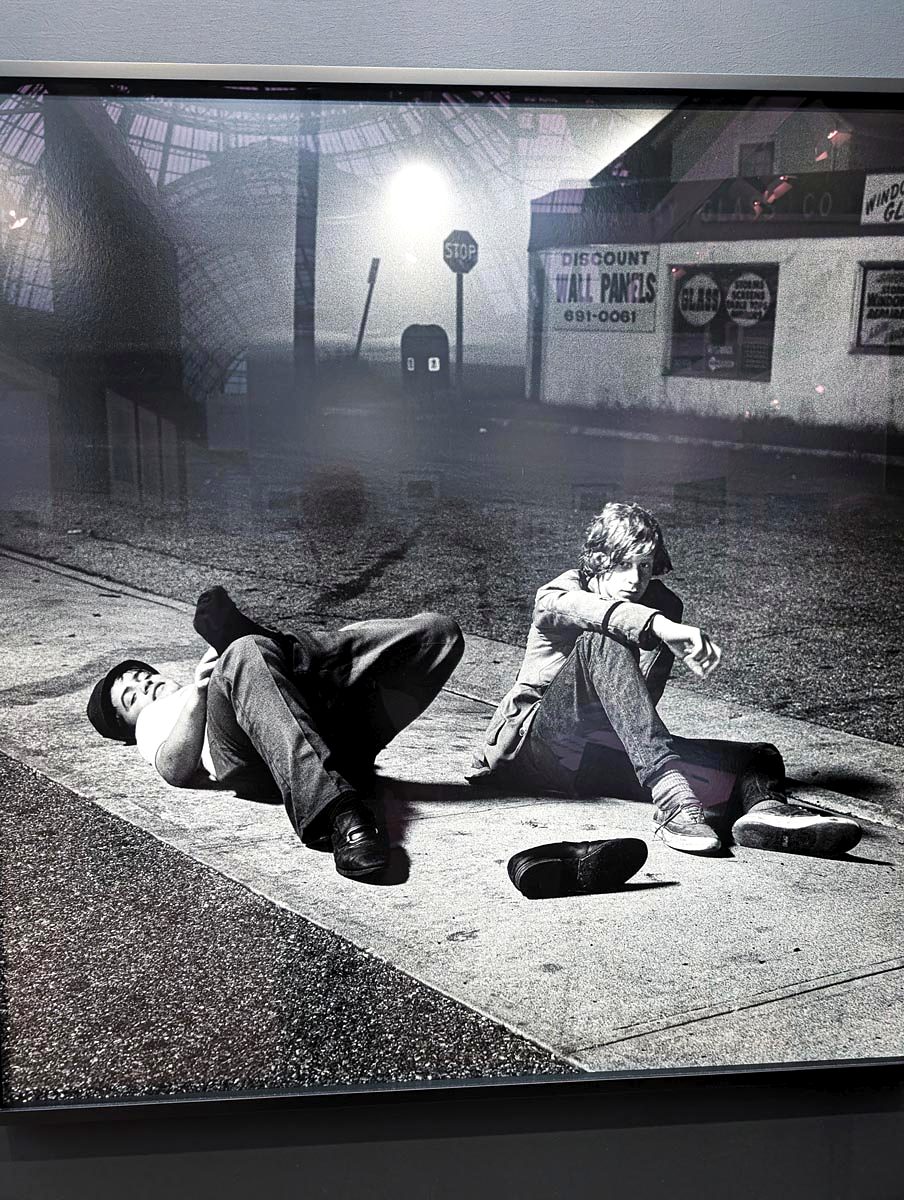
I love what was at Jackson Fine Art: a four-foot-square silver print of Joseph Szabo‘s 1971 night picture Night Owls. Two teenage boys stretch out on a sidewalk next to a shoe while a streetlamp burns through the dark behind a stop sign and a Discount Wall Panels storefront. Seeing a quiet 70s night printed at scale gave the shadows weight.
Galerie Clémentine de la Féronnière (Paris): Mikiya Takimoto
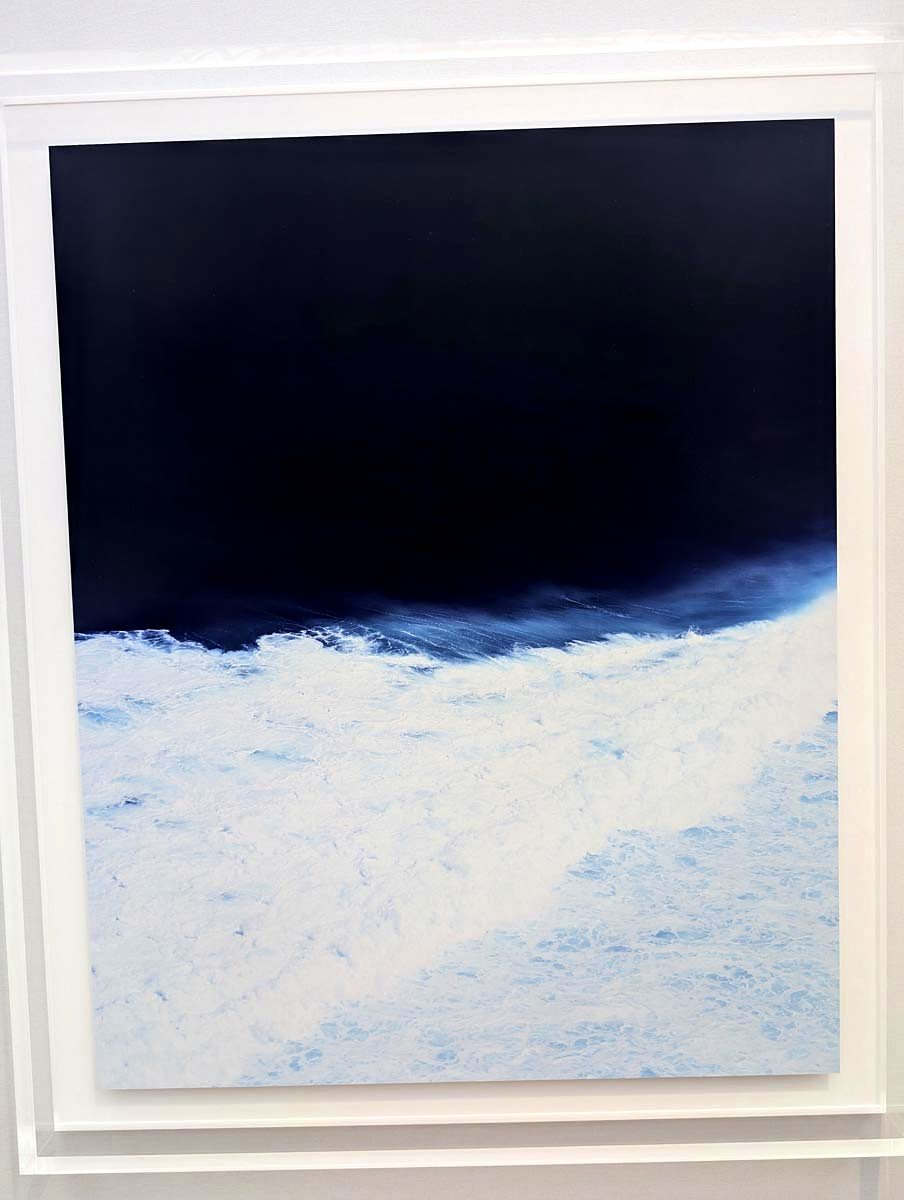
At Booth B31, Mikiya Takimoto showed vertical color prints from his Grain of Light series where churning white and pale-blue seafoam fills the bottom half of the frame against pitch-black darkness above. Stripped of any horizon line or sense of scale, the breaking water stops reading as a straight seascape and feels much closer to dark, slow-moving painting.
Bildhalle (Zurich / Amsterdam): Ilona Langbroek, Éric Antoine
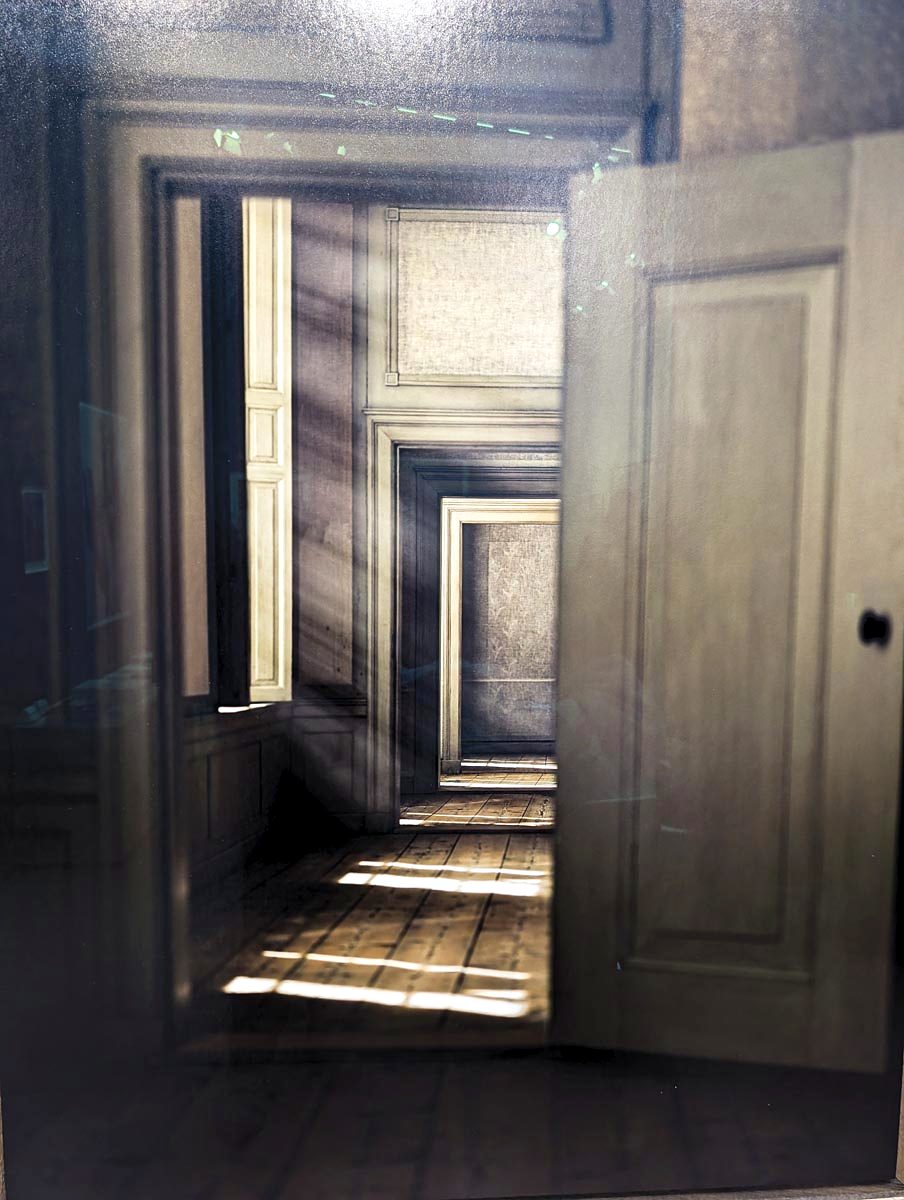
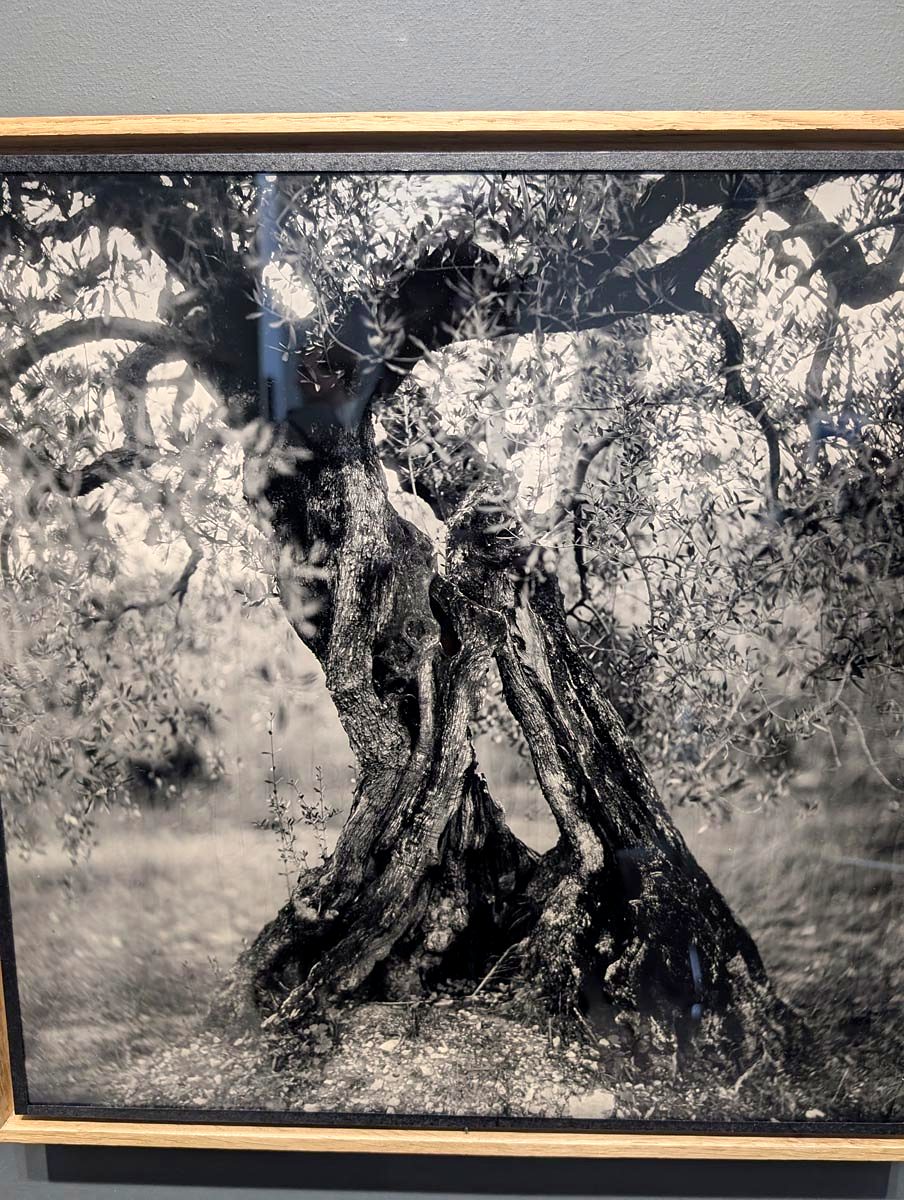
Dutch photographer Ilona Langbroek showed an interior looking past an open wooden door down a line of sunlit empty rooms, drawing on her family’s history in the former Dutch East Indies. I love work with a connection to history and that is personal. Next to it was Éric Antoine‘s black-and-white photograph of a split-trunk olive tree made from a wet-plate collodion process. Putting lived family memory right beside slow, handmade glass-plate chemistry gave that wall a quiet weight that pushed back against instant digital pictures.
Fraenkel Gallery (San Francisco): Peter Hujar, Diane Arbus, Richard Learoyd, Lee Friedlander, Hiroshi Sugimoto
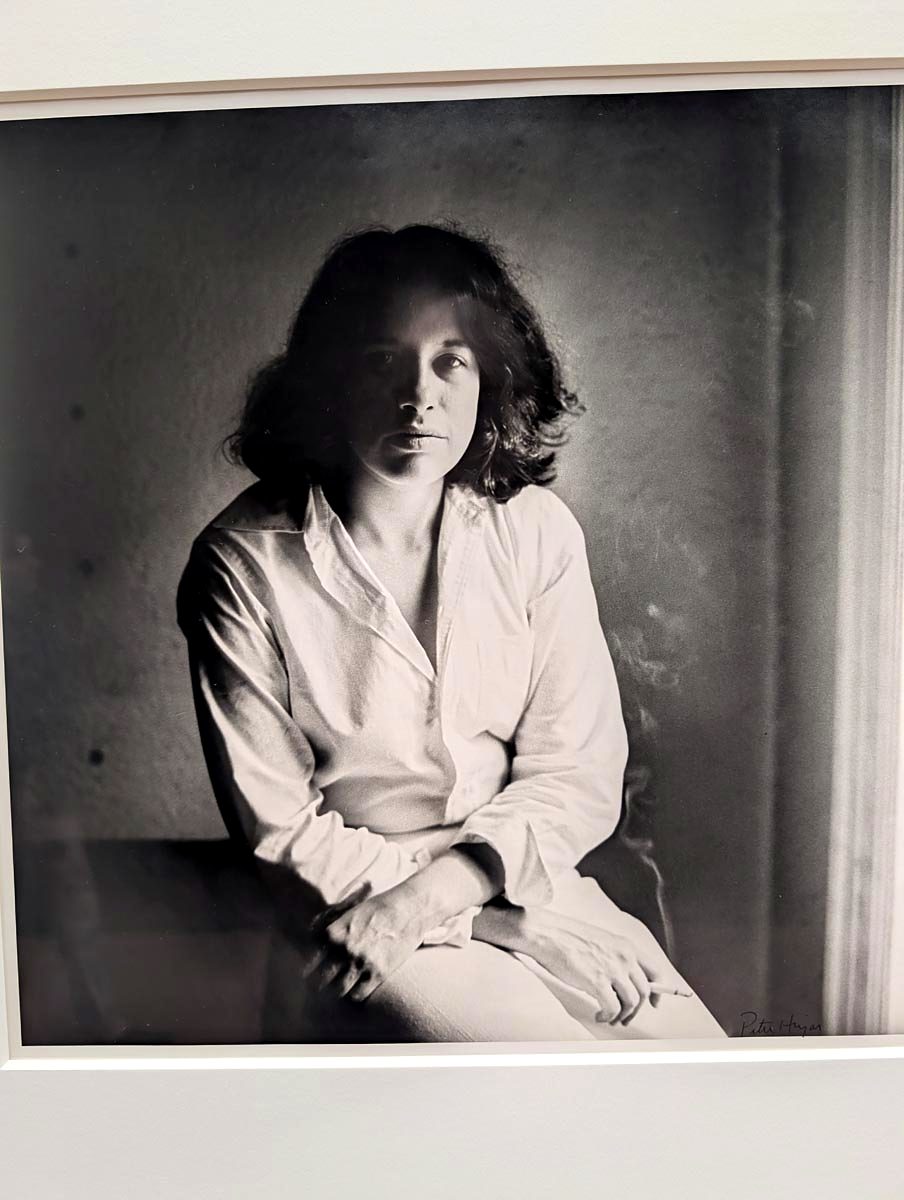
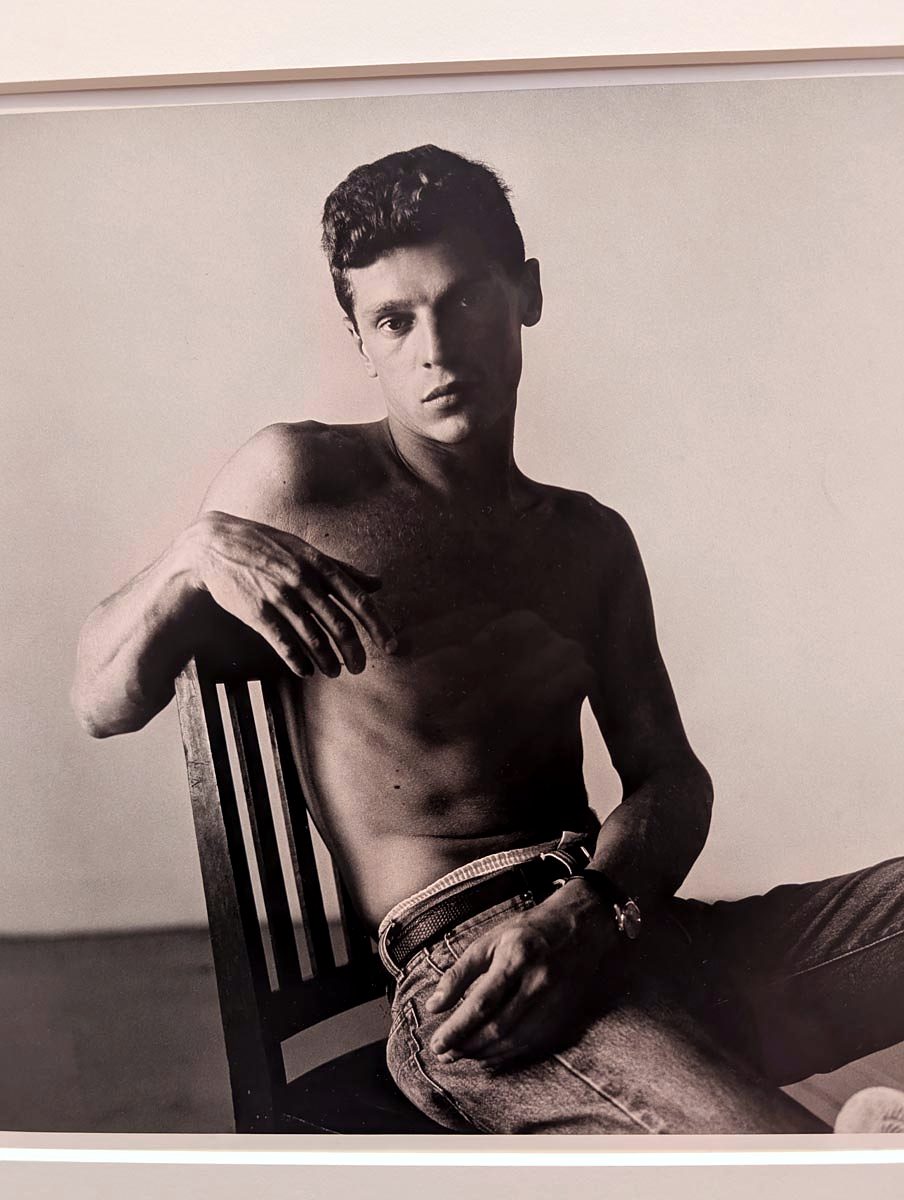
Fraenkel hung two amazing studio portraits by Peter Hujar: a signed 1975 print of Fran Lebowitz sitting by a window in a white shirt, and a 1981 portrait of Jerry Frankel leaning shirtless over the back of a wooden chair. Elsewhere in the booth were Diane Arbus, Richard Learoyd, Lee Friedlander (who also was a visiting artist in grad school), and Hiroshi Sugimoto.
Galerie Maubert (Paris): Philippe Gronon
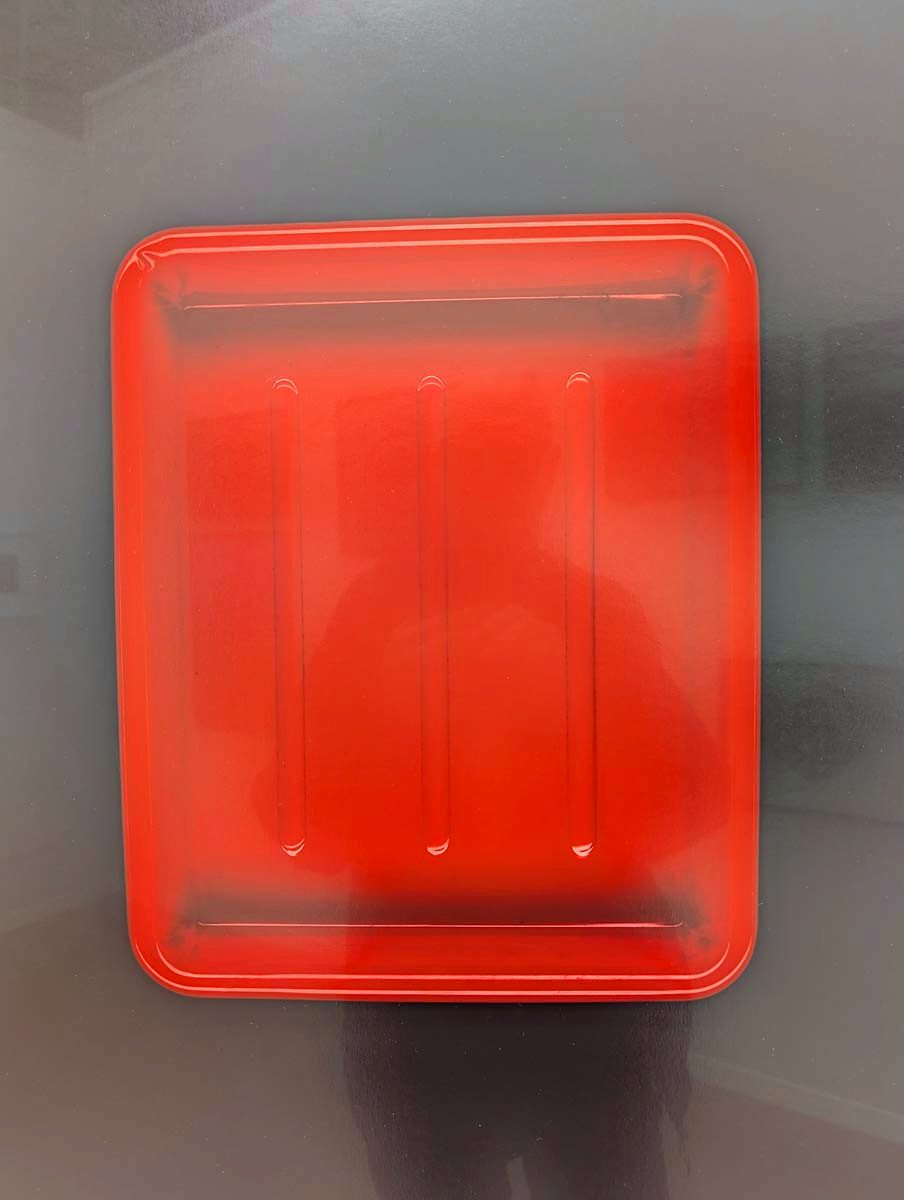
Anyone who has stood over trays in a darkroom had to smile at Philippe Gronon‘s print at Galerie Maubert: a straight-on, life-size photo of a ribbed red plastic developing tray.
Huxley-Parlour Gallery (London): Sarah Jones
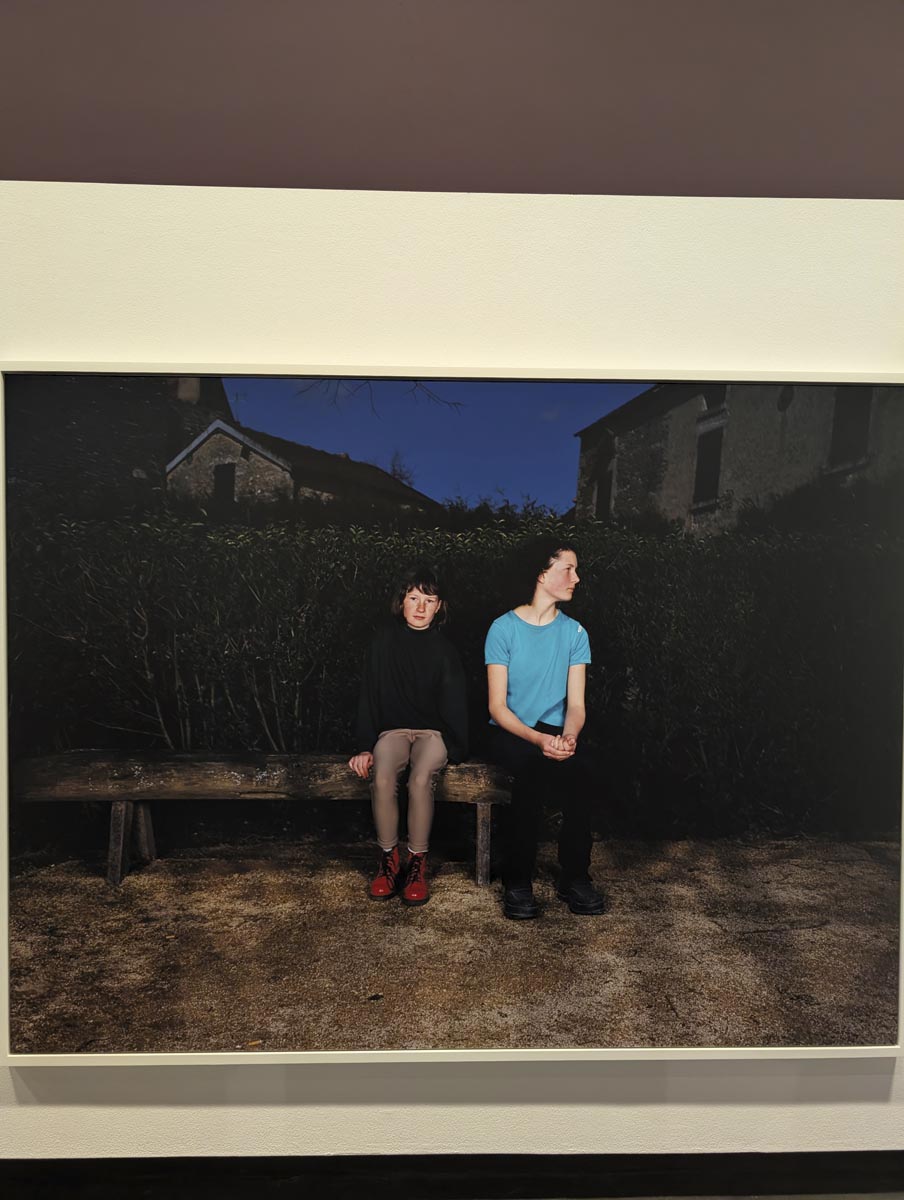
Huxley-Parlour showed quiet color exterior studies by Sarah Jones, using deep shadow, heavy drapery, and total stillness to give domestic rooms a slightly uncanny psychological weight.
Howard Greenberg Gallery (New York): Gordon Parks
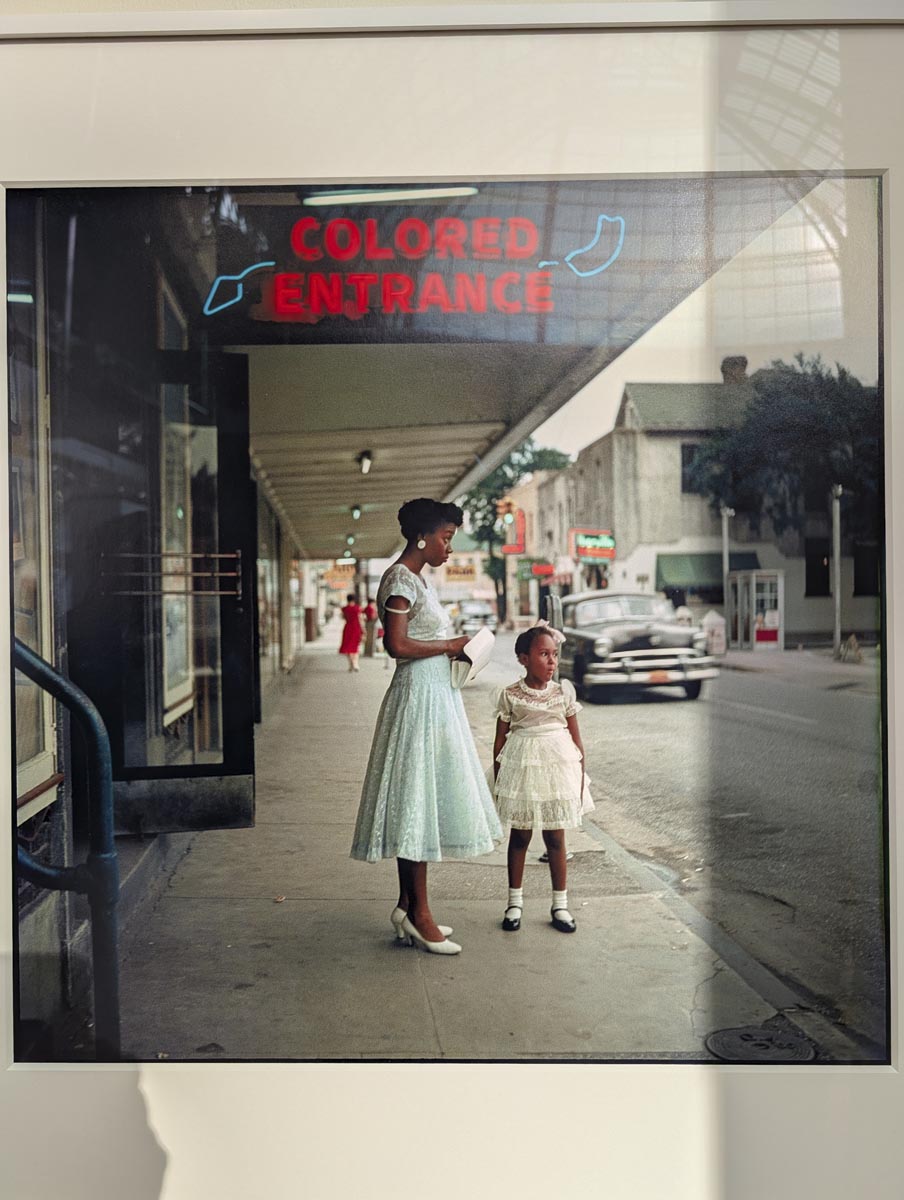
Howard Greenberg included Gordon Parks‘s 1956 color photograph Department Store, Mobile, Alabama, framing a crisply dressed woman and her young niece standing composed beneath a glowing red neon ‘COLORED ENTRANCE’ sign, a picture whose quiet dignity hits even harder in person.
Bruce Silverstein Gallery (New York): Edward Weston, Chester Higgins
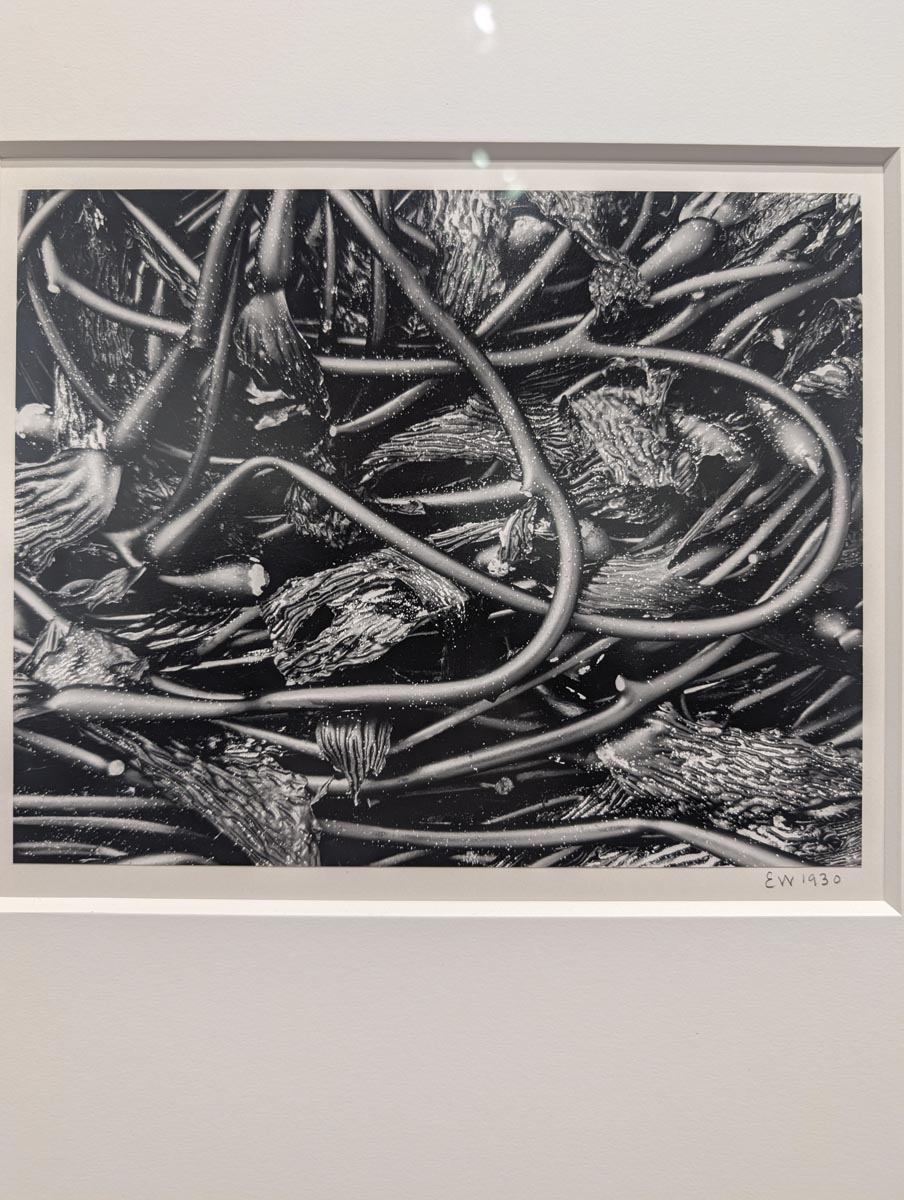
Bruce Silverstein hung a 1940s gelatin silver print of Edward Weston‘s kelp at Point Lobos, which was delicate and beautiful beyond words, alongside Chester Higgins‘s warm 1974 photograph of morning coffee in Harlem.
Robert Morat Galerie (Berlin): Andy Sewell
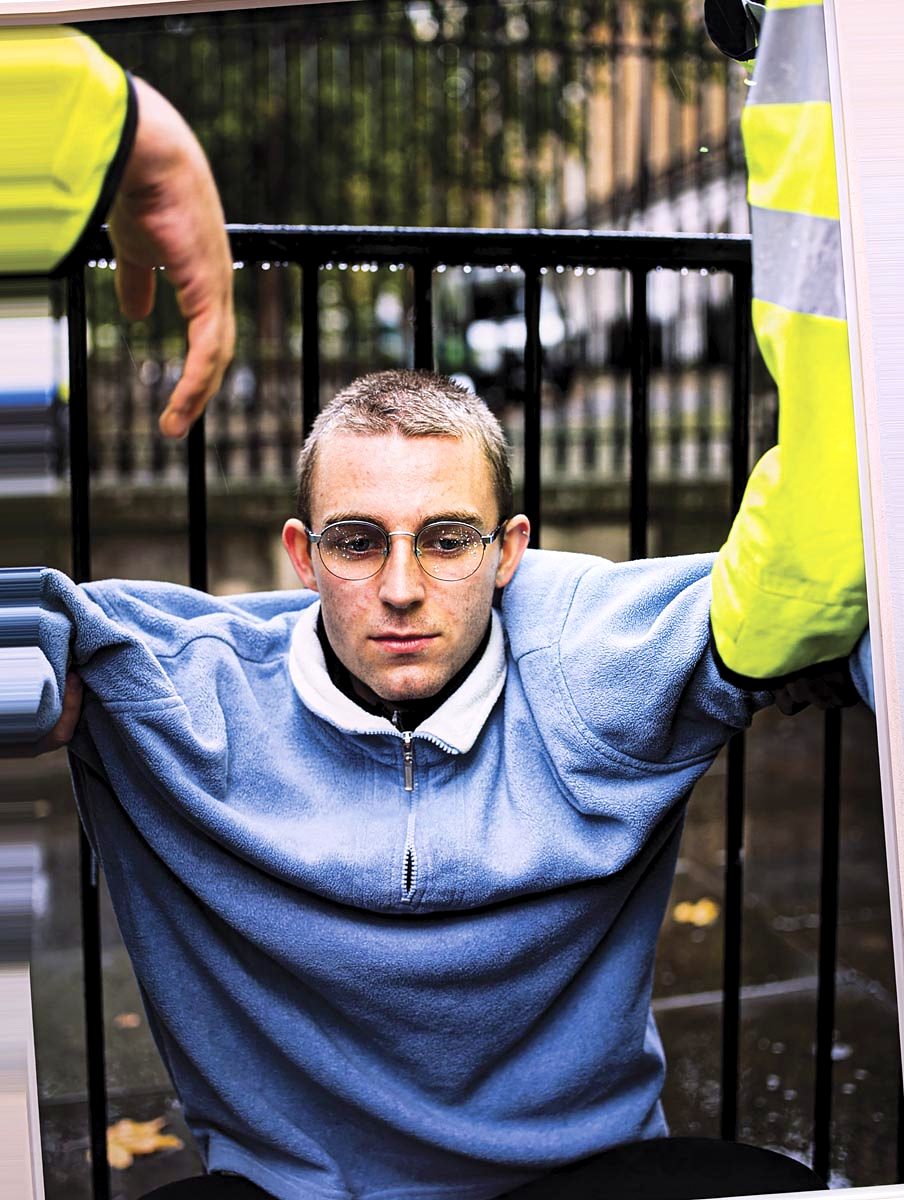
Andy Sewell at Robert Morat showed a triptych of a demonstration in London, directly framing a man in rain-soaked glasses in the arms of police.
Martin Asbæk Gallery (Copenhagen): Trine Søndergaard
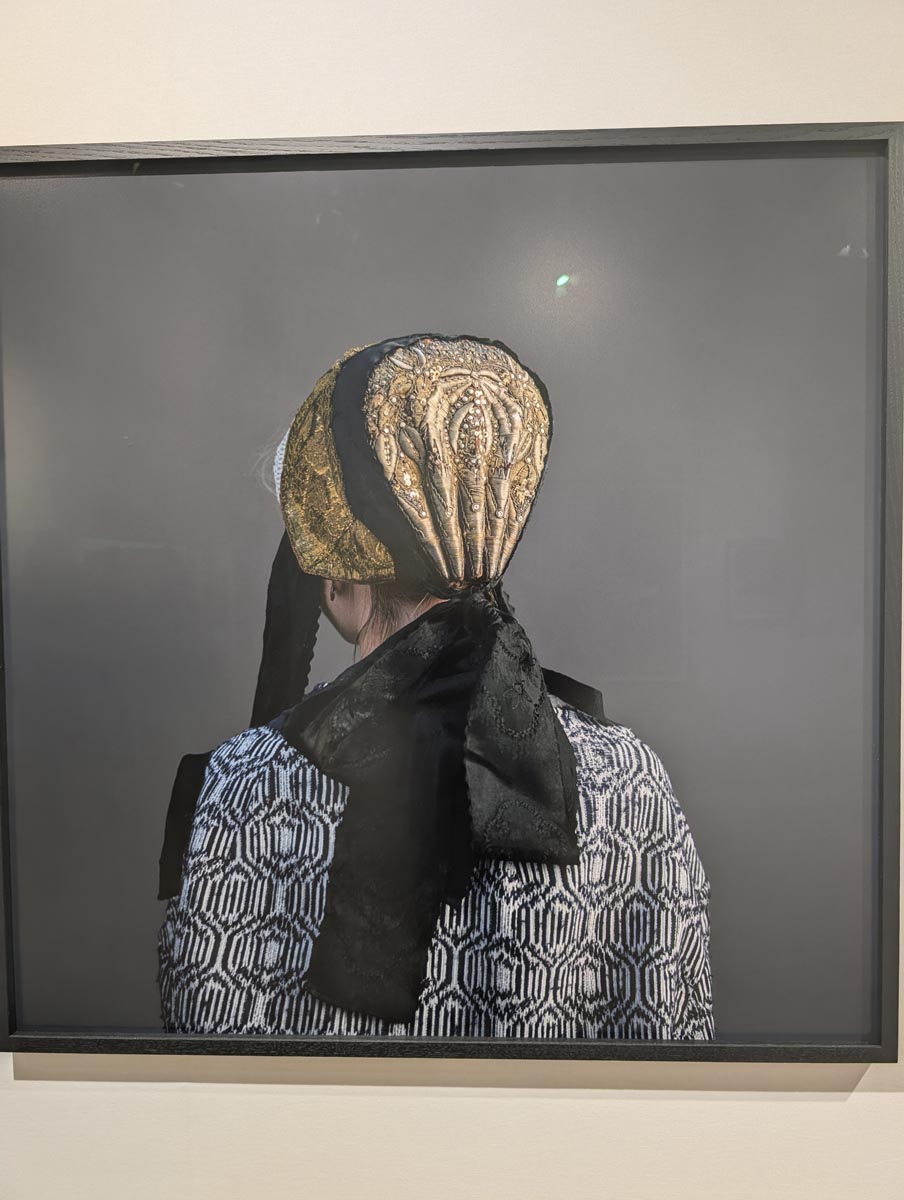
Martin Asbæk showed square prints by Trine Søndergaard of women wearing traditional Danish headwear in soft interior light, which were slightly haunting, and reminds me of a famous scene in the film Vertigo by Hitchcock.
Bienvenu Steinberg & C (New York): Juan Manuel Echavarría
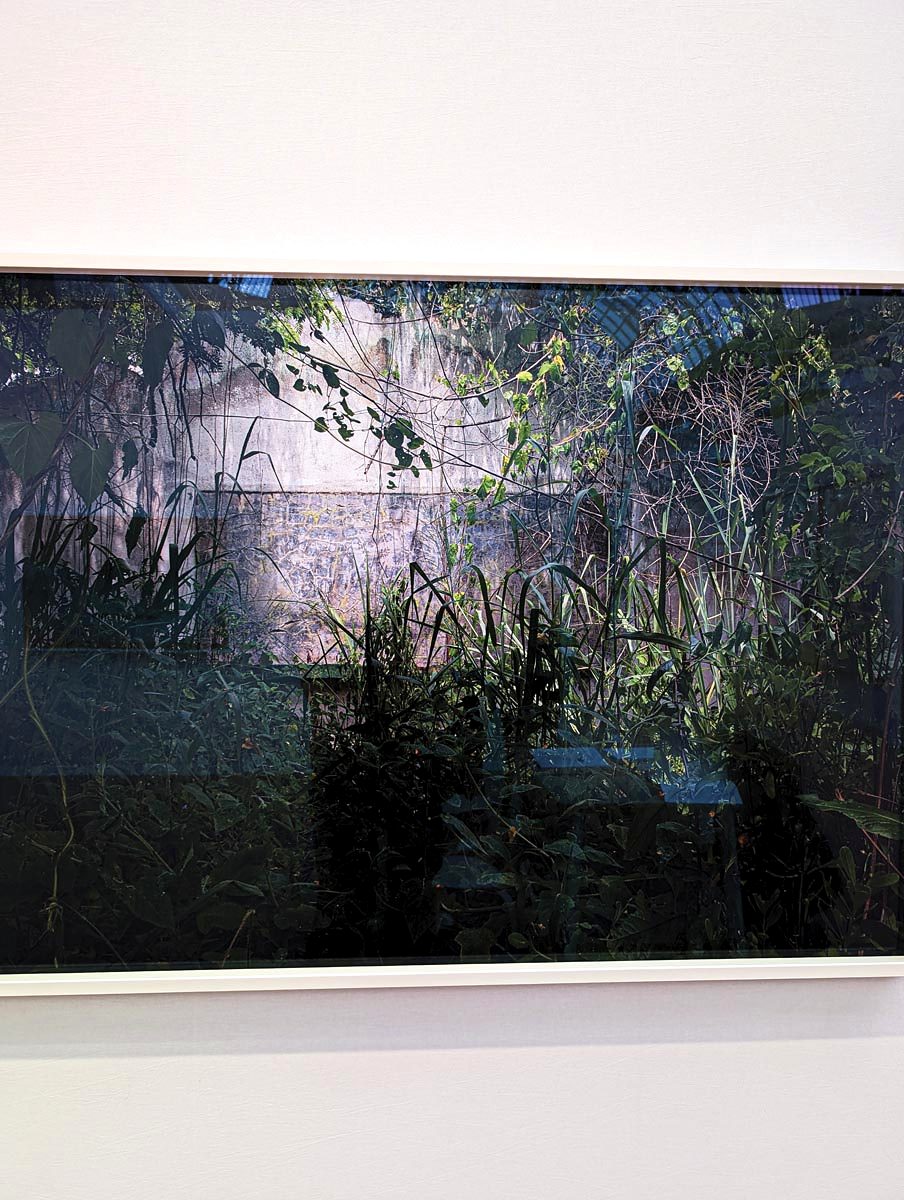
Tribeca gallery Bienvenu Steinberg & C hung large prints from Bolívar, Colombia, by Juan Manuel Echavarría, looking through dark foreground vines and grass toward a stained plaster school wall lit from above. In each is an abandoned blackboard representing the toll drug trafficking has in the region. They looked disarming at first but were haunting.
Galerie Miranda (Paris): Merry Alpern
I think this is the first time this series has been shown at an art fair, Galerie Miranda paired vintage 1993 silver prints and new 2026 editions from Merry Alpern‘s gritty Dirty Windows, photographed at night through frosted bathroom windows in lower Manhattan. Up close, the heavy silver grain and tight window mullions hold a cold, voyeuristic night tension.
Lia Rumma (Milan / Naples): Thomas Ruff
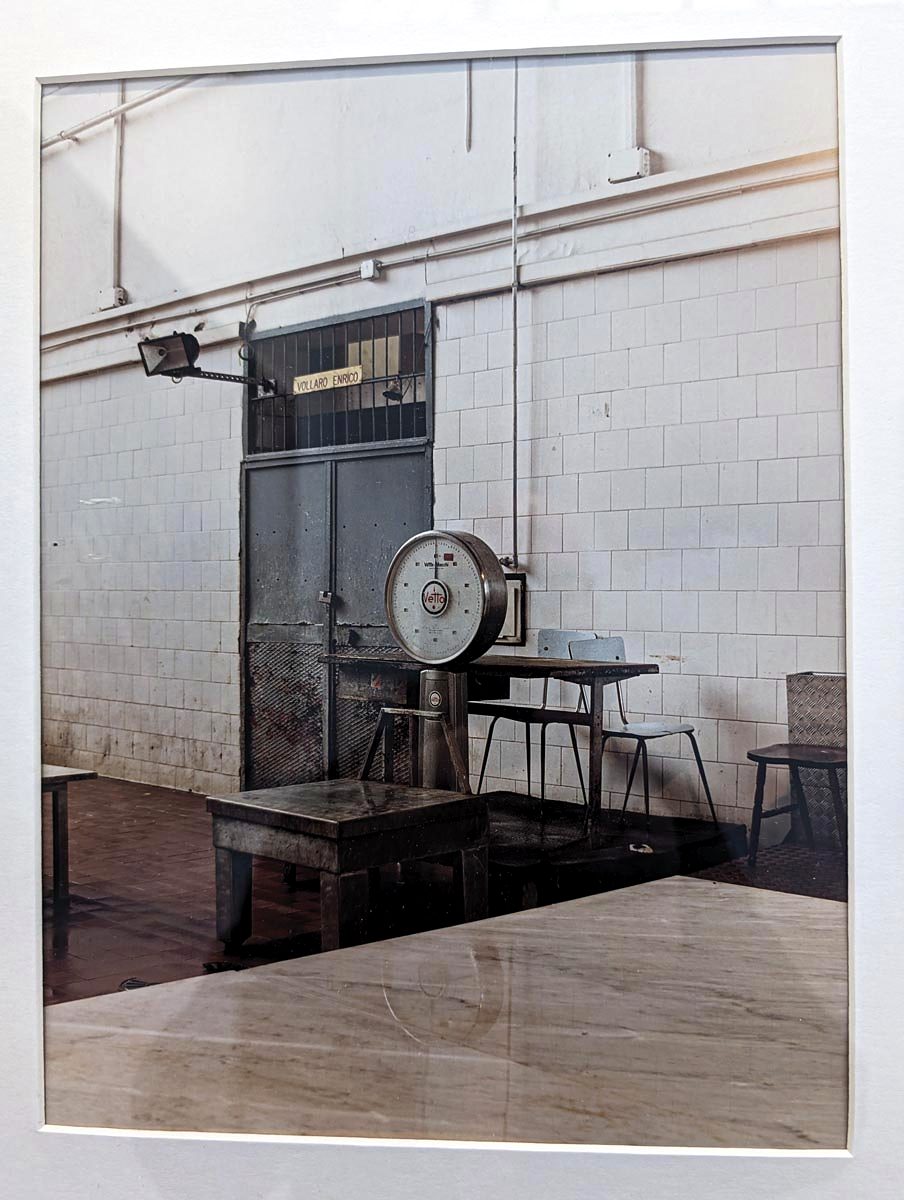
Lia Rumma hung a 2002 C-print by Thomas Ruff of an empty, white-tiled Italian industrial room with a round dial. That cool, clinical distance made looking closely at how Ruff builds a picture interesting.
Hans P. Kraus, Jr. Fine Photographs (New York): Jean Laurent, Gustave Le Gray
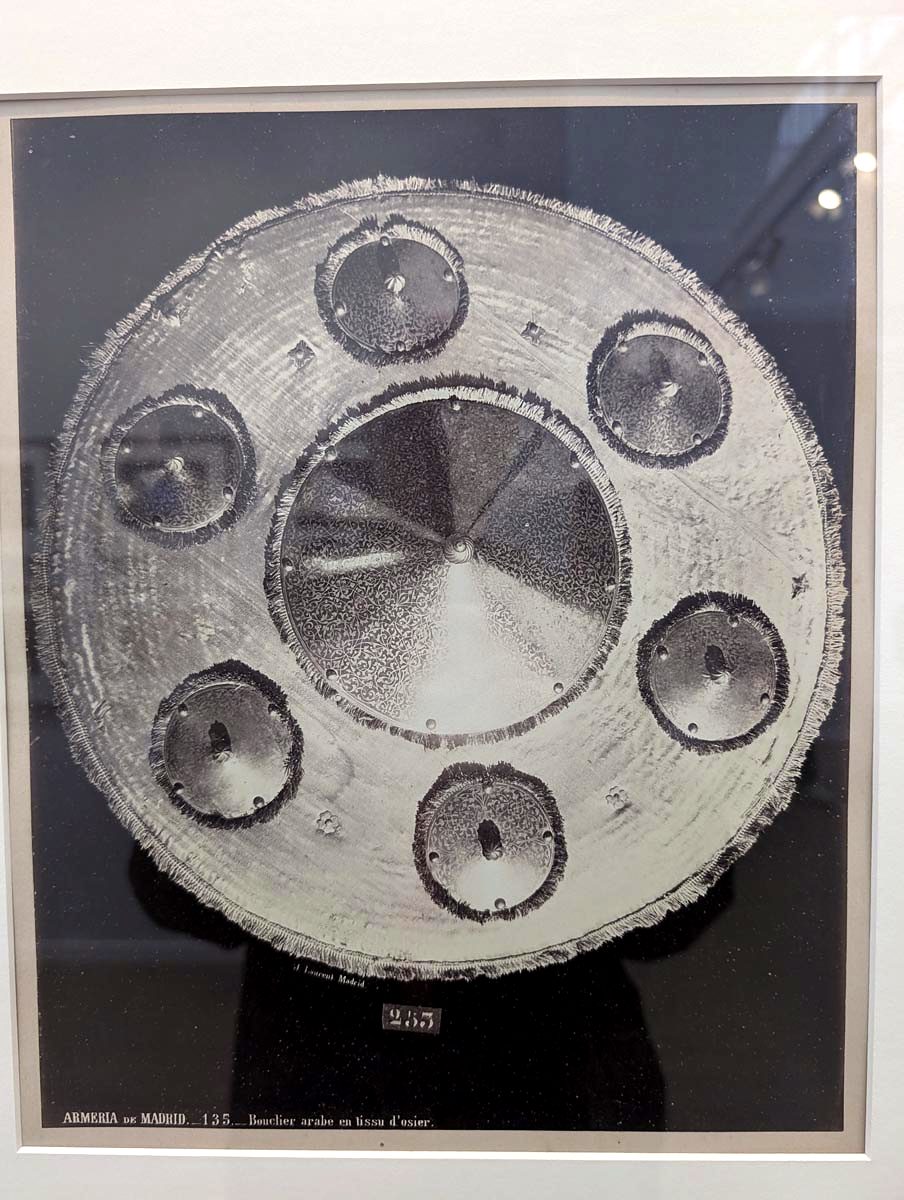
Hans P. Kraus, Jr. brought an amazing collection of early work, such as an 1860s albumen print by Jean Laurent of a circular fringed wicker shield from Madrid’s Royal Armory isolated against deep black, hung near a nineteenth-century sepia seascape of a two-masted brig under heavy clouds by Gustave Le Gray. I always love seeing early work and to think about what it was like for early photographers to choose their subjects.
Galerie Esther Woerdehoff (Paris / Geneva): Sama Alshaibi
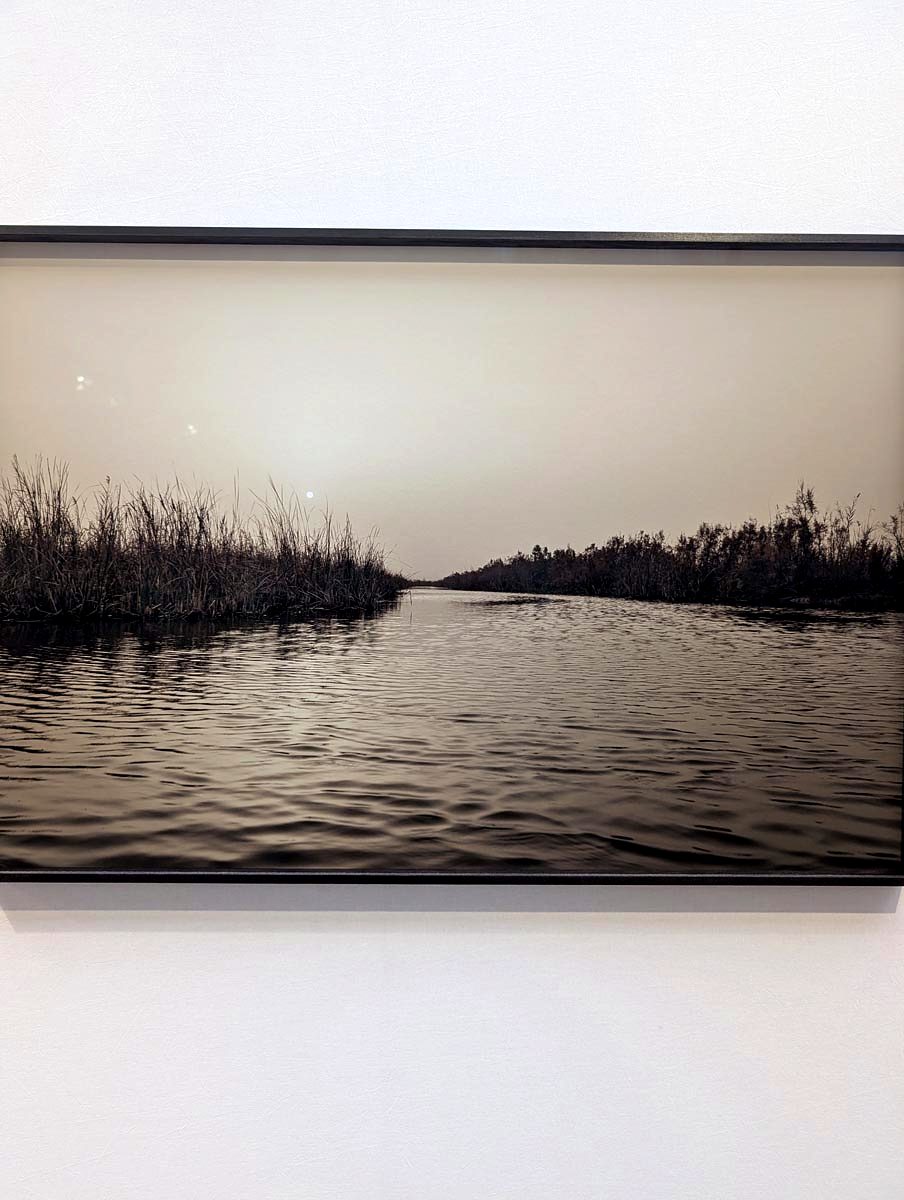
Esther Woerdehoff showed a print by Sama Alshaibi looking low across dark, rippled water between reed banks in the marshes of southern Iraq, an ancient landscape now squeezed by receding water and oil infrastructure.
Camara Oscura Galería de Arte (Madrid): Elina Brotherus
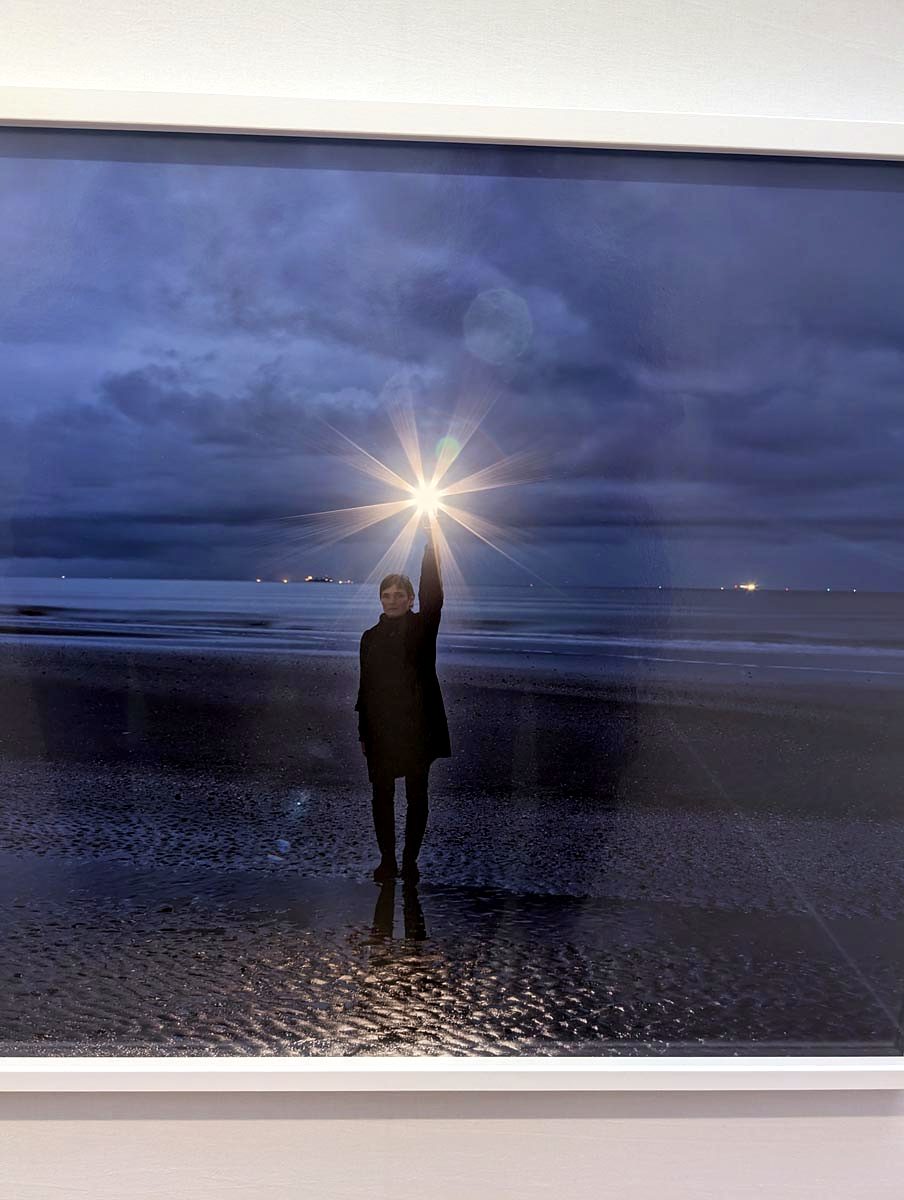
Finnish photographer Elina Brotherus stood alone in a black coat on wet sand at twilight, holding a bright starburst light overhead with ship lights along the horizon.
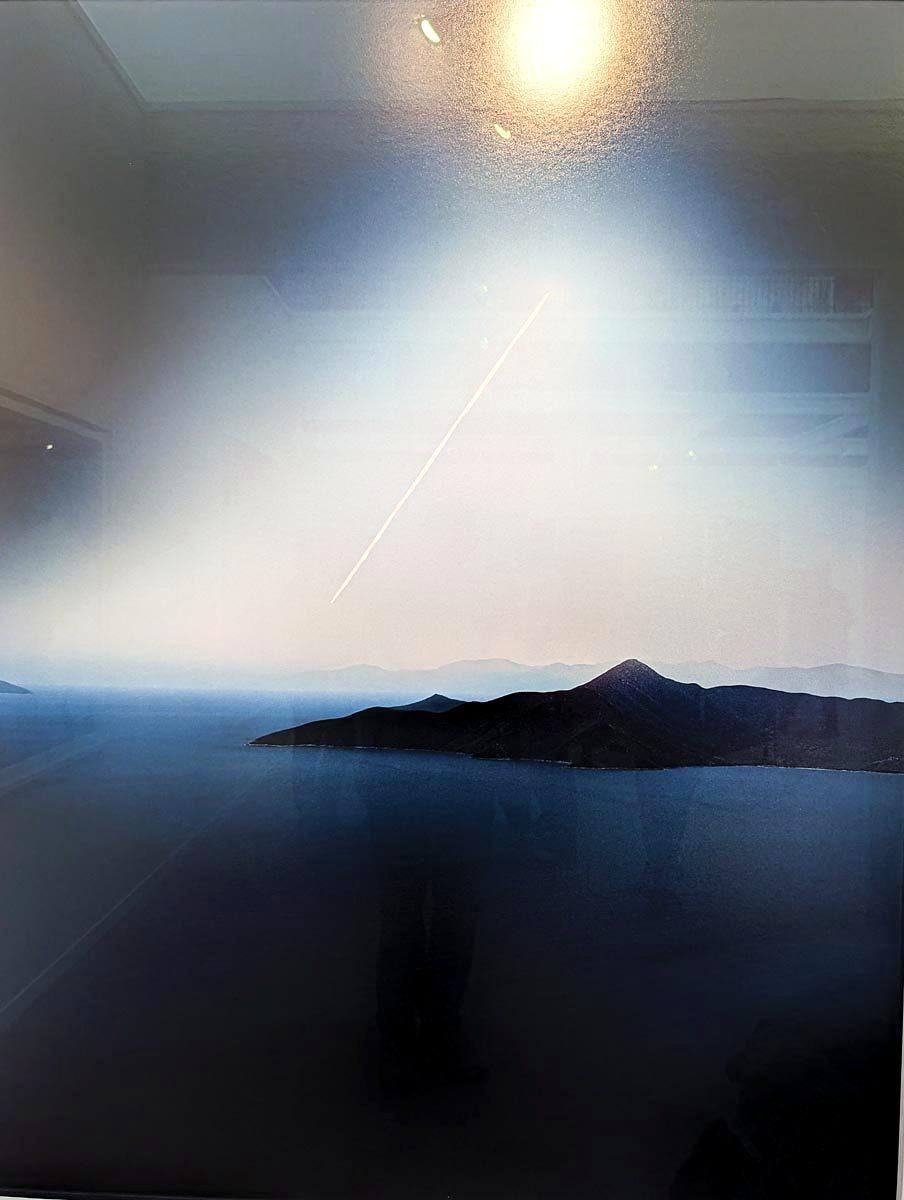
Galerie Bacqueville (Lille / The Hague): David De Beyter
Galerie Bacqueville hung a vertical color landscape by David De Beyter showing a dark coastal headland over deep blue water beneath a thin diagonal streak of white light (the moon, I believe, which looks familiar) cutting across the pale sky. Letting that long-exposure light trail slice across real coastal rock turns a straight landscape into something strange and almost sci-fi.
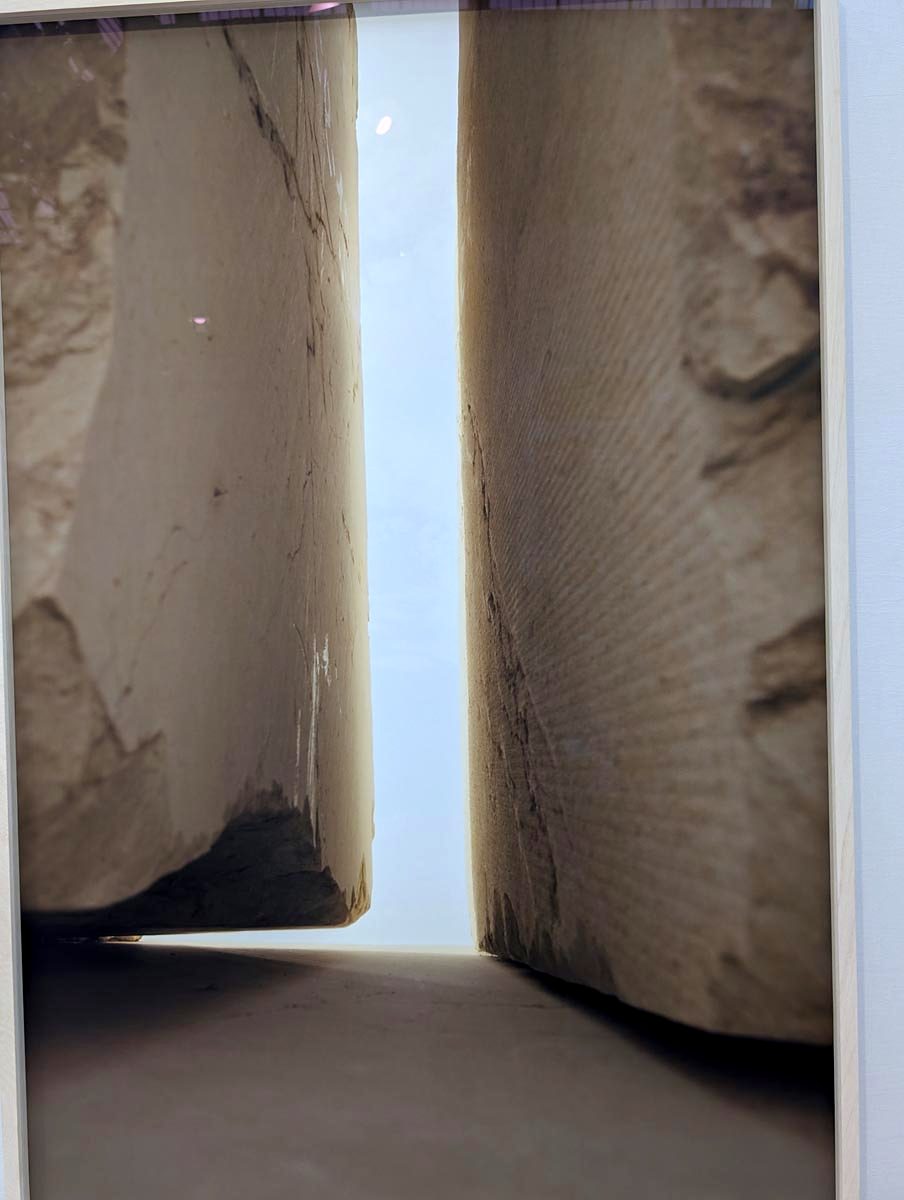
Alarcón Criado (Seville): José Guerrero
Alarcón Criado showed cotton-paper pigment prints by José Guerrero, including a vertical view from a Granada limestone quarry framed tightly between two cut-stone walls with a narrow strip of pale sky down the center.
Galerie Binome (Paris): Philippe Durand
Galerie Binome hung Philippe Durand‘s 2022 photograph from Gour de Tazenat, printed in Japan using 2.5D relief printing on aluminium in a maple shadow box so the sunlit rock rises slightly above the dark water reflections.
Galerie C (Paris / Neuchâtel): Matthieu Gafsou
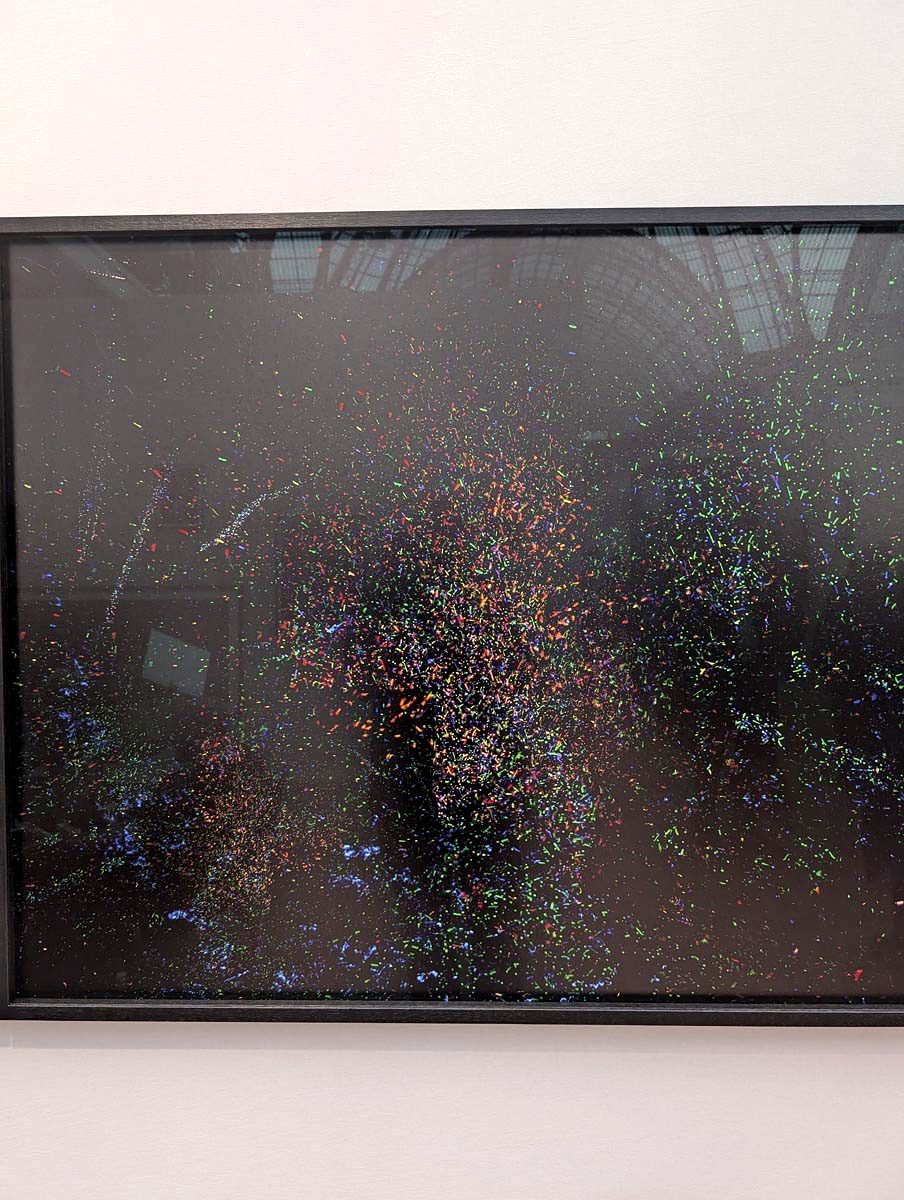
At Booth C50, Matthieu Gafsou‘s metallic-paper prints scattered small neon orange, green, blue, and violet flecks across a pitch-black ground.
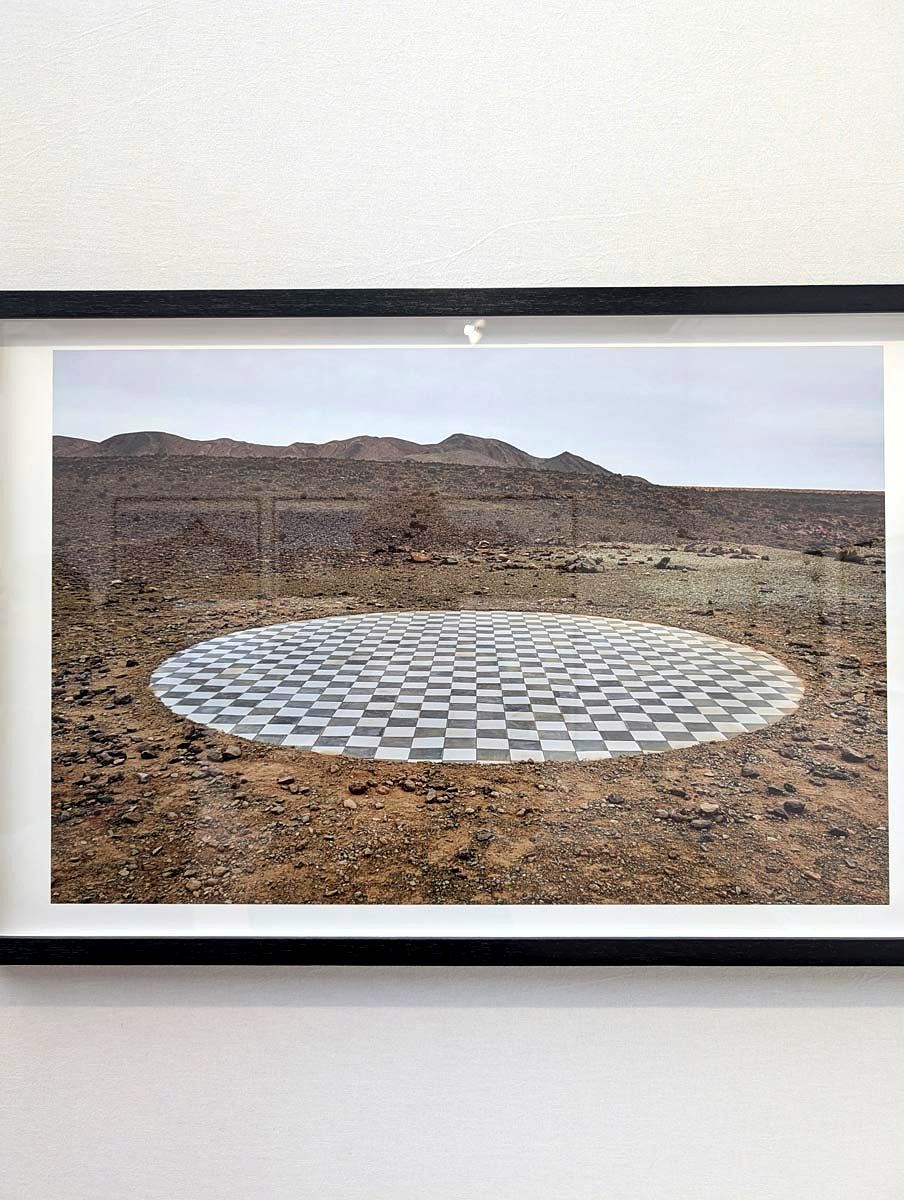
L’Atelier 21 (Casablanca): Hicham Benohoud
A 2018 baryta print by Moroccan artist Hicham Benohoud showed a circular black-and-white checkerboard floor laid flat into rocky desert ground in front of barren hills.
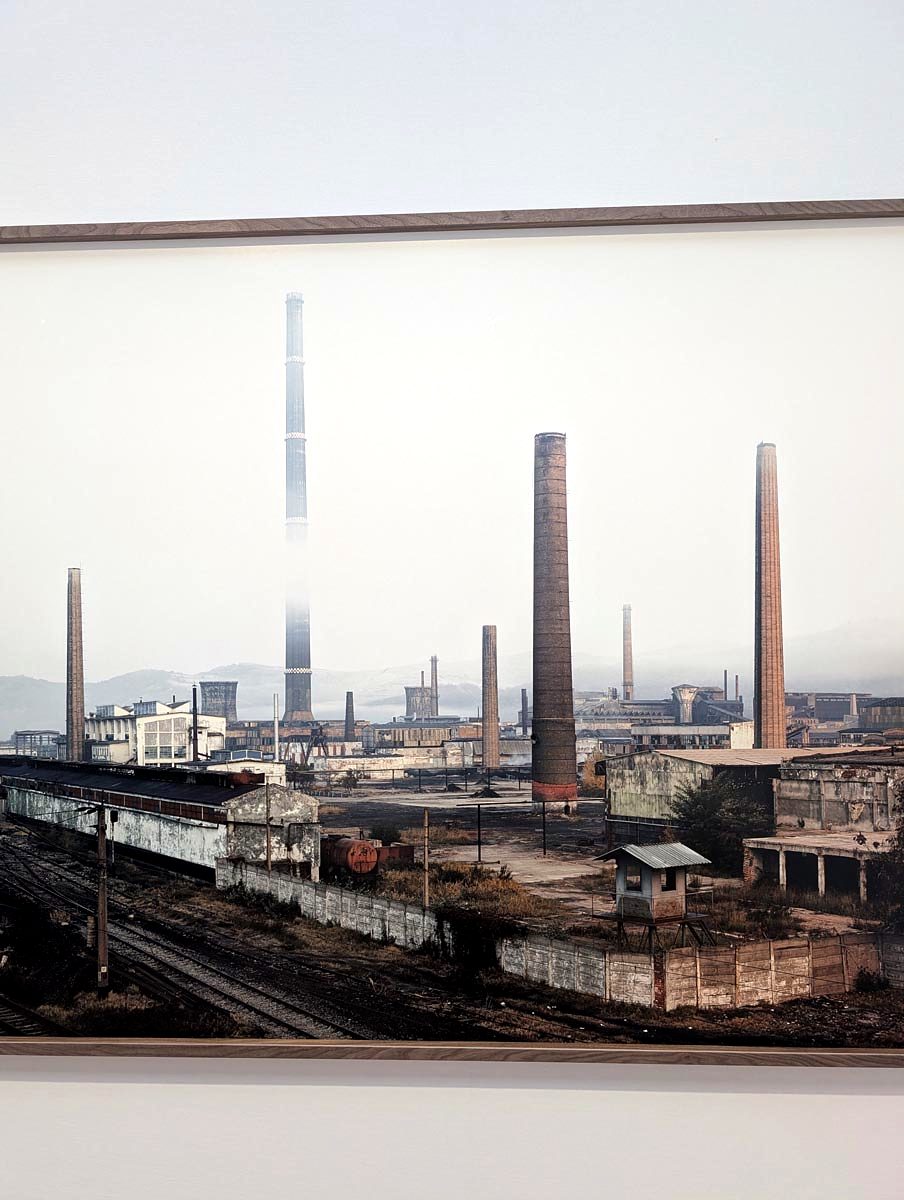
Einspach & Czapolai Fine Art (Budapest): Tamás Dezső
At Booth B20, a large wood-framed color vista looked across empty rail tracks, concrete walls, and tall brick smokestacks where a band of white mist cut cleanly across the tallest central chimney, alongside stacks of Tamás Dezső‘s books on the table. Noticed many red dots.
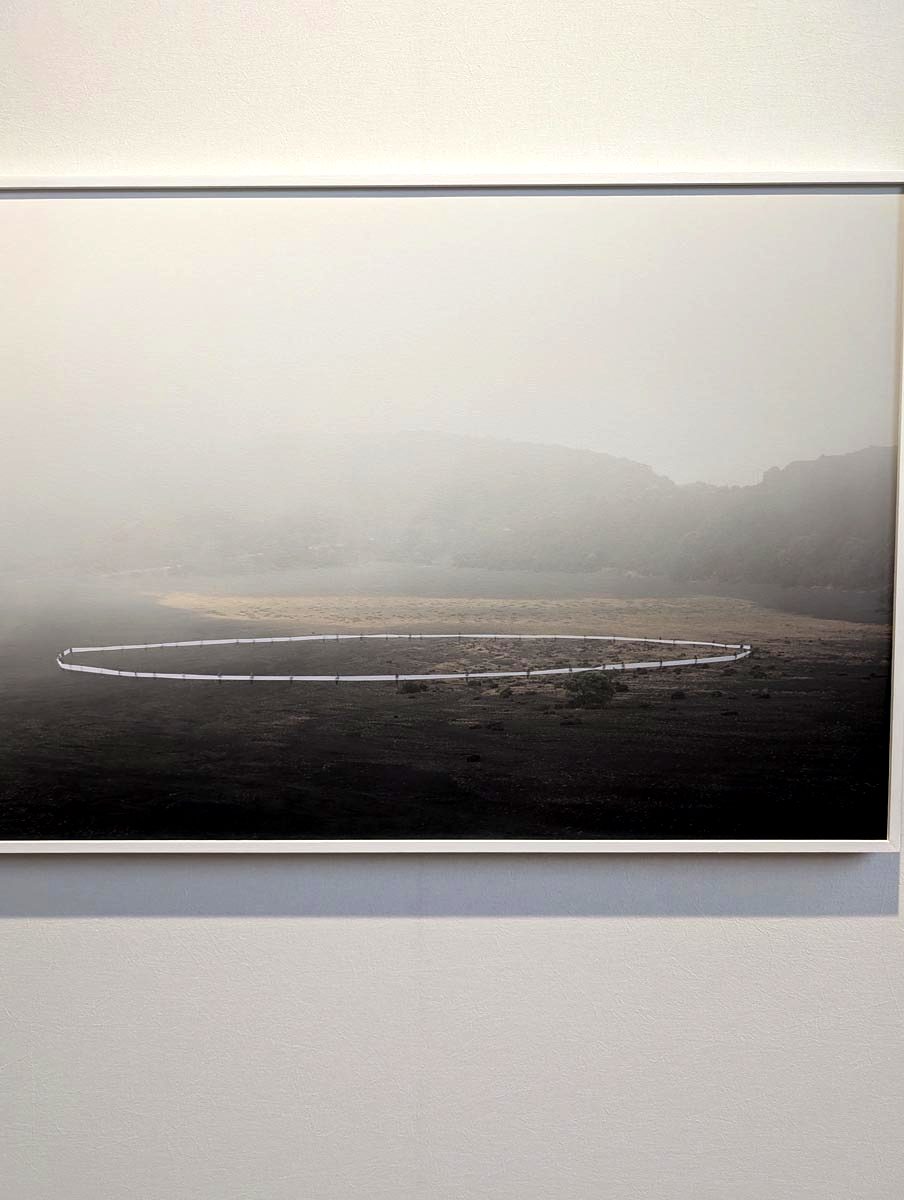
Sorondo Projects (Barcelona): Miguel Braceli
In the Emergence sector, Sorondo Projects showed a horizontal color landscape by Miguel Braceli where a thin white ring sits stretched across dark earth in front of fog-covered hills.
Galerie Anne de Villepoix (Paris): Judit Kele
At Booth A42, Judit Kele‘s I am a work of art revisited her three-day 1979 museum performance in a large 2026 satin color print: Kele sits behind velvet museum ropes in a black dress, fur collar, and fishnets looking calmly into a red purse while a uniformed guard stands behind her.
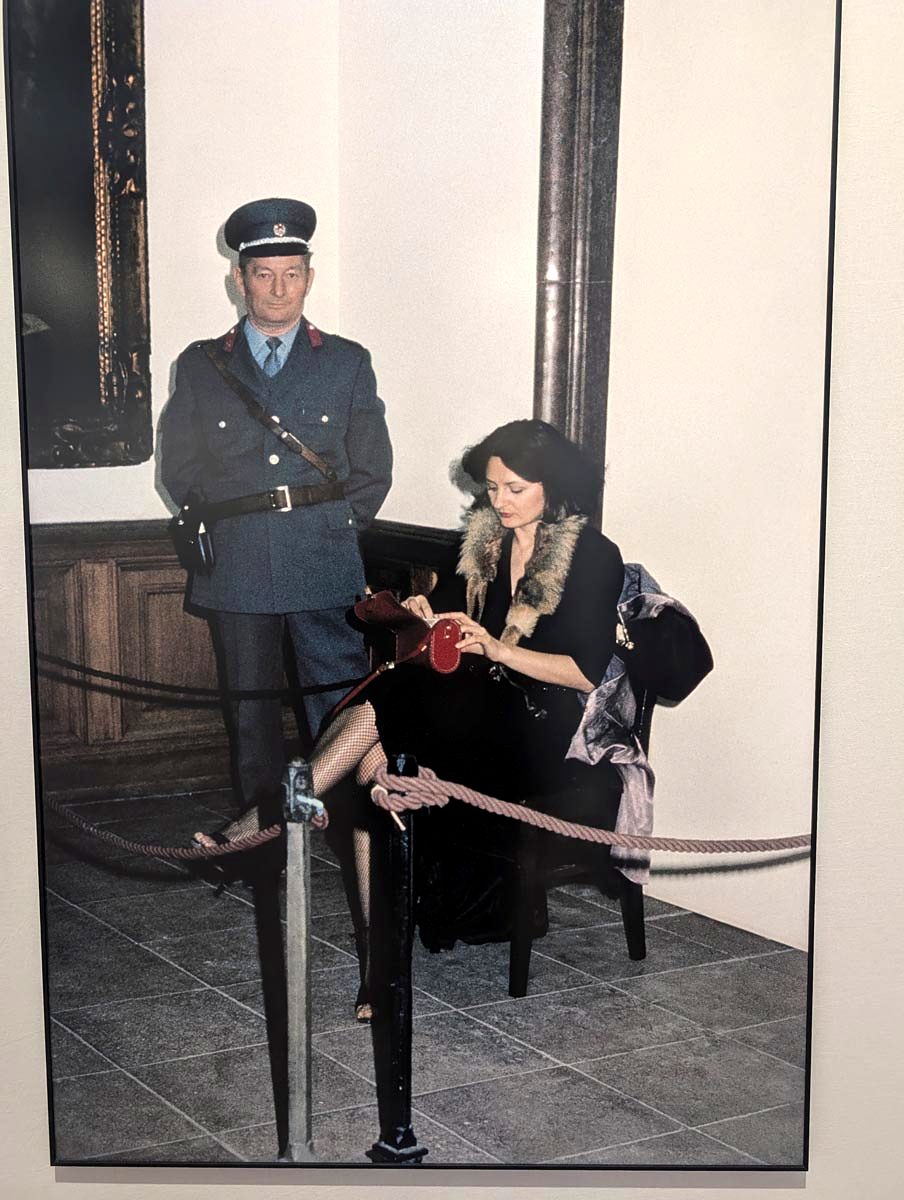
Galerie Sit Down (Paris): Tom Wood
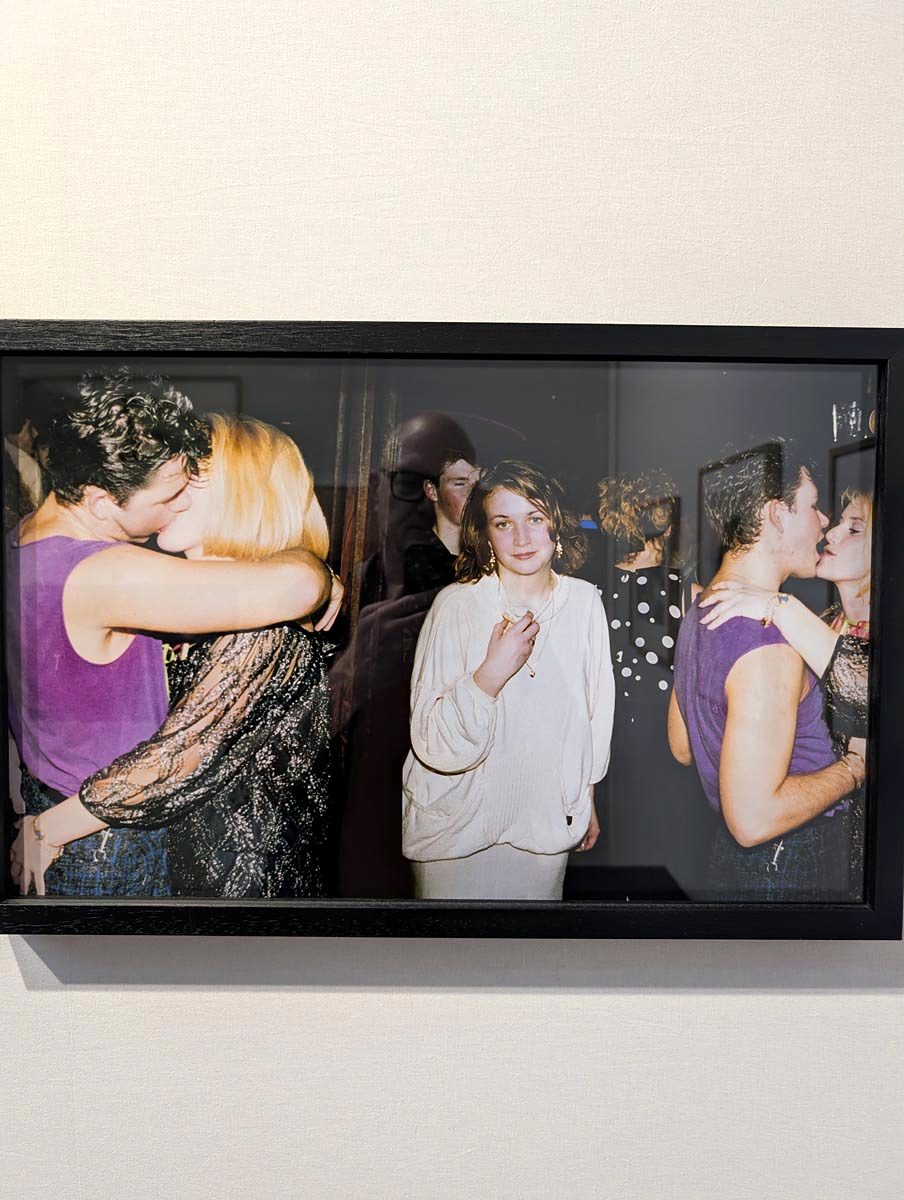
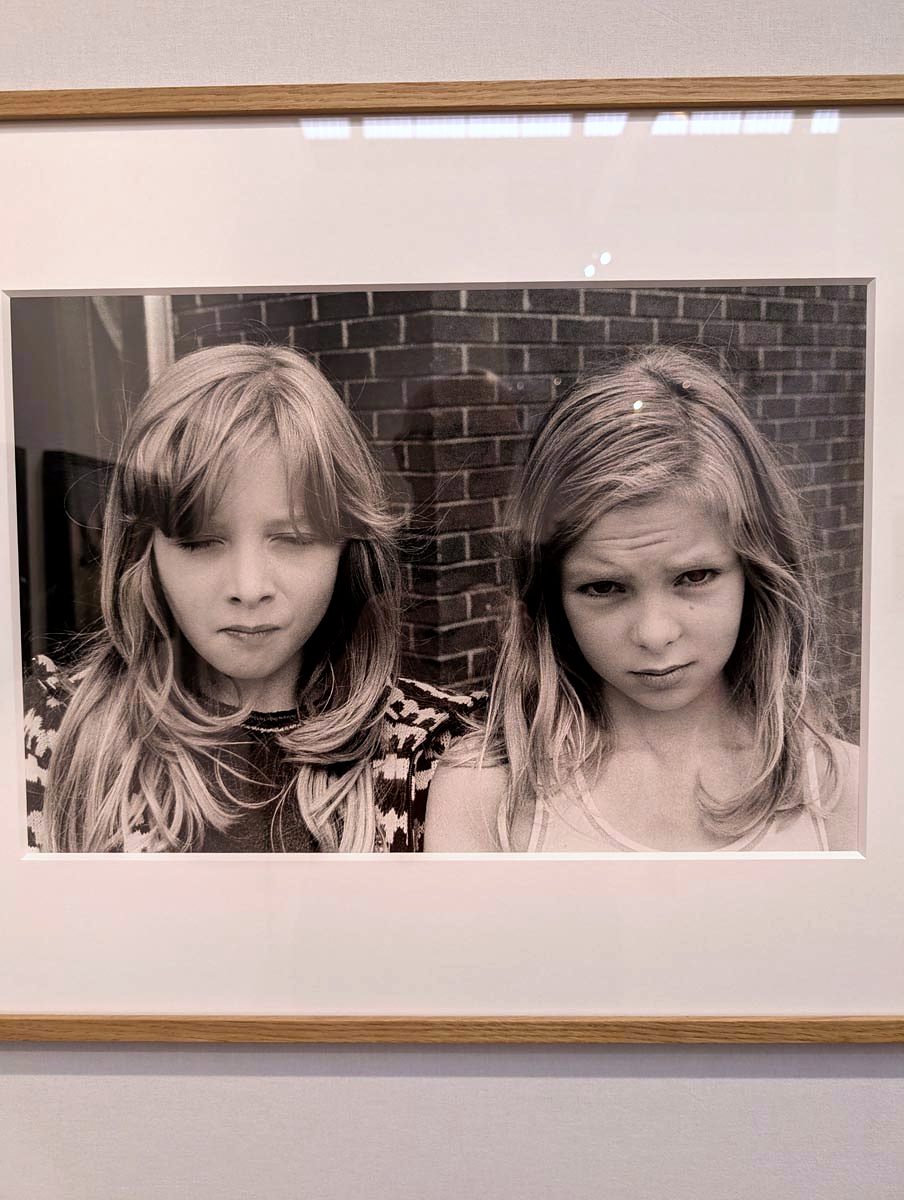
At Booth A51, Sit Down hung two 1975 prints by Tom Wood: a selenium-toned silver double portrait of two young blonde girls before a brick wall, one blinking and one frowning, next to a color nightclub frame centering a calm woman in white between two kissing couples in purple sleeveless tops. His works are undiscovered gems.
Galleria Mazzoli (Modena / Berlin): Stefano Graziani
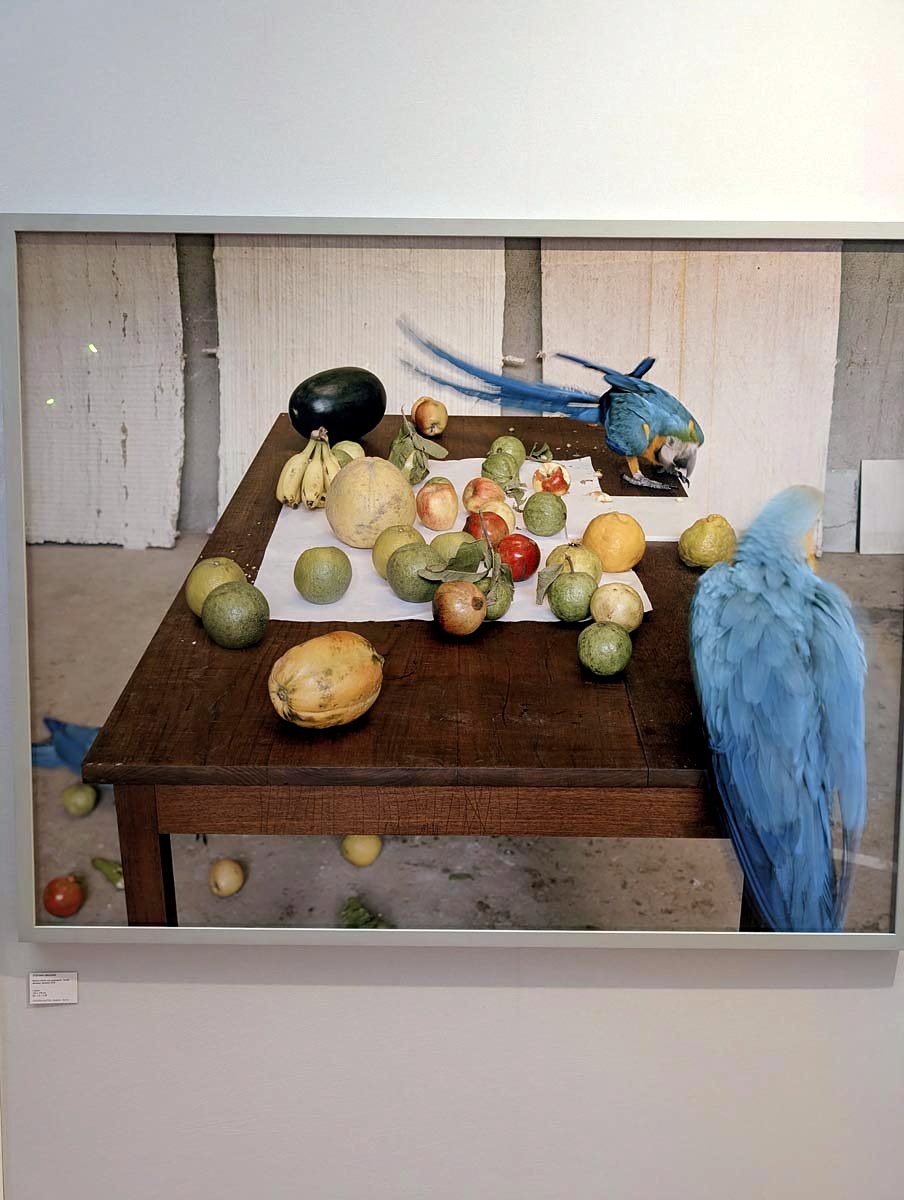
Galleria Mazzoli showed a large 2018 C-print by Stefano Graziani made at Studio Mumbai, with melons, bananas, citrus, squash, and a halved pomegranate arranged across a dark wooden table beside two blue-and-yellow macaws, one blurring its tail feathers mid-reach.
Spot Home Gallery (Naples): Kourtney Roy
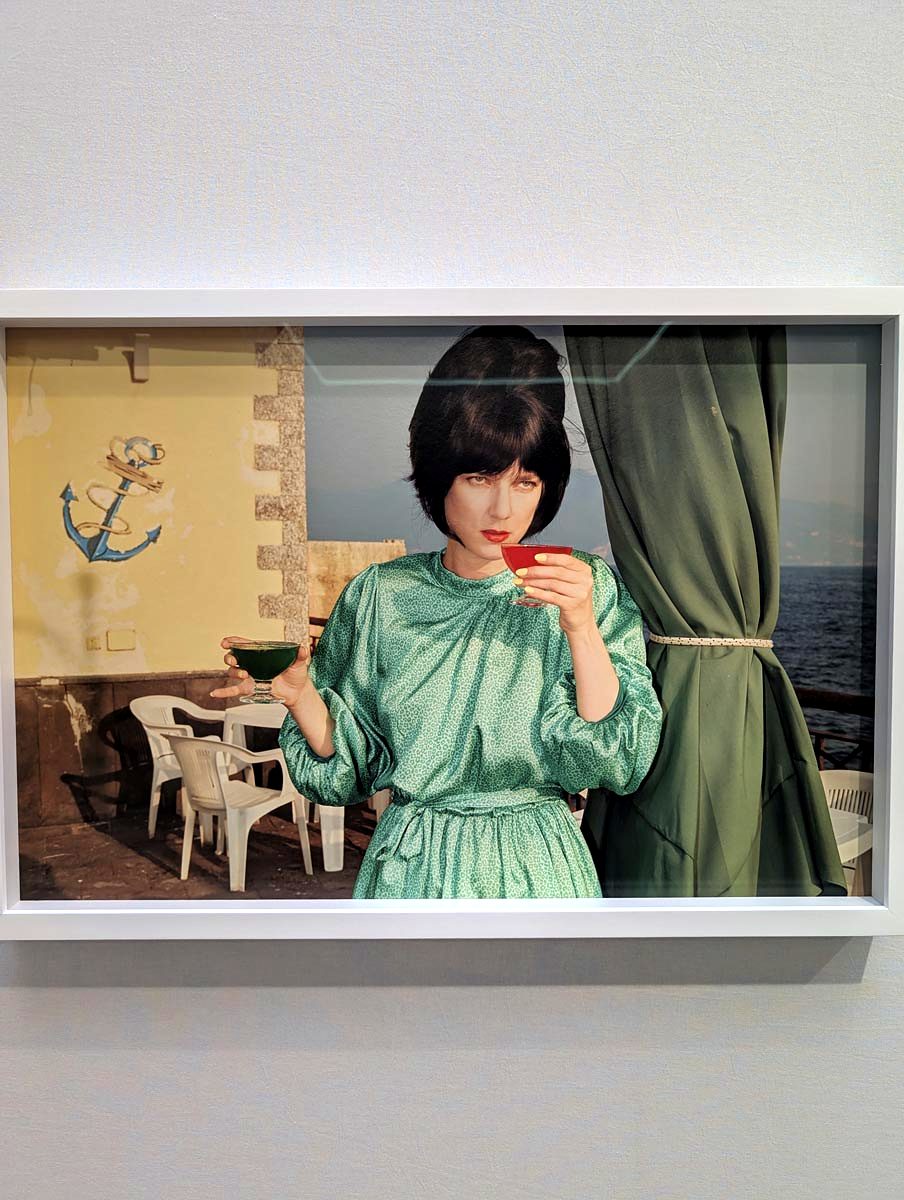
At Booth C04, Spot Home Gallery hung 2025 baryta prints from Kourtney Roy‘s Naples residency, including Roy standing on a sunny coastal terrace in a dark beehive wig and green dress holding up red and green glasses between a painted anchor wall and an olive curtain.
RocioSantaCruz (Barcelona): Ouka Leele
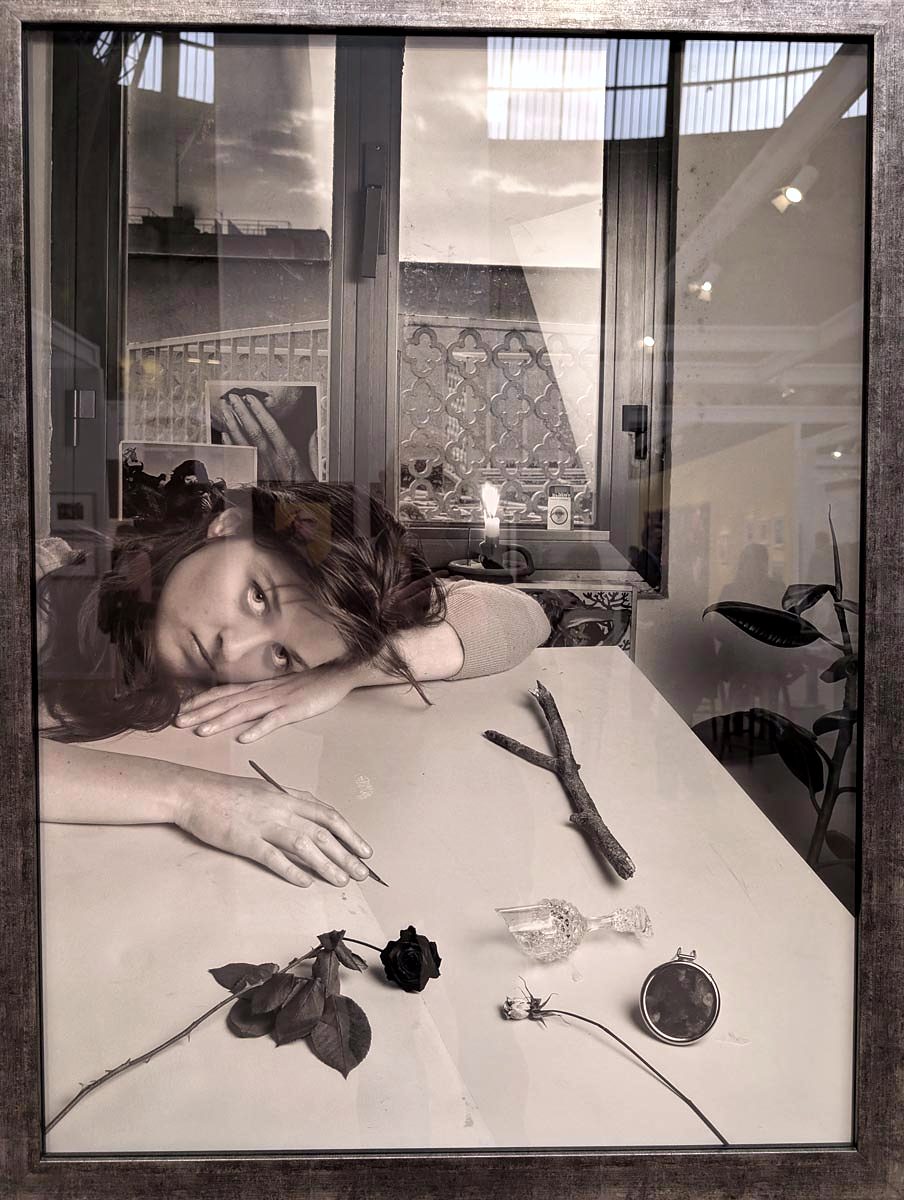
RocioSantaCruz showed a quiet black-and-white 1986 self-portrait by Spanish artist Ouka Leele resting her head sideways on a table before a window candle, holding a small brush beside a dark rose, a forked twig, a tipped crystal glass, and a pocket mirror.
Public Relations (Glasgow / New York): Elle Pérez
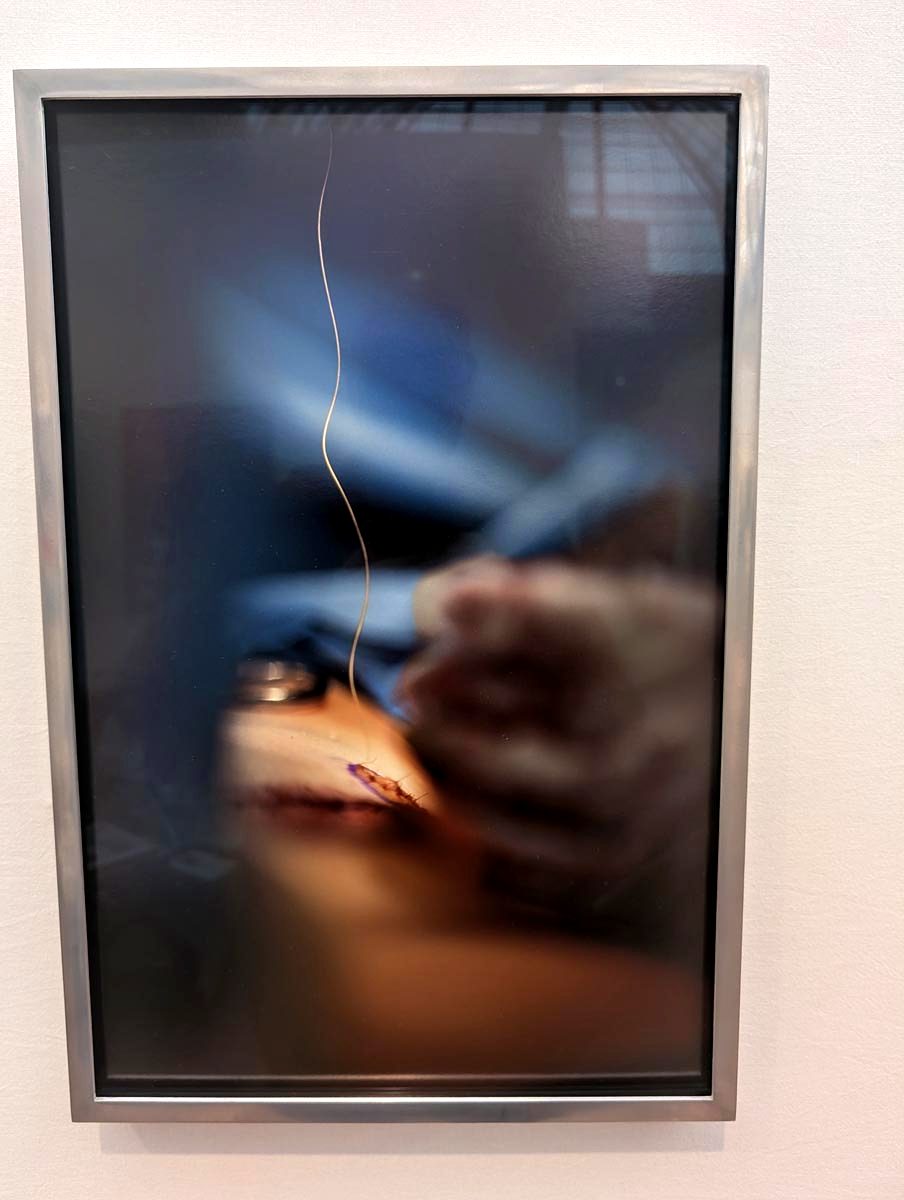
At Booth C28, Public Relations hung ten 2026 Gloss Baryta color prints by Elle Pérez titled strictly with raw .nef camera filenames, including a close-up of an out-of-focus hand pulling a suture thread taut above a marked incision against blue surgical folds.
Southern Guild (Cape Town / Los Angeles): Zanele Muholi
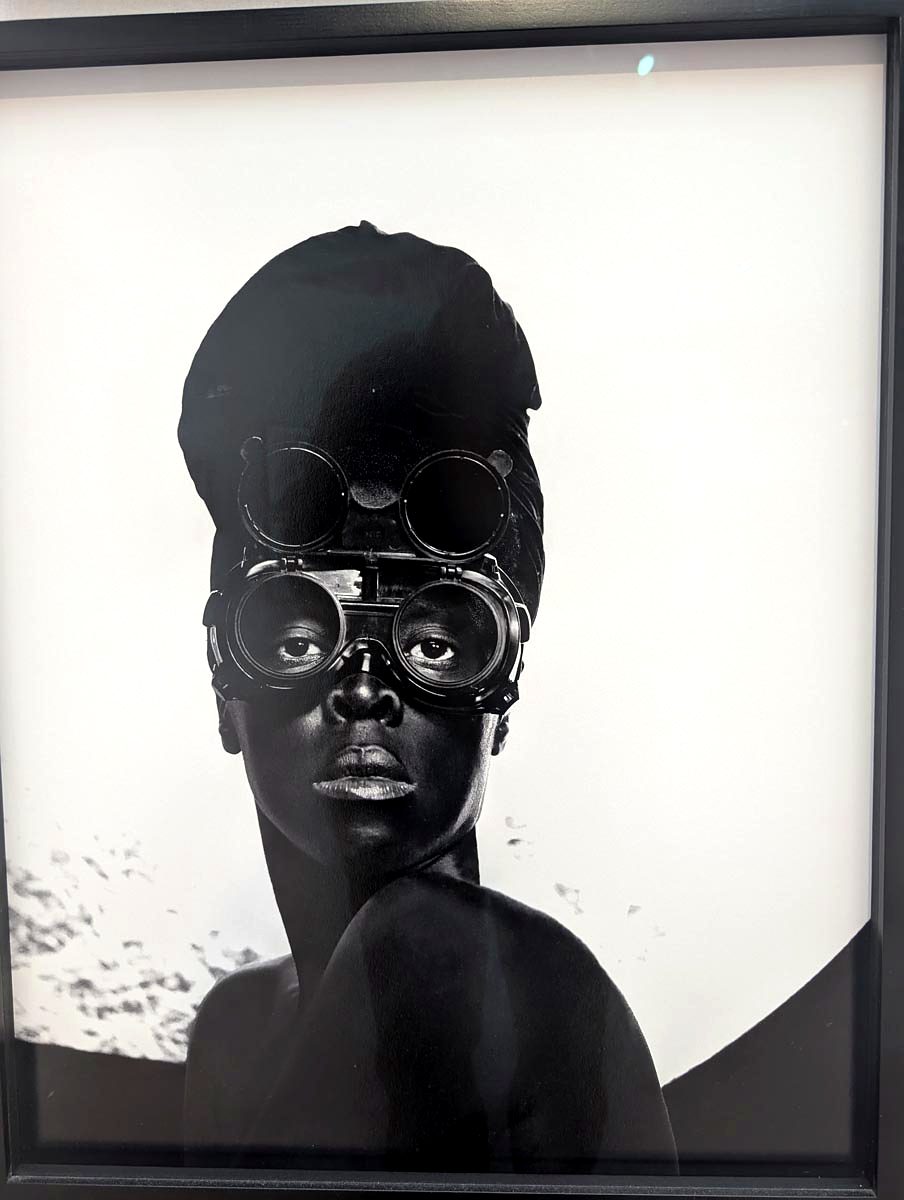
Southern Guild showed black-and-white Baryta portraits from Cape Town by Zanele Muholi, including a figure looking over a bare shoulder in a tall dark headwrap and industrial flip-up goggles against stark white ground.
Raster Gallery (Warsaw): Aneta Grzeszykowska
At Booth D29, Aneta Grzeszykowska‘s 2026 cotton-paper color print looked from across the aisle like a simple portrait of a girl in a beige sweatshirt and pink skirt leaning against a gray horse; up close, the hand she presses into the horse’s flank is deeply veined and elderly.
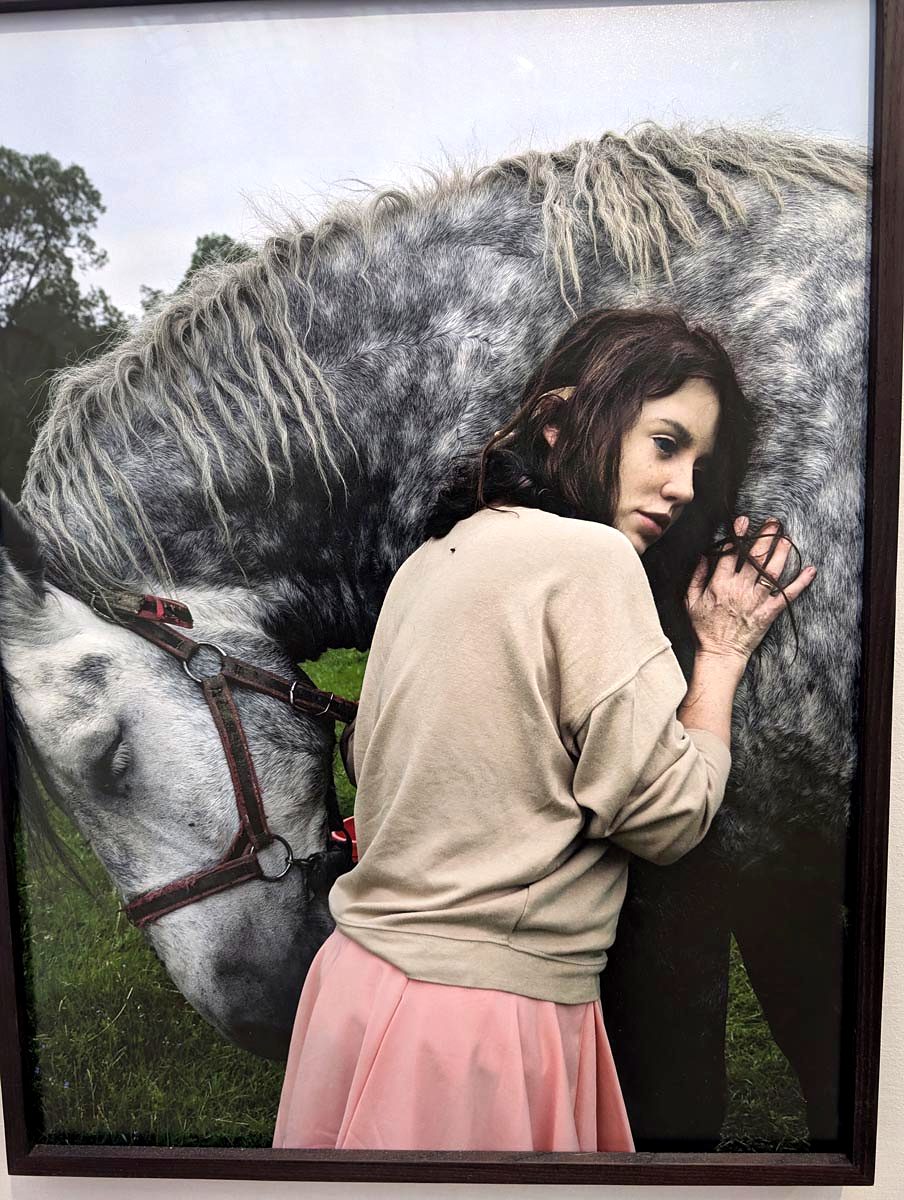
Keteleer Gallery (Antwerp): Paul Kooiker, Philippe Van Snick, Sybren Vanoverberghe
Across the aisle at Booth D26, Keteleer paired works by Paul Kooiker, Philippe Van Snick, and Sybren Vanoverberghe, including a close monochrome portrait of a woman’s face fractured behind a spiderweb of cracked glass.
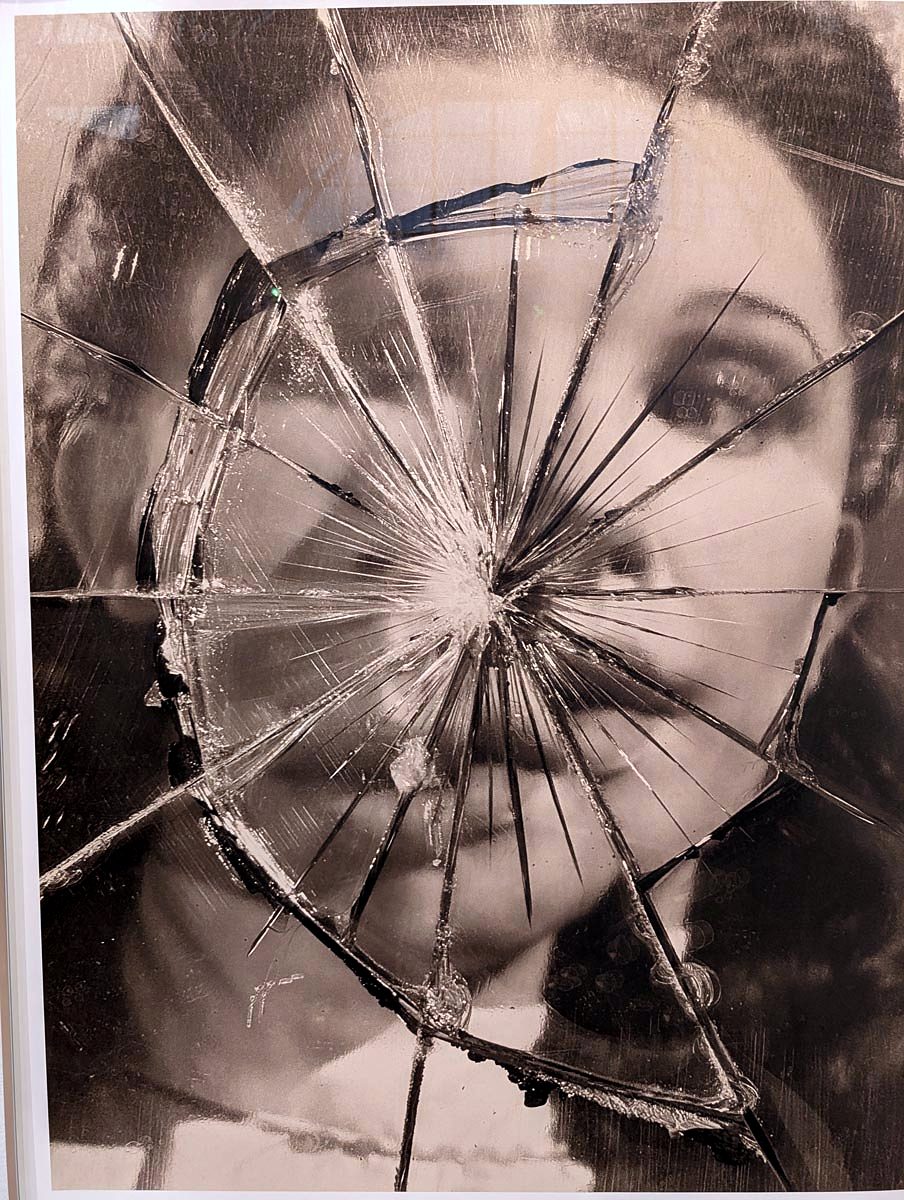
Kaunas Photography Gallery (Kaunas): Vitas Luckus
A wall at Kaunas Photography Gallery dedicated to Lithuanian experimenter Vitas Luckus (1943-1987) included a warm-toned square print of a boy in a felt hat holding the patterned wings of a hawk wide open above flames under wooden rafters. These were wild, and a fantastic discovery.
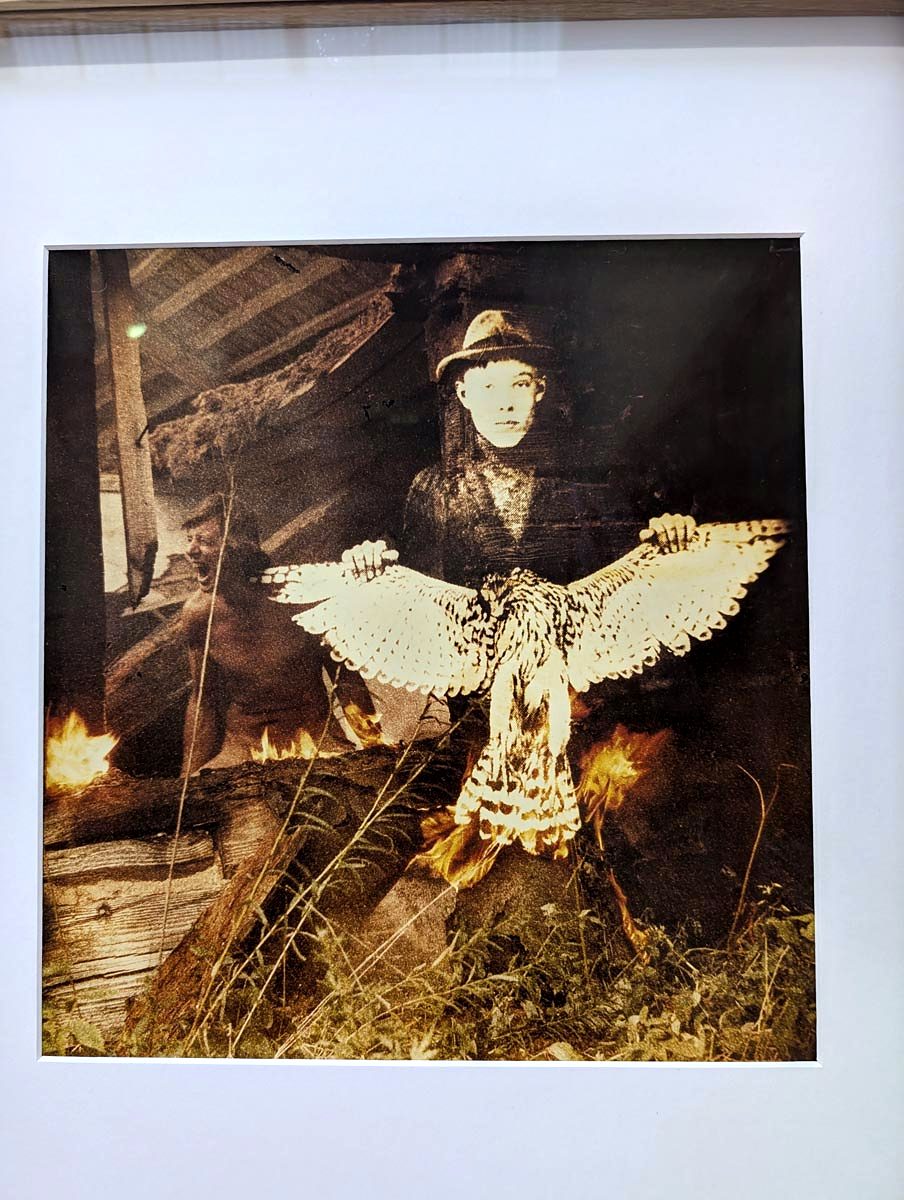
Momentum Fine Art (Dublin / Miami): Shane Lynam
At Booth D17, Momentum Fine Art hung color architectural landscapes from Irish photographer Shane Lynam‘s Paradis Europa series, turning sun-washed European leisure spaces and spare concrete geometry into quiet, slightly off-kilter compositions.
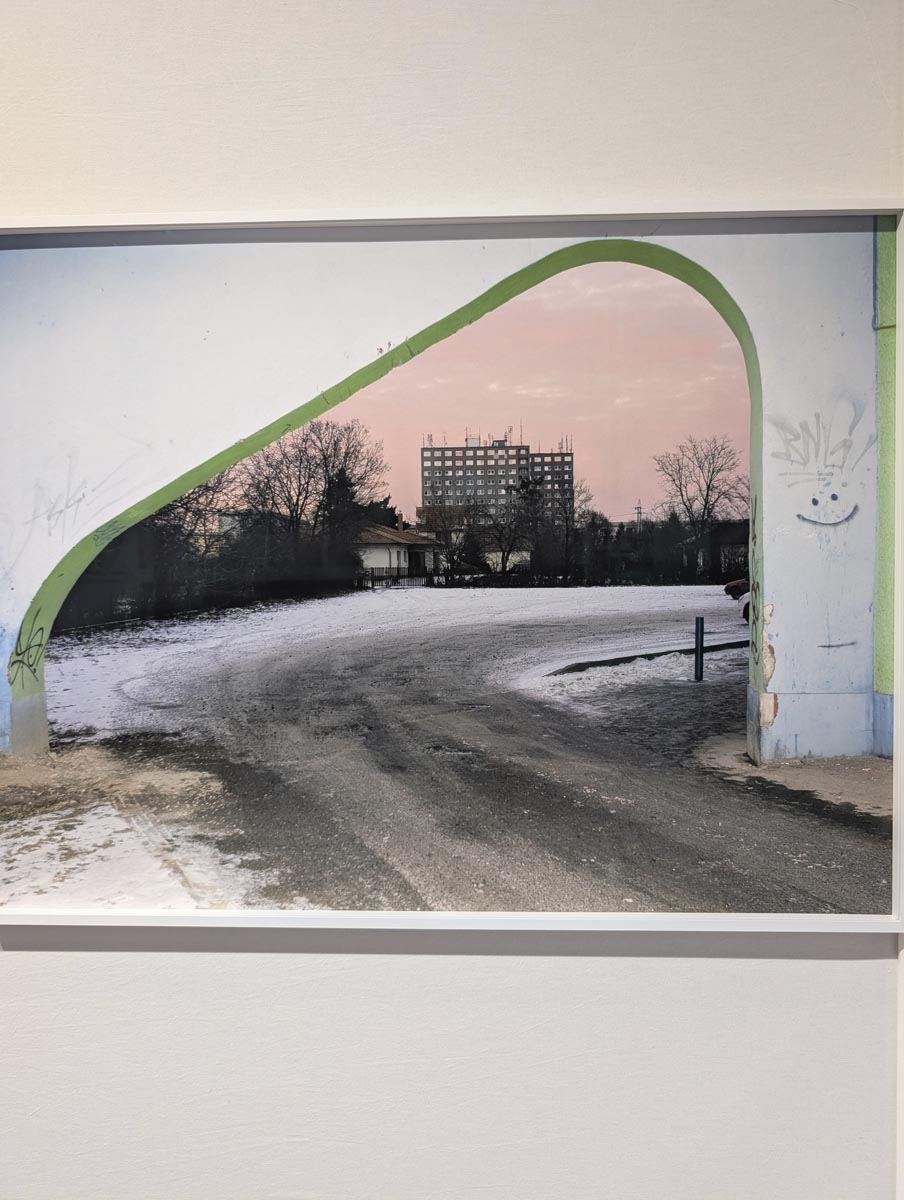
Rocket Gallery (London): Martin Parr
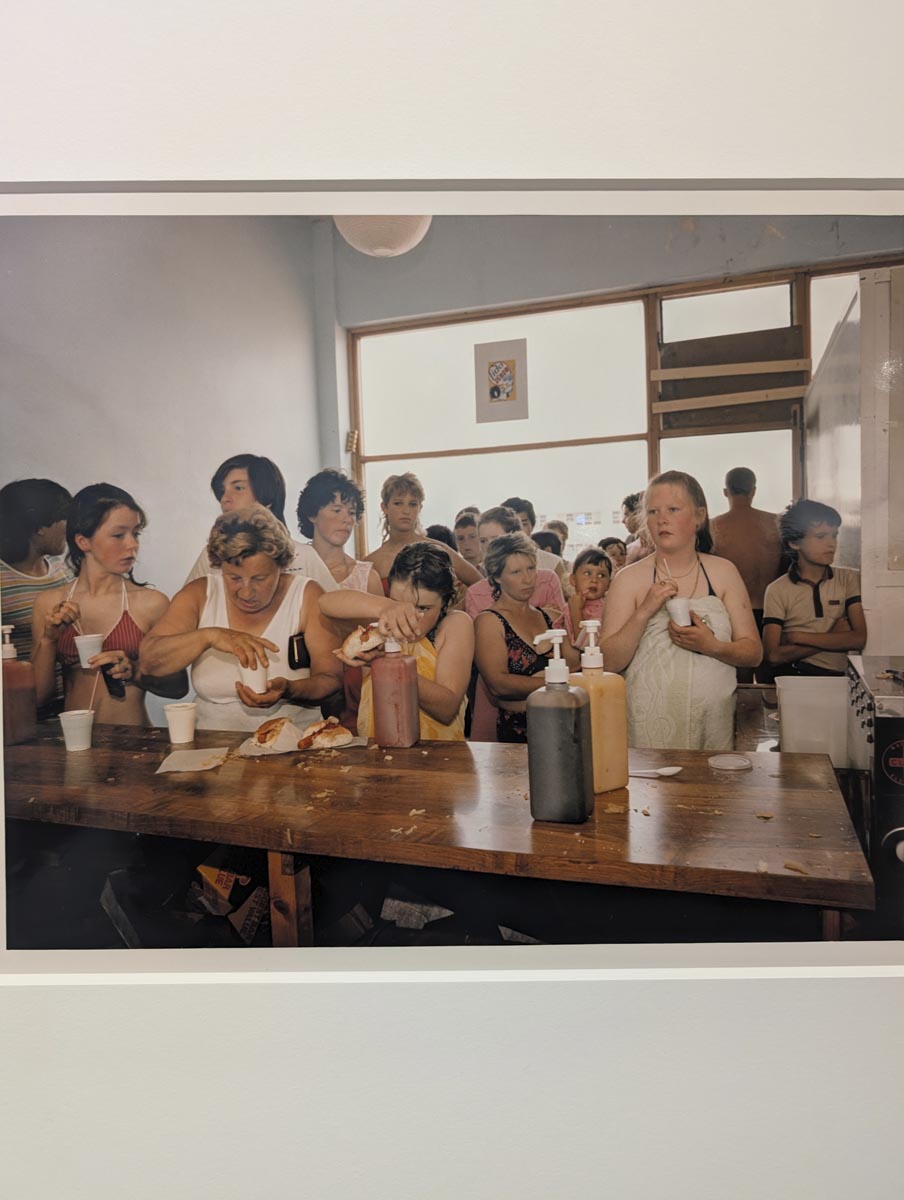
Rocket Gallery showed lifetime vintage 1980s C-prints from Martin Parr‘s The Last Resort, including his 1984 New Brighton hot-dog stand photograph with beachgoers pressing tight around the counter. I still remember being blown away the first time I ever saw that series, and seeing lifetime prints from 1986 up close, with all that harsh flash and saturated seaside color intact, held every bit of its original jolt.
M77 Gallery (Milan): William Klein
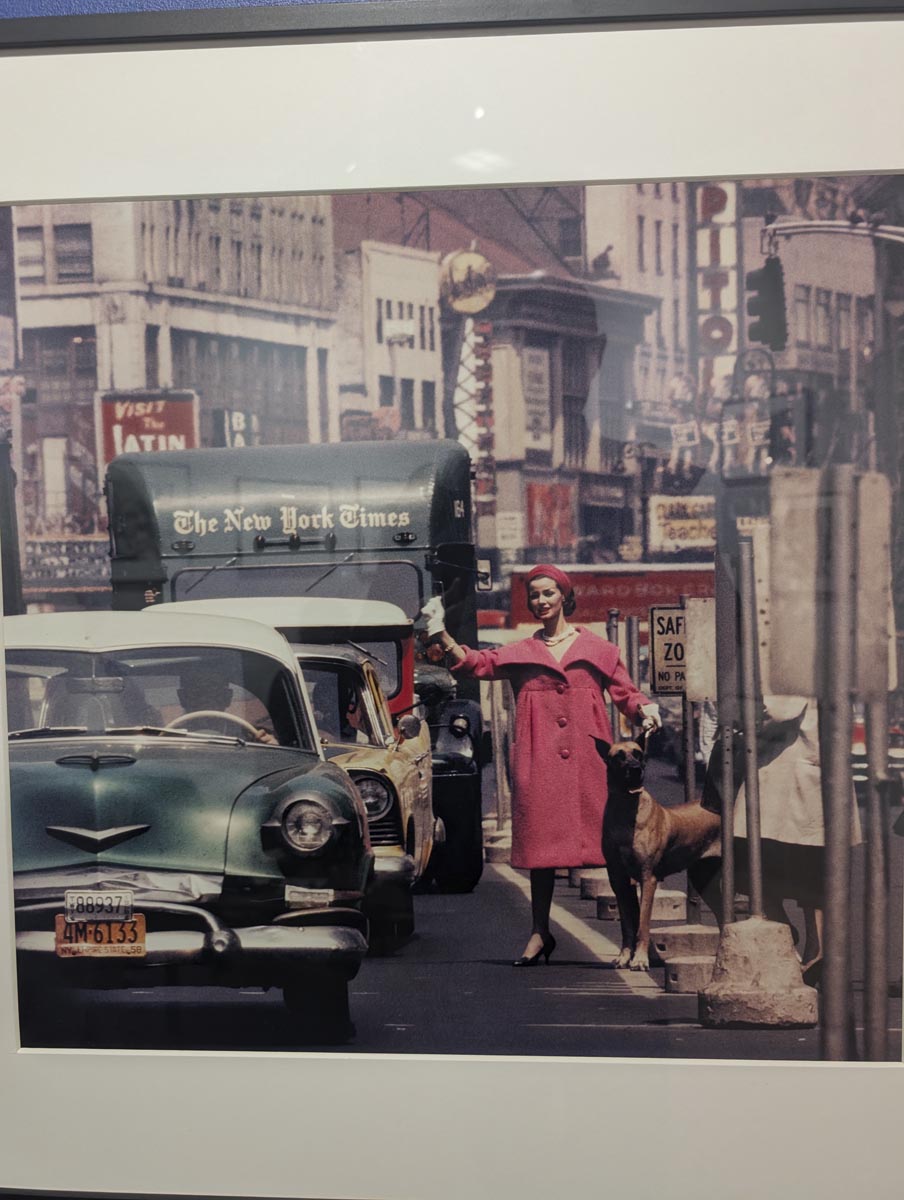
M77 Gallery hung William Klein‘s 1958 New York Vogue street fashion photograph of Dolores in a bright pink coat, printed in dye transfer. The color in that print was superb. That electric pink coat cutting right through the blurred New York street traffic had a physical depth and richness you simply never get on a screen.
Galerie Julian Sander (Cologne): Alexander Rodchenko, Lisette Model, Jaroslav Rössler
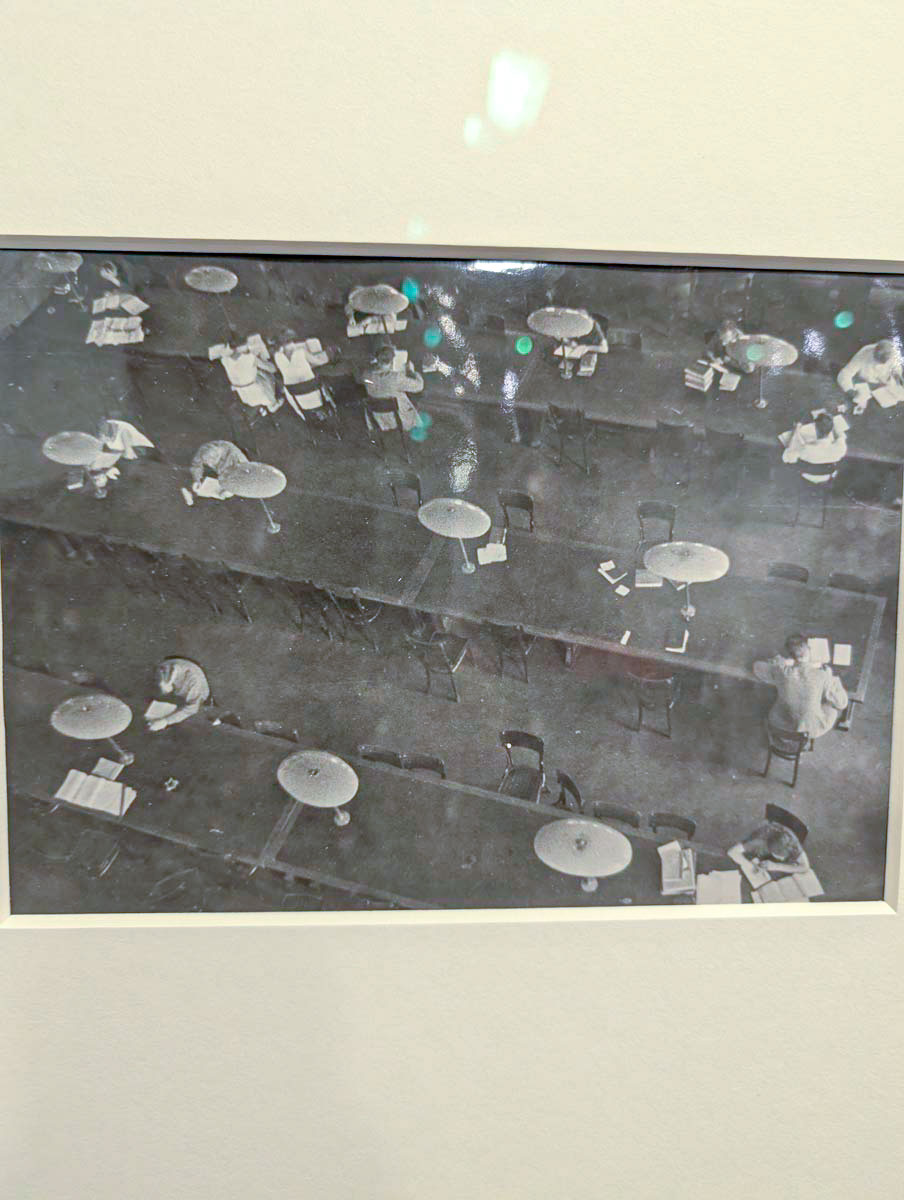
Cologne’s Galerie Julian Sander brought a tight modernist wall that included Alexander Rodchenko alongside Lisette Model and Jaroslav Rössler. Rodchenko’s tilted camera angle and hard graphic shadow lines still looked as sharp and off-kilter as anything shot this year.
Akio Nagasawa Gallery (Tokyo): Daido Moriyama
Running across Daido Moriyama‘s gritty, high-contrast black-and-white print at Tokyo’s Akio Nagasawa cut right through the cleaner, high-resolution walls nearby, letting heavy grain and deep shadow do all the work.
Collection of the Centre Pompidou (Grand Palais): Sam Contis, Cindy Sherman
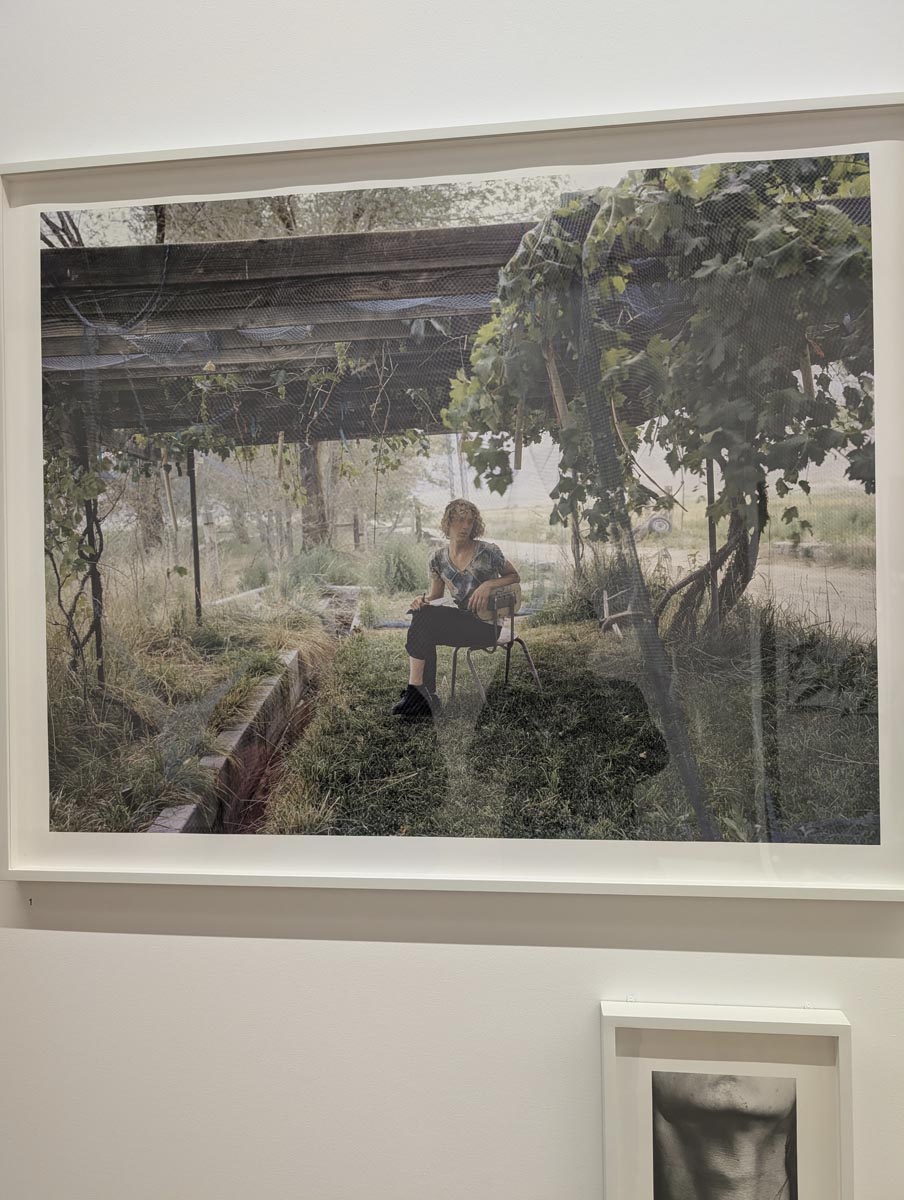
Inside the Centre Pompidou‘s curated presentation at the fair, two prints from different decades stood out. Sam Contis‘s 2014 pigment print Arbor, from her Deep Springs series in the California desert, handled scrub terrain and physical gesture quietly without leaning on standard Western landscape tropes. Nearby, Cindy Sherman‘s 1981 horizontal color print Untitled #95 used damp hair, a flat stare, and wide cinema framing to suggest an entire movie before and after the shutter clicked.
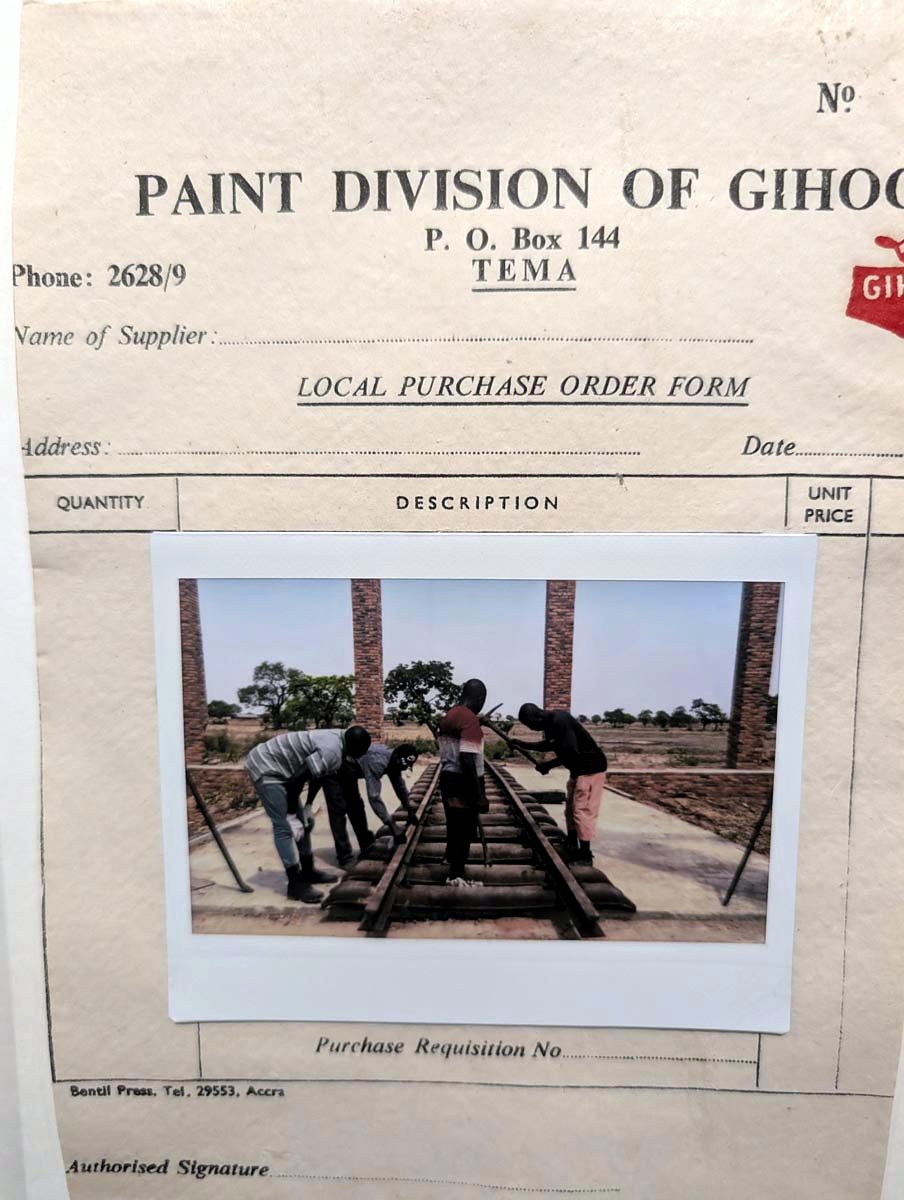
Ibrahim Mahama: Jenayili Polaroids (Grand Palais)
After seeing Ibrahim Mahama‘s large-scale exhibition Le Temps des récoltes across town at Fondation Cartier, it was a surprise to run into a compact series of Polaroids at the fair that compressed his focus on labor, material surface, and place down to handheld scale.
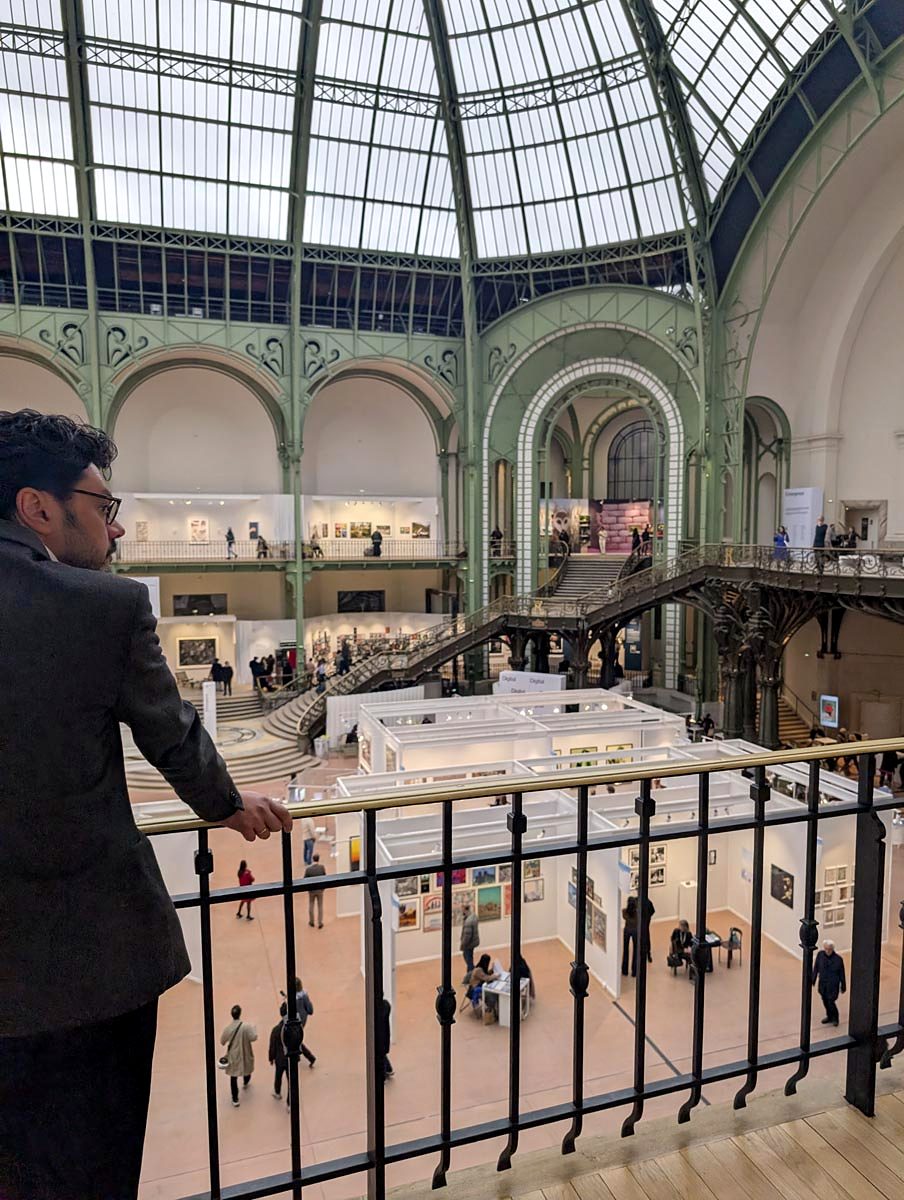
Centre national des arts plastiques (CNAP) — FIX/DEV (Grand Palais Balcony): Patrick Bailly-Maître-Grand, Aurora Király, Isabelle Le Minh, Michel Campeau, Lara Tabet
Up on the Grand Palais balcony, CNAP‘s five-artist wall FIX/DEV marked two hundred years of photography by tracing how physical chemistry gave way to digital tools. What caught me first was Patrick Bailly-Maître-Grand‘s 1989 four-panel mirrored piece Homage to Daguerre, an augmented reproduction of Daguerre’s 1838 Boulevard du Temple daguerreotype that reflected the iron-and-glass roof and Art Nouveau staircase directly over nineteenth-century Paris rooftops. Alongside works on viewfinders and camera shutters by Aurora Király and Isabelle Le Minh, the wall paired Michel Campeau‘s photographs of abandoned analog darkrooms with bacterial prints by Lara Tabet.
Barnabé Moinard & Serge Plantureux (Paris): Booth D50 Cabinet Works
Across from Booth D51, Barnabé Moinard and Serge Plantureux painted their Booth D50 walls a deep cabinet red, hanging small vintage photographs in wide dark and wood frames that stood apart from the white-cube booths down the aisle.
La Galerie Rouge (Paris): Rosalind Fox Solomon & Booth A43 Selections
Across the Sector A aisle from Anne de Villepoix, Paris space La Galerie Rouge paired vintage black-and-white work including Rosalind Fox Solomon with grid-hung color studies along its outer wall.
Walking the long aisles from Sector A through Sector D also meant passing booths from Parrotta Contemporary Art (Cologne and Bonn), Hangar (Brussels), Gallery Fifty One (Antwerp), CLAIRbyKahn (Zurich), MEM (Tokyo), England & Co (London), Cob Gallery (London), Bendana | Pinel Art Contemporain (Paris), and NIKA Project Space (Dubai and Paris), more booths than any one pair of eyes can take in properly even over several days under the glass roof.
Why Photography in Paris Feels Wide Awake Right Now
Having walked AIPAD at the Park Avenue Armory in New York in April, the contrast in Paris hit hard. Paris Photo felt ten times more interesting, diverse, daring, and international. With nearly 250 galleries and publishers from 38 countries gathered under the glass roof of the Grand Palais, including 80 exhibitors new to the fair, you could turn a corner from 1850s Gustave Le Gray seascapes or tiny postwar Polish darkroom prints by Marek Piasecki straight into Greenland pictured from the inside by Inuuteq Storch, Colombian school walls overtaken by jungle, or Joanne Dugan‘s lensed solargrams. At AIPAD, you walk one polite booth, step back out onto Park Avenue, and the fair disappears. In Paris, photography takes over the whole city, spilling from Palais de Tokyo late at night into Rue de Seine galleries, museum rotundas, and the Polycopies boat on the river.
Part of why photography in Paris is booming, I think, comes down to a strange reversal between Europe and the United States. New York and much of the American art world have drifted into a post-photography mindset. Caught between mega-gallery painting markets, perhaps on the decline, on one side and an endless stream of synthetic images on the other, fine art photography in the US and New York seems lost, hidden, and unimportant. Maybe American shows cull nostalgia. France marked two hundred years of photography’s invention, and Paris seems to treat the medium as part of its core culture alongside cinema and literature, backed by serious public collections and everyday viewers who actually show up. Being steeped in tradition ironically turns out not to make things conservative at all, but might be a place to take risks.
Also, the photobook seems vibrant and diverse. Treating the book as a primary artwork keeps the doors open to younger, stranger, and international voices that do not depend on selling prints. It also breaks open what we get used to seeing, putting 1970s Abidjan photo-novels by Paul Kodjo, Lithuanian conceptual work by Vitas Luckus, southern Iraqi marshes, and small Nordic presses on equal footing.
Spending hours in near-complete darkness making long-exposure night landscapes in Greenland for my ongoing series churn shapes what I look for on a wall: tonal depth in the shadows, physical print presence, and photographs that reward slow, sustained looking rather than a two-second scroll. Walking the Grand Palais aisles and Left Bank openings all week made clear that Paris remains the sharpest, most engaged testing ground for the printed photograph today.
Paris Photo 2026 Grand Palais Galleries Directory
Stuttgart (Booth L01)Barbara Probst (through the looking glass), Andrea Grützner (Erbgericht)hartmann-books.com
DamianiBologna (Booth L03)Todd Webb (Paris: A Love Story 1948-1952), Walter Chandoha (Family Cats)damianibooks.comLe Bec en l’air & Witty BooksMarseille / Turin (Booths L05 & L09)Martine Voyeux (Al di là), Krisztián Éder (Light Exercises for the Spirit), Li Hui (The Crack)becair.com
About the Photographer
Steve Giovinco is a New York–based fine art photographer (MFA, Yale University School of Art) whose work is held in the permanent collections of the Museum of Fine Arts, Houston, the Brooklyn Museum, and the Yale University Art Gallery. Supported by two grants from the American-Scandinavian Foundation, his ongoing project and photobook maquette, churn, captures multi-hour nocturnal landscapes across transforming terrain in Greenland.