Are collectors aging out? Did you know MoMA sold photos?
Doing anything for 50 years is an achievement, so taking a train to Philadelphia seemed an easy decision to attend The Photo Review 50th Anniversary Symposium for Stephen Perloff.
It highlights his 50-year legacy of running The Photo Review, which I think is the longest running photo publication in the US, second oldest after Aperture. Perloff founded it in 1976 and also edits The Photograph Collector, curated more than a score of exhibitions, taught photography at numerous colleges, and is an exhibiting photographer. The symposium was an outstanding, clear-eyed look at the history of photography, galleries, current artist/educators present, and a testament to Stephen’s role in it.
A few takeaways:
- Philadelphia’s Historic Roots: Tracing Philly’s role as early incubator for American photography
- Market Changes: Tracking the value of fine art in auctions and galleries
- The New Commercial Reality: Are galleries and collectors aging out?
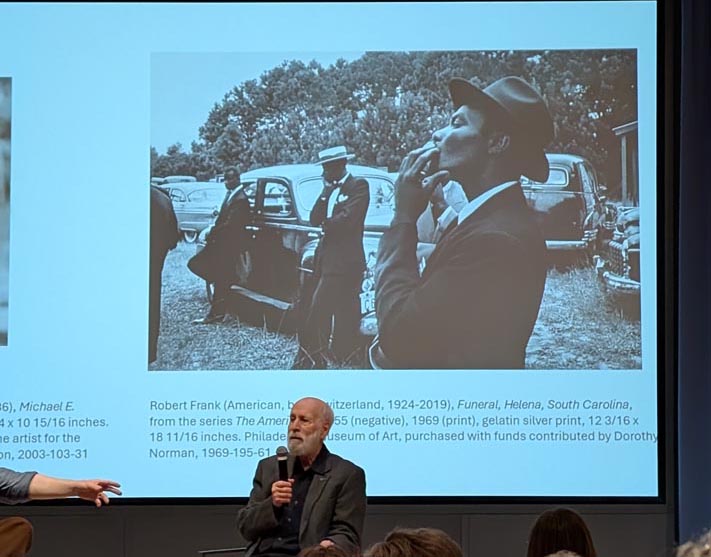
Philadelphia Photography Galleries and Art Spaces
Before diving into the museum lectures, I spent time exploring art spaces. I started at Temple University’s Tyler School of Art and saw a show that mapped city monuments, revealing that most were in white neighborhoods.
TILT was next. I knew of the Institute for the Contemporary Image for years and loved Sarah Stolfa’s work. There was a series focused on where we are as a country for the upcoming 250-year anniversary. The Print Center had great prints; I saw other galleries in Old City and Locks Gallery.
ICA Philadelphia has a remarkable show on the Shakers, which highlighted some African American members. The rigorous clarity and precise concepts around making things always seems quietly profound.
The importance of these local institutions and a tight-knit photography community was a recurring theme all weekend. I guess it’s needed, because in New York, the market can support a range of spaces, but in “smaller” cities, cooperation and collaboration is required.
Dr. Deborah Willis on African American Photography and Representation
The formal event began Friday night with the PMA’s Arnold Newman Lecture, which was the keynote talk. It was introduced by Peter Barberie, Curator of Photographs at the PMA (been there since 2005).
Dr. Deborah Willis is a University Professor and Chair of the Department of Photography & Imaging at NYU’s Tisch, a MacArthur and Guggenheim Fellow, author of Posing Beauty, and holds many other accolades.
As she pointed out, photographs have had an effect on how the Black body is assessed and appreciated, even from the start in the 1840s. Over the past forty years, Dr. Willis has written about the imposed representation and how Black Americans might use family portraits and contemporary images for self-presentation. Central is display of the Black body affects how we see and look at images, and to reconsider the notion of beauty: what it meant in the nineteenth century, how it was and still is denied, and how we can even begin to describe it today given the overabundance of images circulating on social media and in archives. Afterwards, she signed Reflections in Black in the atrium.
But I think what was most striking was how she talked and the emphasis on community. Despite deep academic credentials, the plain-spokenness was moving and quietly powerful. She shared childhood snapshots and photos taken in her neighborhood with a casualness that was disarming, delightful, and rooted in a deep feel for humanness.
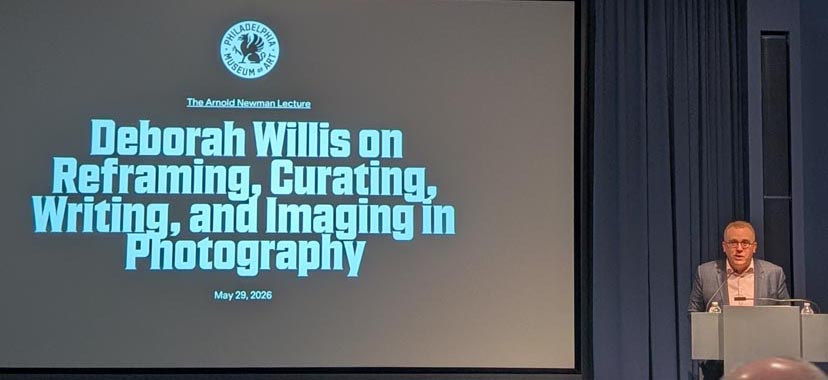
Dr. Deborah Willis’s keynote presentation: “Reframing, Curating, Writing, and Imaging in Photography,” with Peter Barberie introducing her at the podium
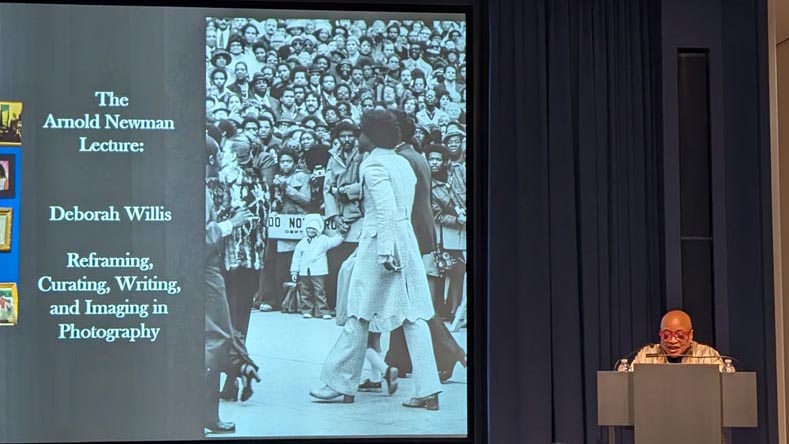
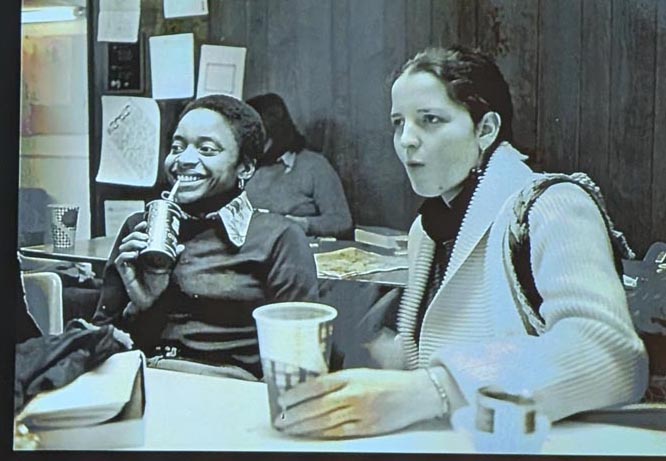
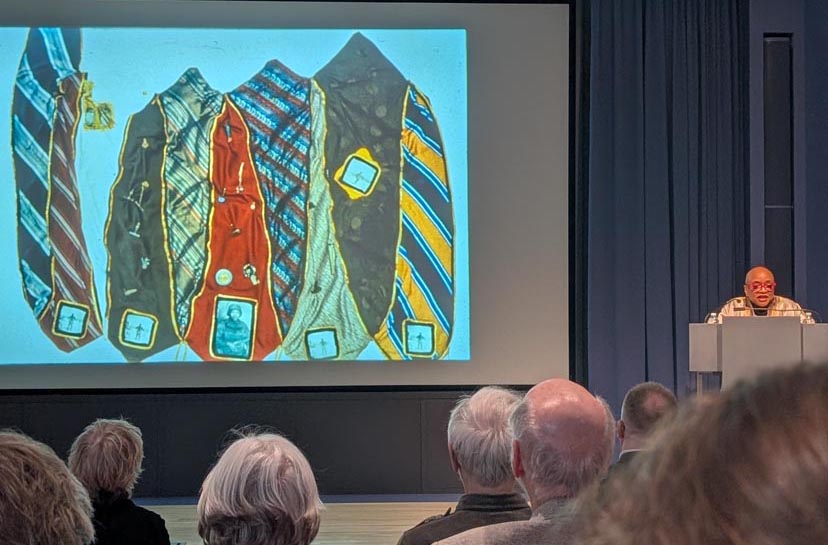
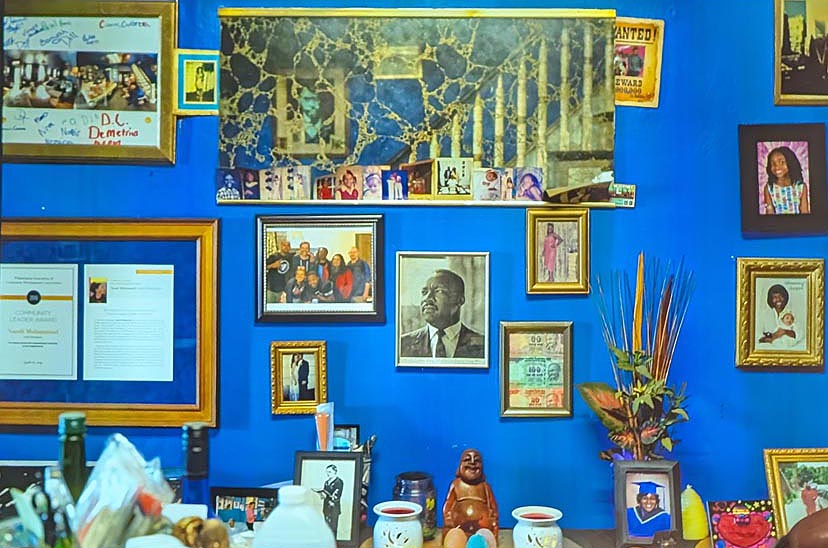
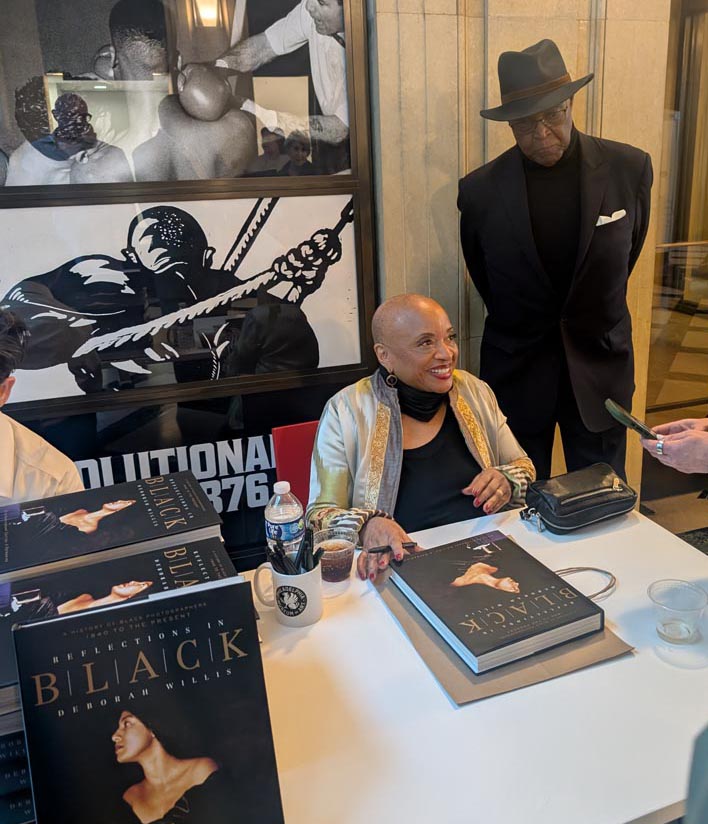
Dr. Deborah Willis seated at a table signing a copy of her book, Reflections in Black.
The Photo Review and the Philadelphia Museum of Art Photography Collection
Saturday started with an opening discussion between Perloff and Peter Barberie on the founding of The Photo Review and the PMA’s Photography Department. They reviewed early acquisitions that established the museum’s collection. Wish I saw more of this but I came late.
Rachel Wetzel on Robert Cornelius and 19th-Century Photography History
Rachel Wetzel discussed the historical context of photography in Philadelphia, which was actually extensive. Wetzel is a Photograph Conservator specializing in daguerreotypes who received an NEH grant to create an online database of Robert Cornelius’s work.
Rachel Wetzel literally mapped Philadelphia’s role in the development of photography. She showed an amazing Robert Cornelius 1839 self-portrait alongside a faint 1839 image by Joseph Saxton. (All of these were incredibly early works were interesting to me; somehow I think about the earliest photos when I am making my night landscapes in Greenland, and wonder, how would someone without the history of photography make a picture?).
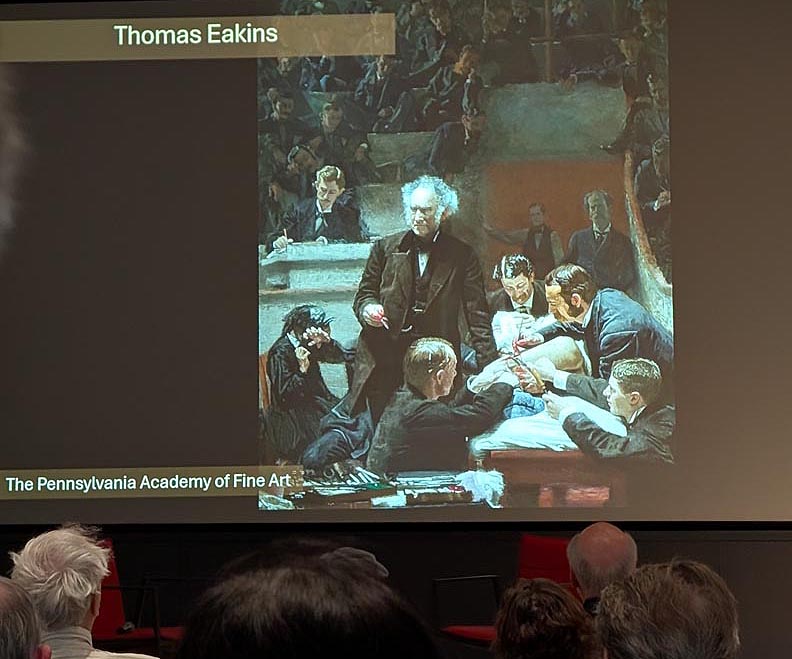
To quantify the early photo industry, she showed a data map pinpointing 48 studios and 62 active daguerreotypists in Center City in 1849, which seems relatively massive for a new technology. Displaying side-by-side time-based photos by Thomas Eakins (whose incredible paintings are across the street at PMA) and sequential grids by Eadweard Muybridge, along with Eakins’s multiple-exposure jump study show different approach to time-based photography.
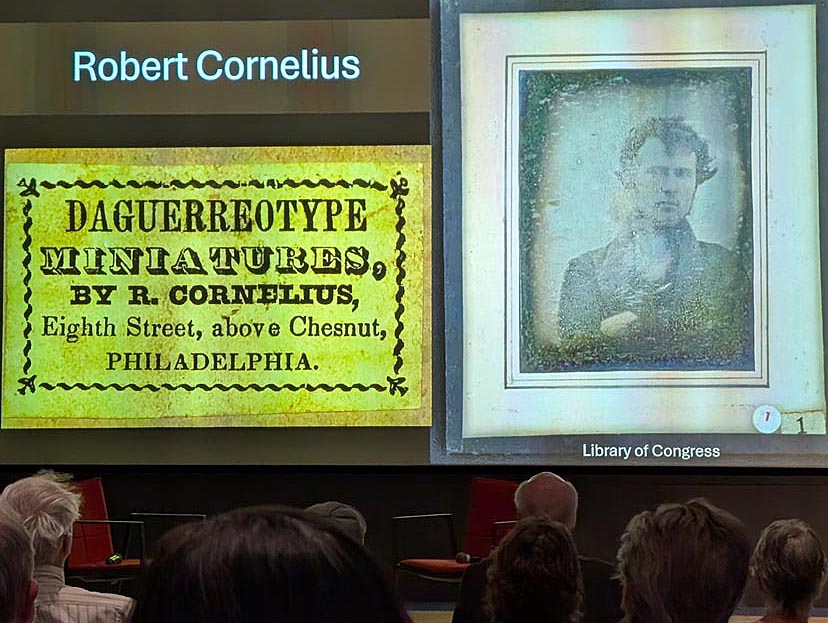
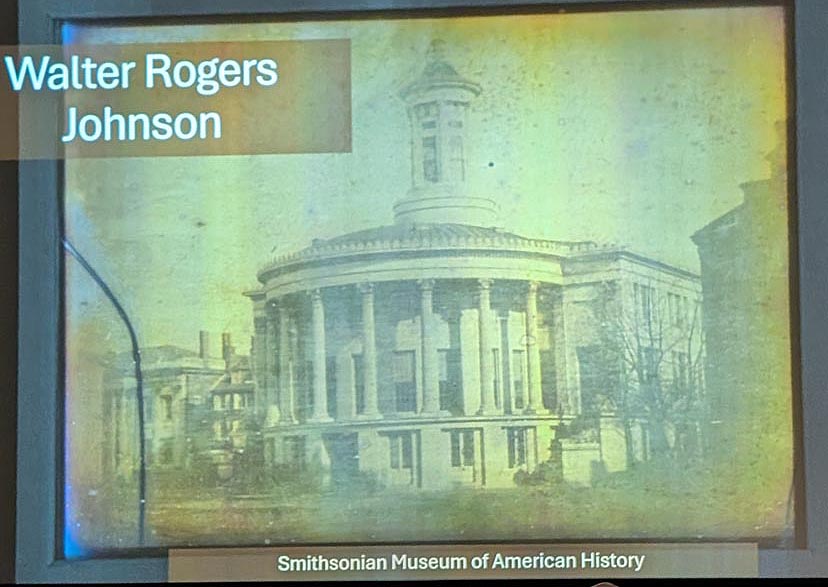
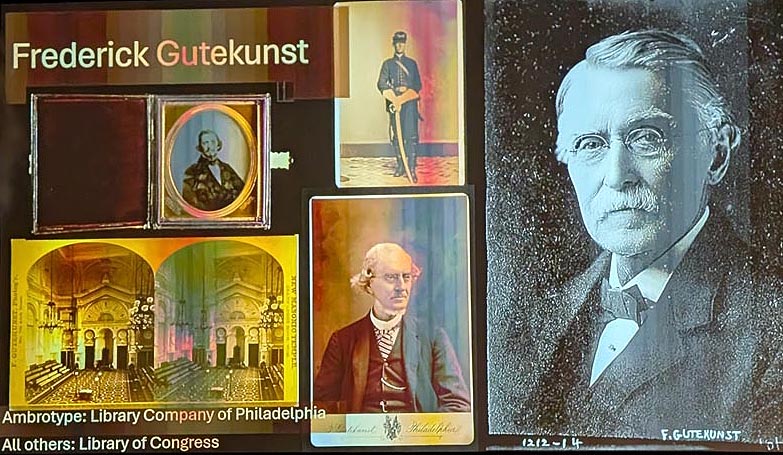
Rachel Wetzel’s presentation slides showing early Philadelphia daguerreotypes and portraits of Robert Cornelius, Walter Rogers Johnson, and Frederick Gutekunst.
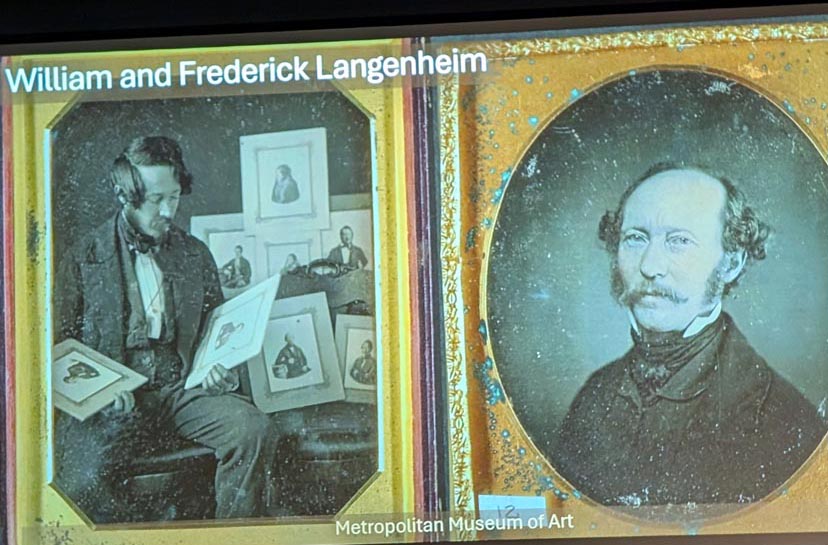
Rachel Wetzel’s slides covering 19th-century innovations, featuring the Langenheim brothers.
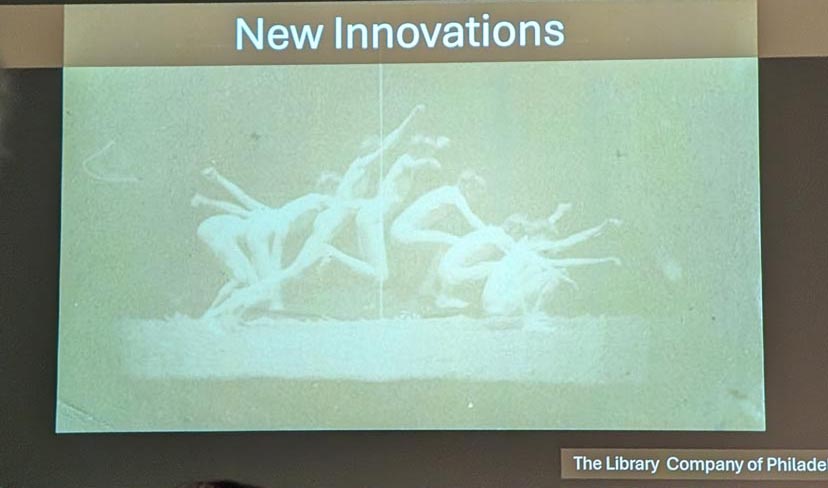
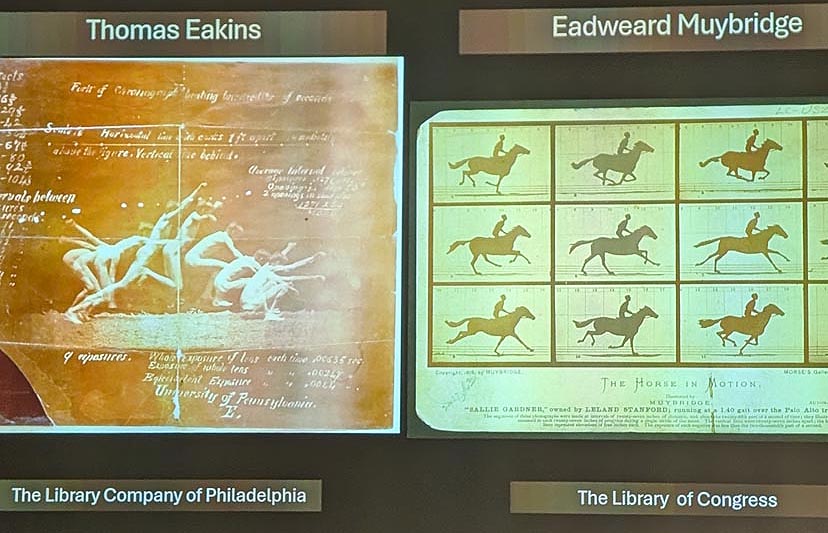
Eakins and Muybridge motion studies.
Sid Sachs on the Museum School and the 1970s
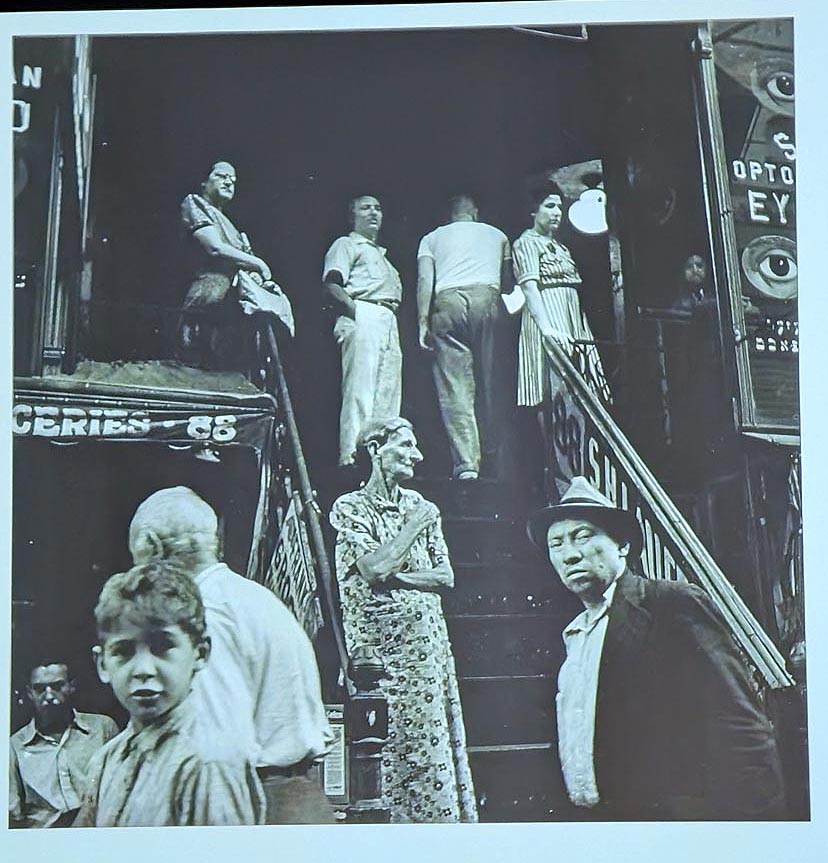
Sid Sachs presented the explosion of photography departments at Philadelphia colleges in the 1970s. Sachs was the Director of Exhibitions at the University and of the Arts from 1999 to 2024, where he curated Seductive Subversion. (Full disclosure–he also gave me a show years ago in the University and of the Arts, long before it closed).He traced early modernist influence from the Museum School, with Alexey Brodovitch’s 1926 graphic design poster next to a photogram. He moved into the urban documentary work, the “Philadelphia School,” geometric streets scenes by Ray K. Metzker, whose light and shadows I love, and a noir-esque large transit clock.
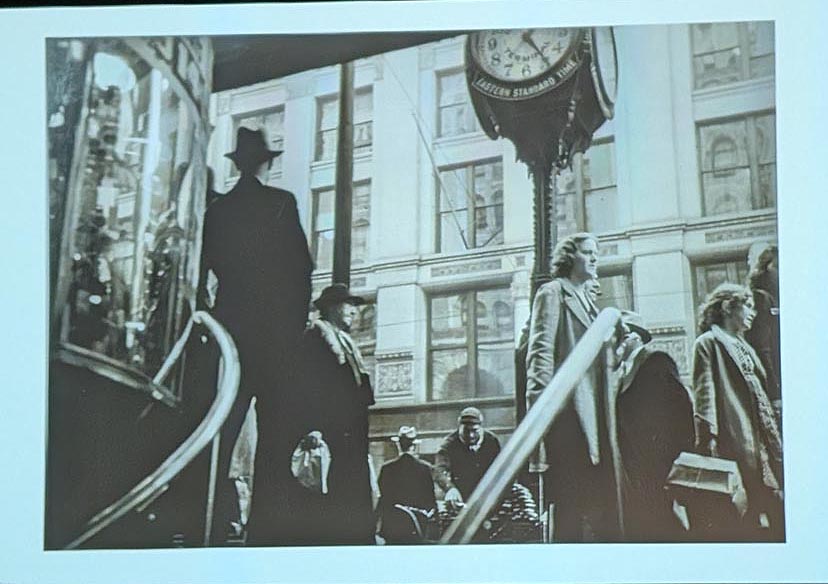
Sid Sachs’s presentation slide showing the classic “Philadelphia School” photo of a silhouette beneath a large transit clock.
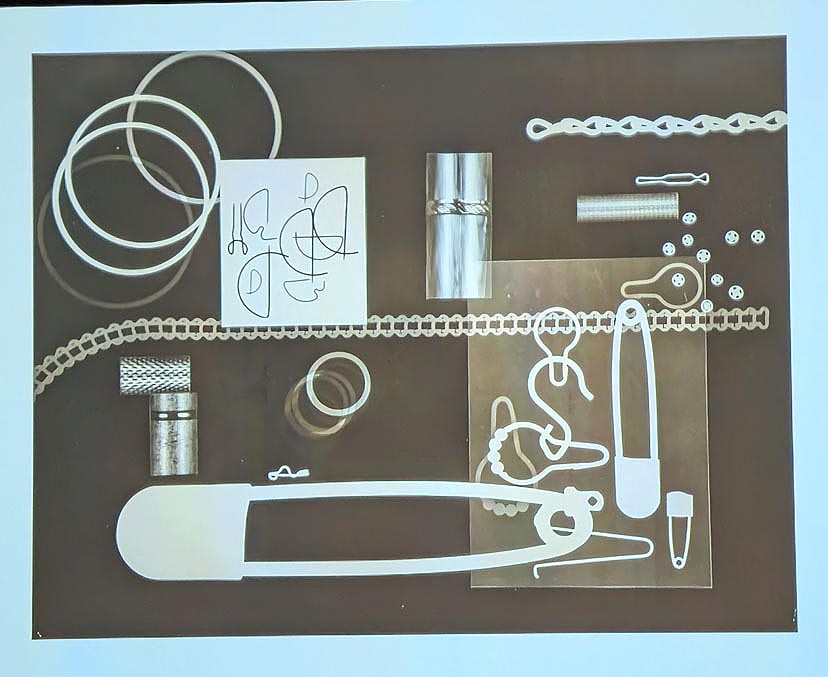
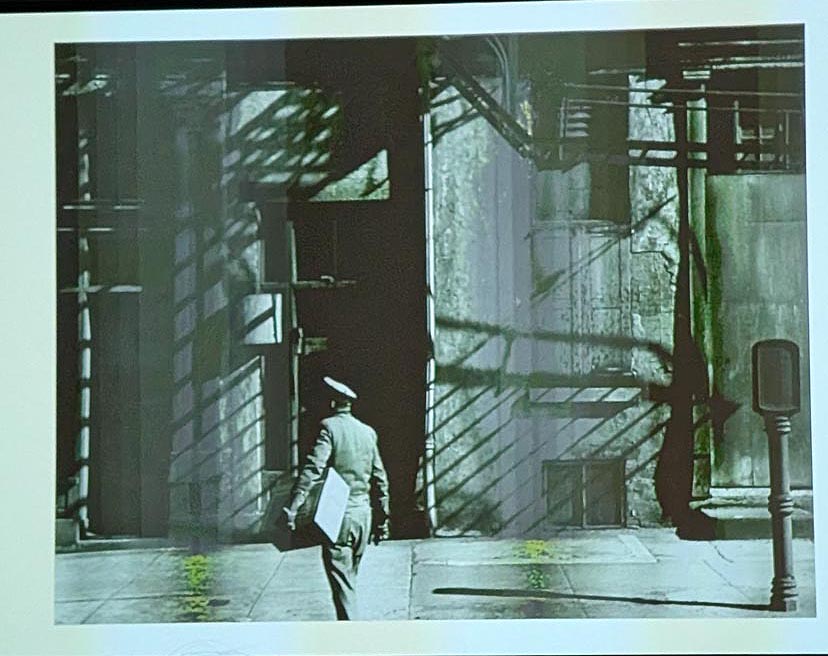
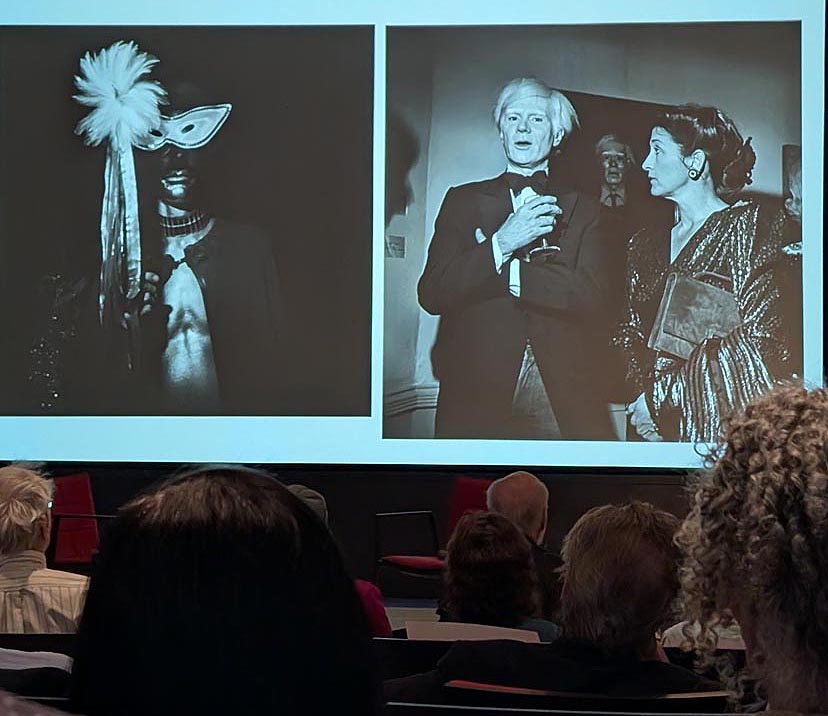
Sid Sachs’s slides featuring more Philadelphia photography, including a Ray K. Metzker geometric shadow study, a photo of Andy Warhol, and a street/diner scene.
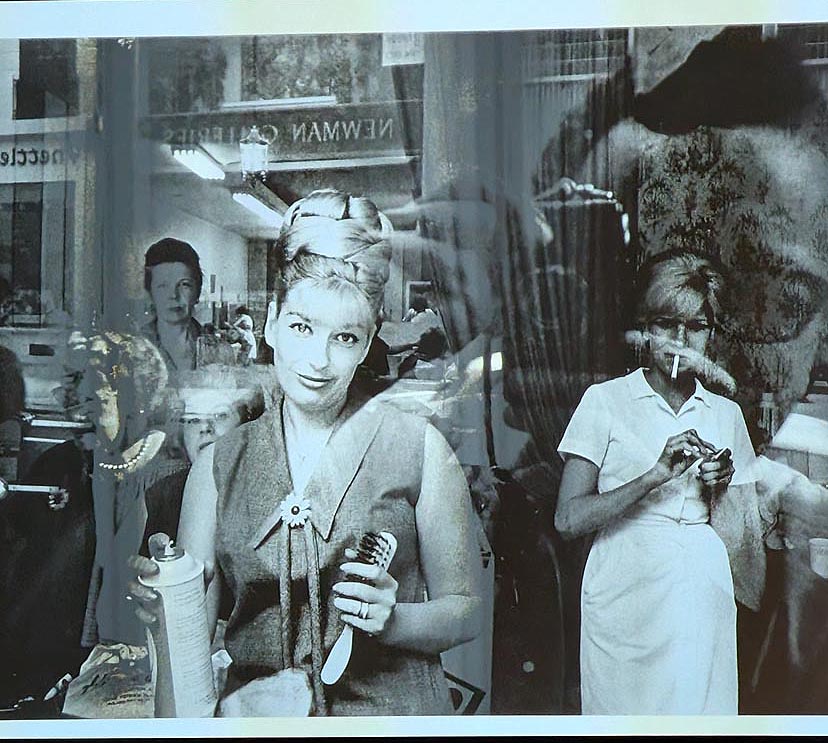
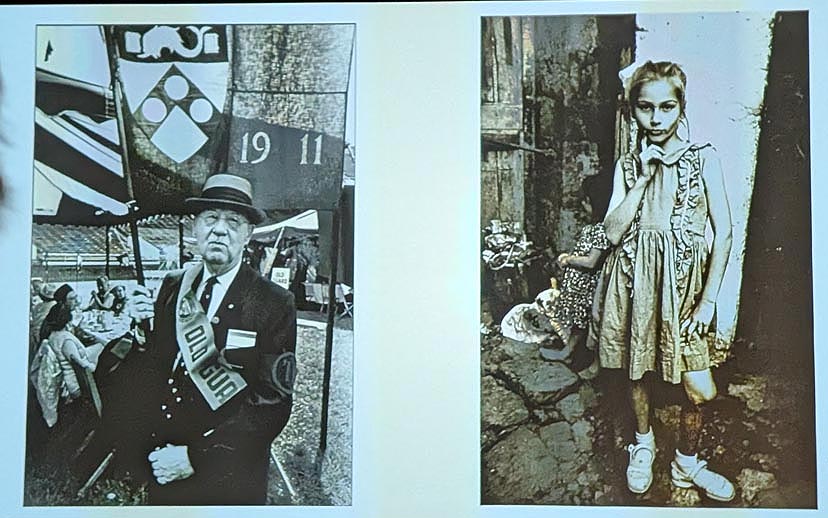
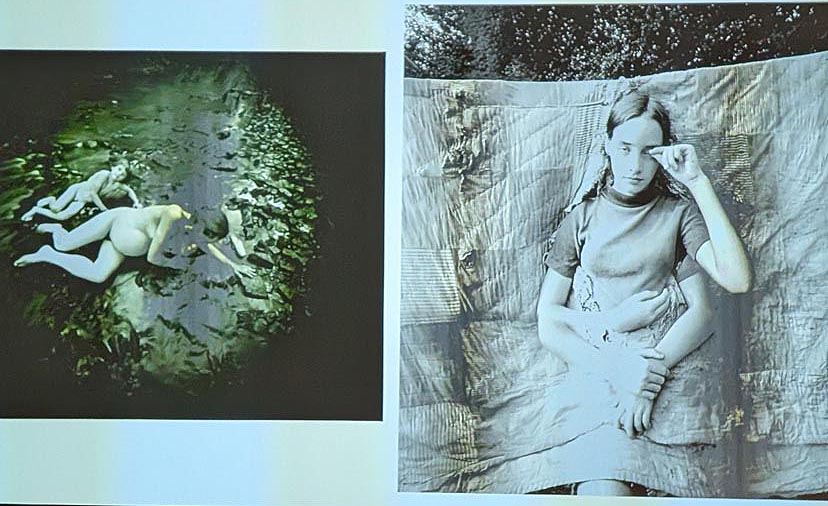
Slides showing Emmet Gowin’s iconic portrait of Edith and (I think) Elijah, Danville, Virginia.
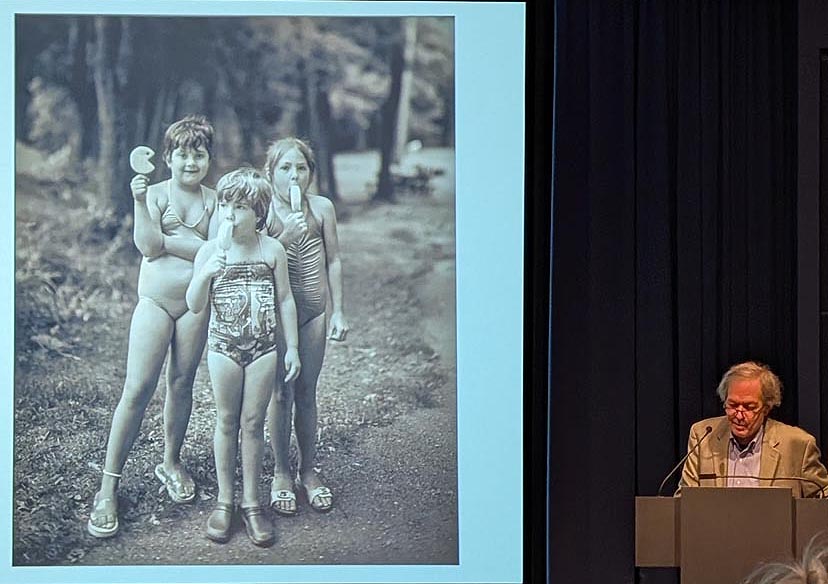
Judith Joy Ross photo of three young girls eating popsicles in the woods, with Sid Sachs at the podium.
Paul Cava, Doug Mellor, and Sarah Morthland on Galleries: The Evolution of Fine Art Photography Galleries and Collecting
The session covered the Philadelphia photo gallery scene over the last 50 years. Paul Cava, an artist and photographer, discussed running the Paul Cava Gallery from 1979 to 1999.
Doug Mellor, former gallery director, spoke about the selling/reselling of Ansel Adams prints–and at one time rediscovered a print he previously owned showing up in Santa Fe gallery. Emmet Gowin’s work was also featured.
Appraiser and former gallery owner Sarah Morthland, who started at the Center for Photography at Woodstock, shared something amazing: MoMA actually sold prints. Early MoMA Bargain Bins advertised “American Photograph $10” and “Christmas Photographs $10 to $25”.
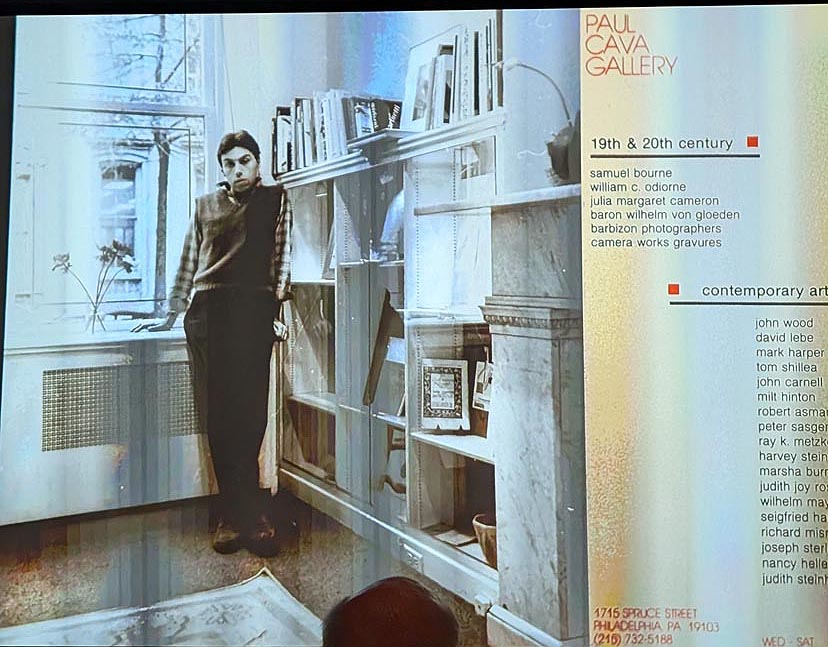
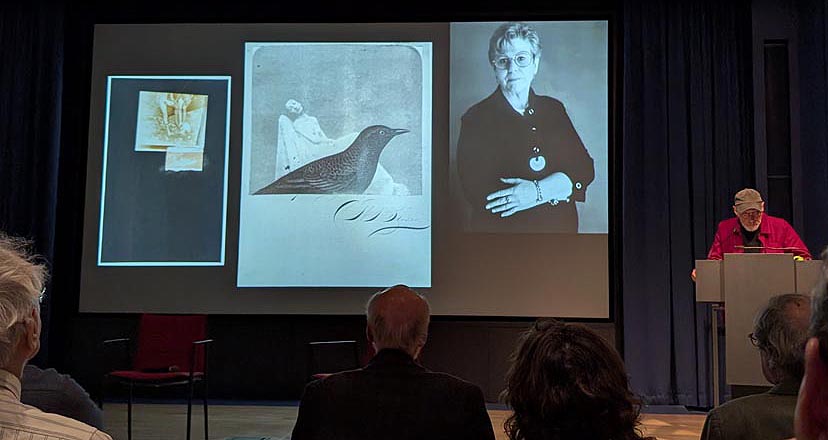
A promotional slide detailing the history and roster of the Paul Cava Gallery.
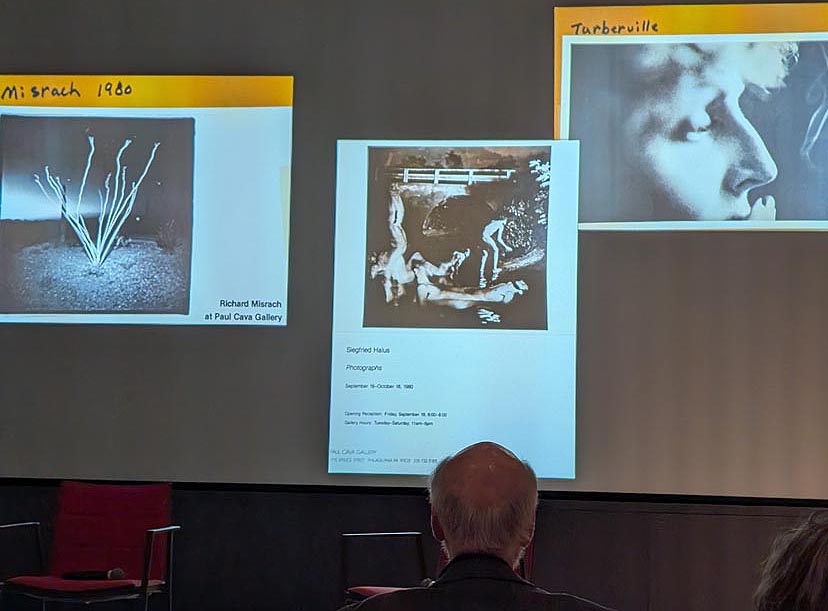
Paul Cava presenting slides, including Richard Misrach’s 1980 cactus.
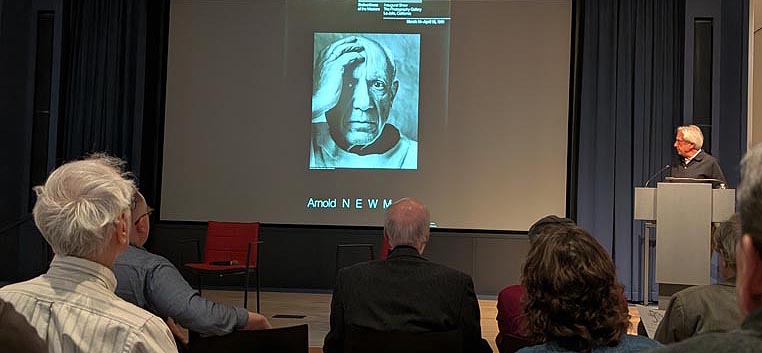
Photograph and Arnold Newman’s portrait of Picasso.
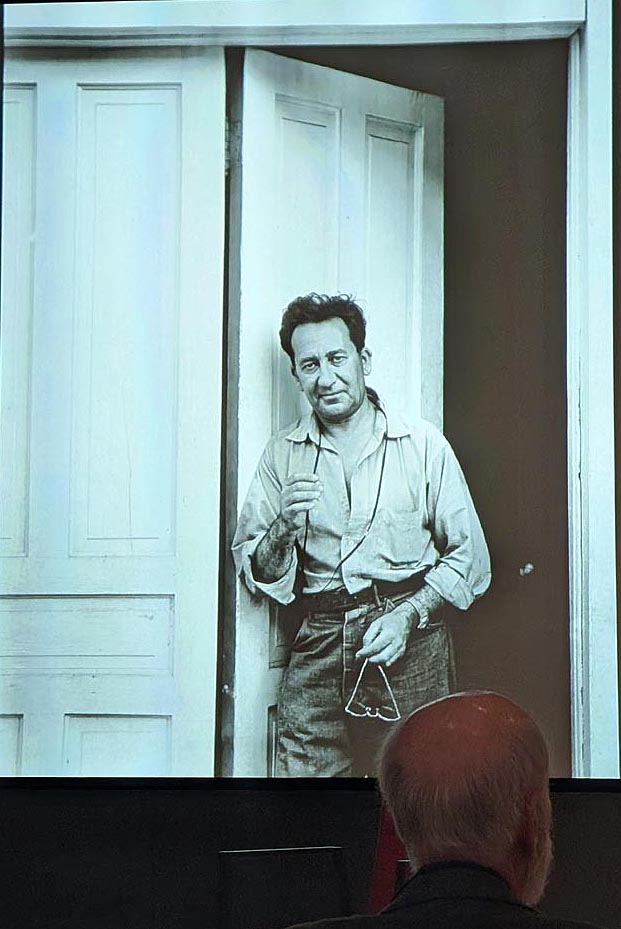
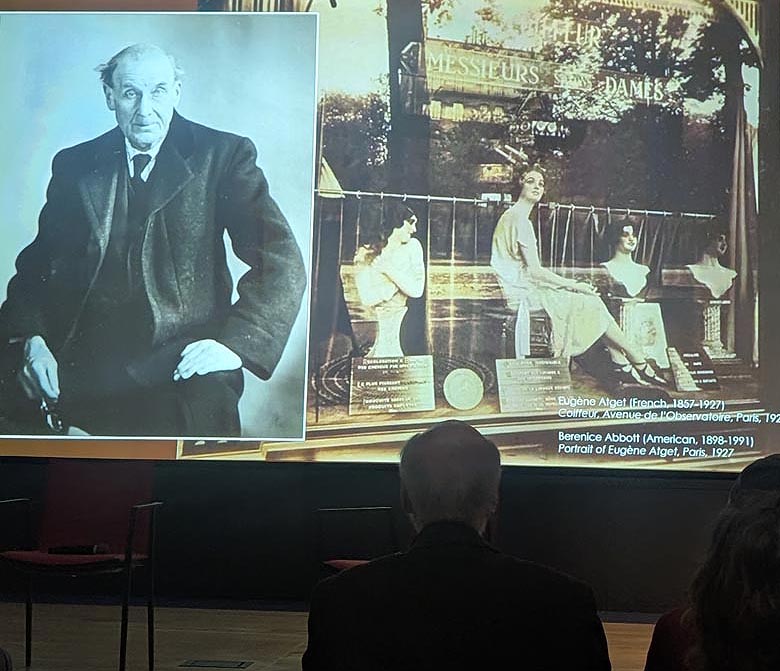
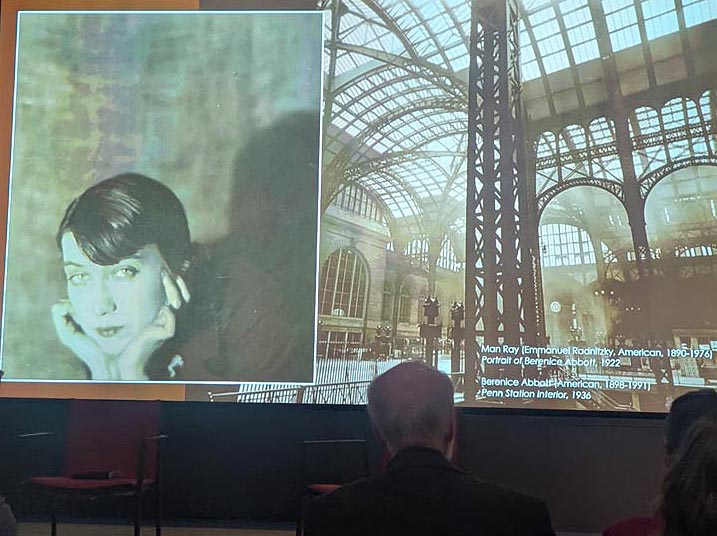
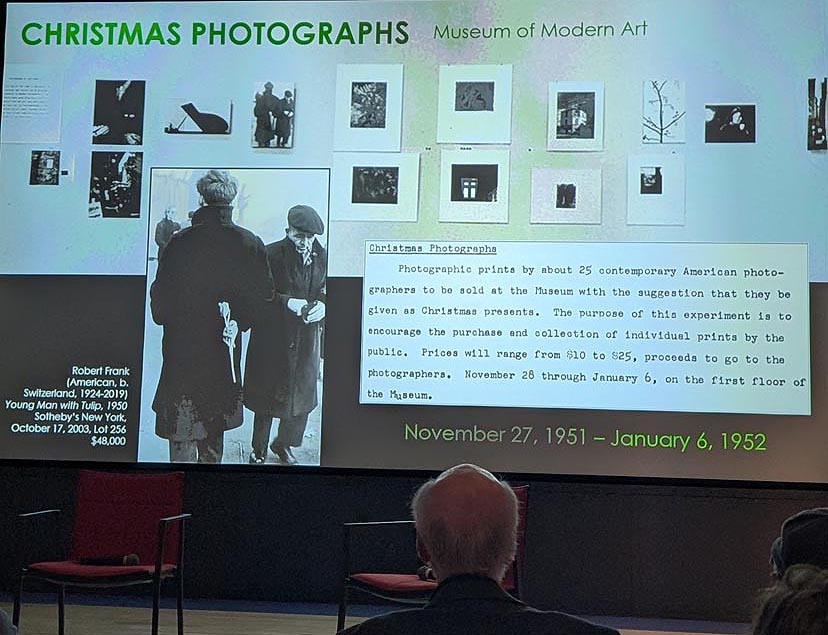
Sarah Morthland’s slides showing Berenice Abbott’s portrait of Eugene Atget and the historical text for MoMA’s “Christmas Photographs” sale.
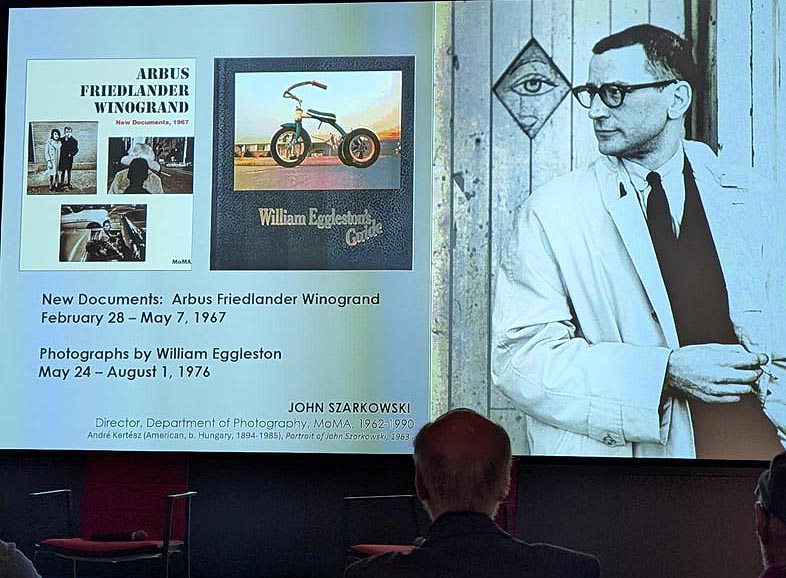
Sarah Morthland’s slides tracking MoMA’s history, featuring the New Documents exhibition (Arbus, Friedlander, Winogrand), William Eggleston’s Guide, and a portrait of MoMA’s Director of Photography, John Szarkowski.
Contemporary Visions: Andrea Modica’s Portraits and William Earle Williams’s Landscapes
After lunch, Andrea Modica presented some of her work and the connection to The Photo Review. Modica is a fellow Yale grad photographer, a Guggenheim Fellow, and about to retire Fall of 2026 from Drexel University professor, with books Treadwell and Minor League. Her large-format portraits slow down the act of looking, revealing a quiet vulnerability and deep intimacy in everyday people. Utilizing an 8×10 view camera, she shared portraits, like a sun-blasted photograph of a baseball catcher in full gear, and an intimate portrait of a young man with his eyes closed; Stephen Perloff attended every opening/event of Andrea’s.
William Earle Williams, a photographer, a Guggenheim and Pew Fellow, and the Curator of Photography at Haverford College, presented his landscape work. He discussed his long-term project photographing unmarked battlefields of the 54th Massachusetts Volunteer Infantry Regiment. Williams turns empty, banal landscapes into heavy historical monuments, using the physical land to mark the forgotten history of Black soldiers. His photos showed a dense, swampy wooded area and a contemporary photo of the solitary Morris Island Lighthouse in South Carolina which trace historical sites of the Civil War. I love this work, and his quote that ‘the physical landscape is a metaphor for what has happened’.
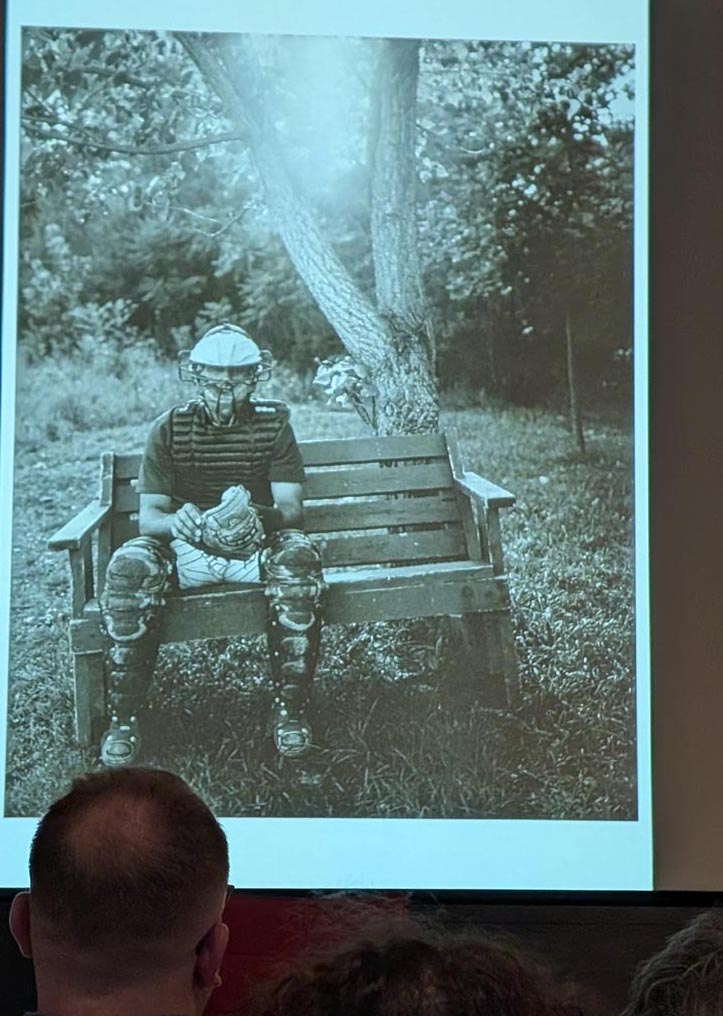
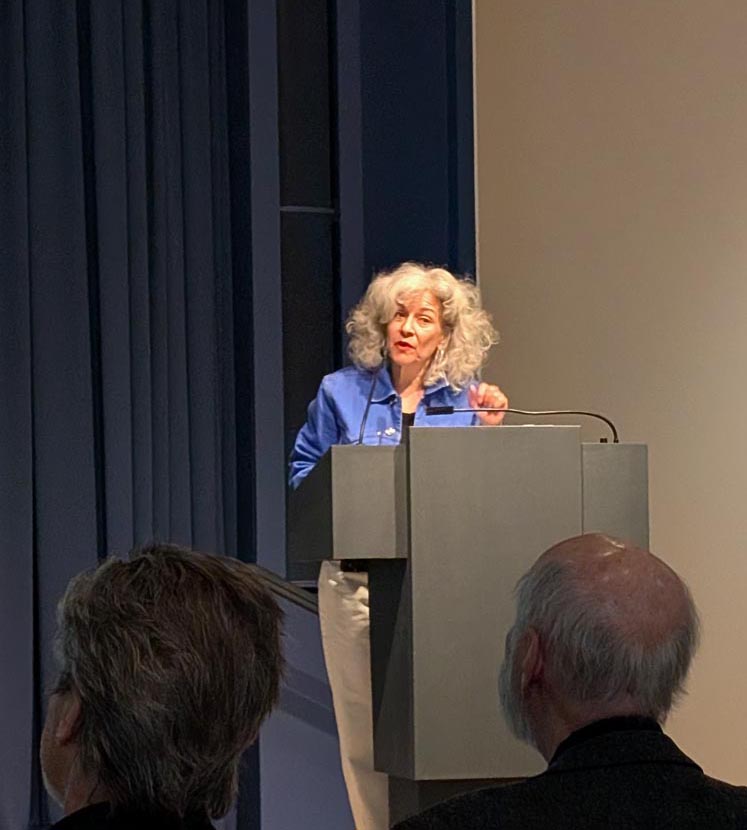
Andrea Modica’s presentation; the sun-blasted photograph of a baseball catcher in full gear; Andrea Modica speaking at the podium.
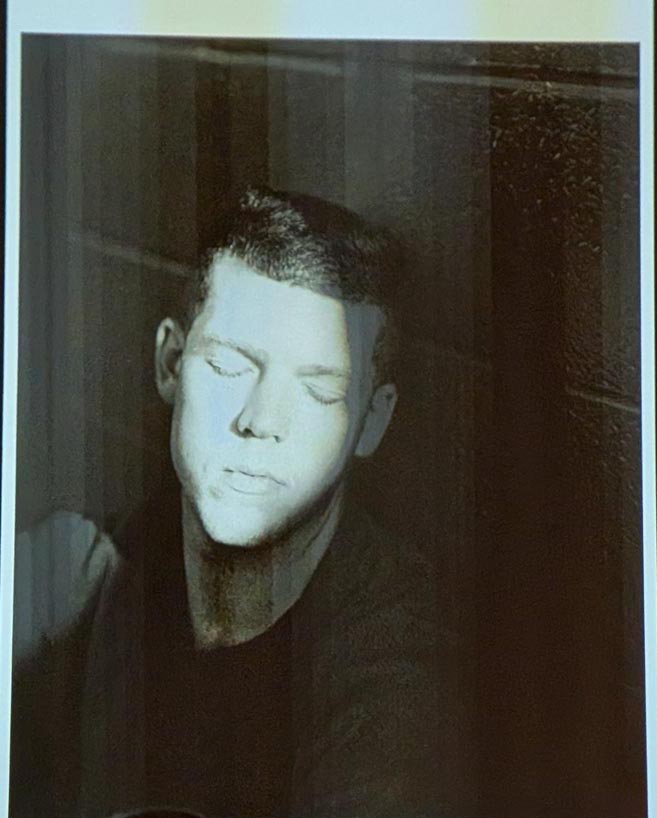
Modica’s intimate portrait of a young man with his eyes closed.
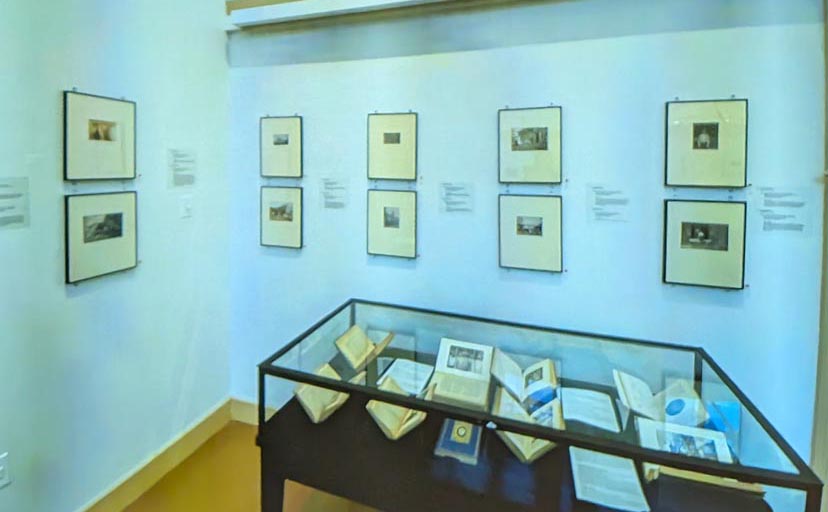
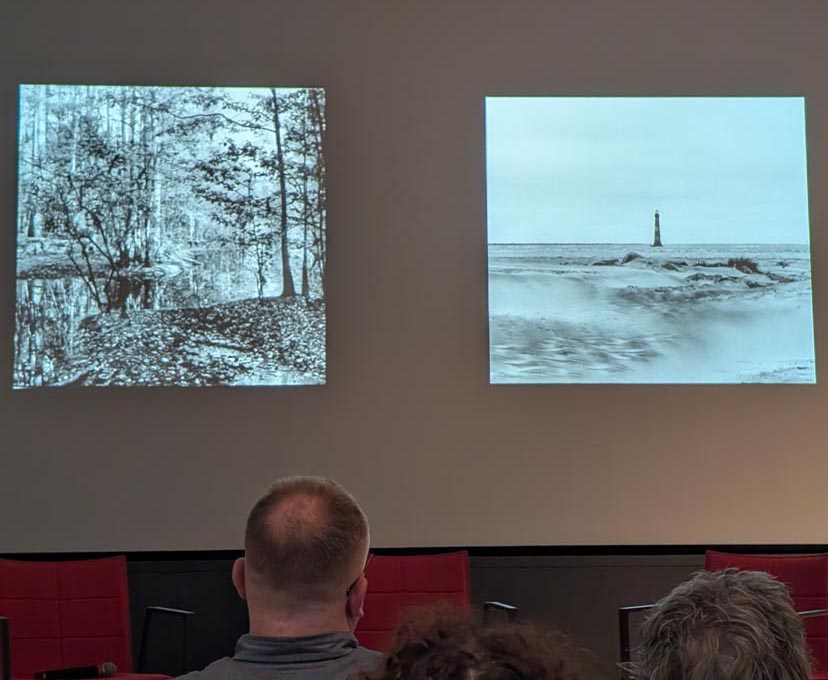
A vitrine display of photo books and prints by William Earle Williams; presenting his landscapes, showing the swampy wooded area and the solitary Morris Island Lighthouse.
Aimee Pflieger, Robert Gurbo, and Janet Borden on Navigating the Fine Art Photography Market and Auction Records
Next, the panel detailed changes in the photography market. Aimee Pflieger, Senior Specialist in Photography at Sotheby’s and appraiser (formerly of Freeman’s), broke down recent prices, where the average sold price per photo was about $30k–seemingly high. Interestingly, the top ten photographs sold in 1990-2000 were dominated by historical work like Gustave Le Gray; in 2024, the top 10 photo sales were dominated by Richard Prince and William Eggleston. There are more options now, and advisors play less of a role.
Robert Gurbo, who runs the André and Elizabeth Kertész Foundation, spent over fifty years combing through Kertész’s archive and co-authored the 2005 National Gallery catalog. He shared a grid of vintage vignettes from Kertész’s early work (children reading, a romantic embrace, a cow) and showed an archival photograph of Brassaï and Edward Steichen deep in conversation in a gallery.
Janet Borden, gallery owner (who has represented Larry Sultan, Jan Groover, and Lee Friedlander, many more), gave an assessment of galleries but was optimistic, even as walkin sales have declined. Instead, social media (Instagram) informs collectors before they walk in the door and auction prices seem to be setting the floor and the ceiling for prices. But the demographic crisis and wealth consolidation makes it difficult for younger people to collect–who will be the new collectors, educators and stewards?
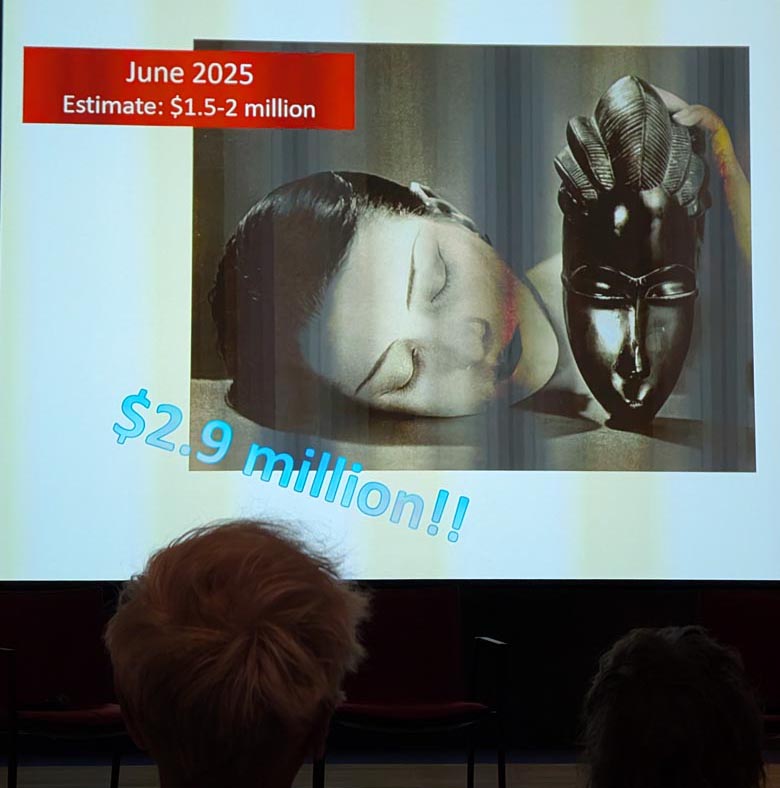
Aimee Pflieger’s slide of Man Ray’s Noire et Blanche showing the auction estimate.
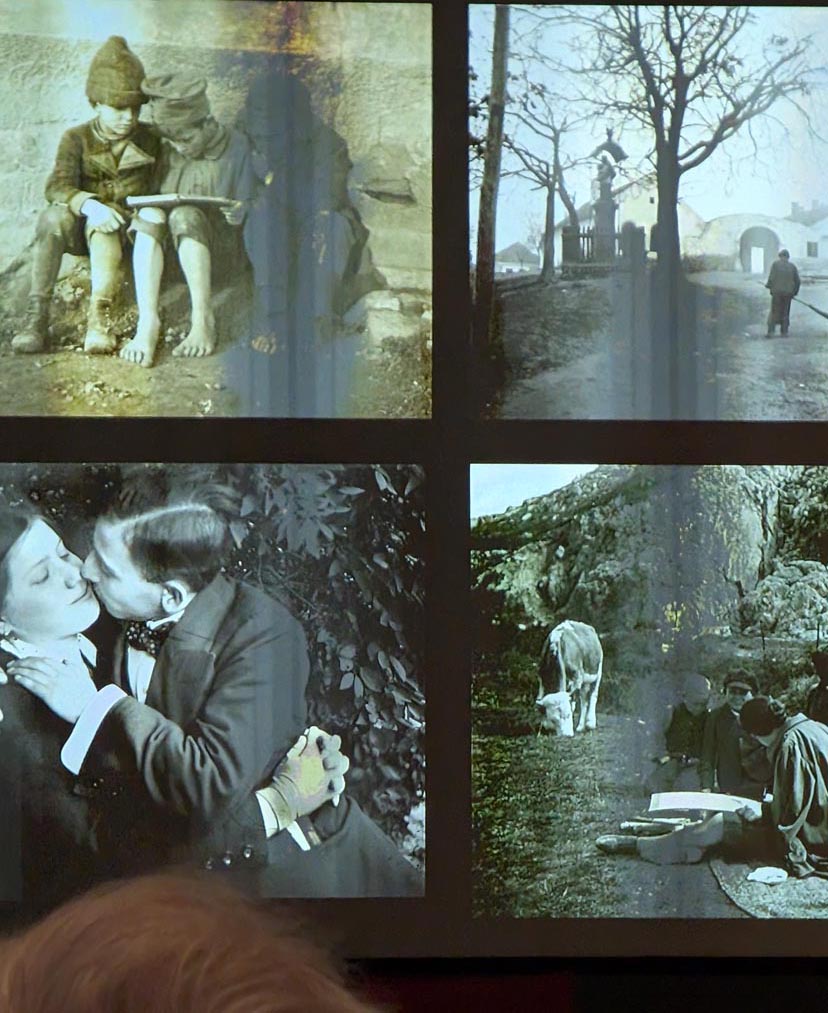
Robert Gurbo’s slides showing a grid of early André Kertész vignettes (children reading, a cow, a romantic embrace).
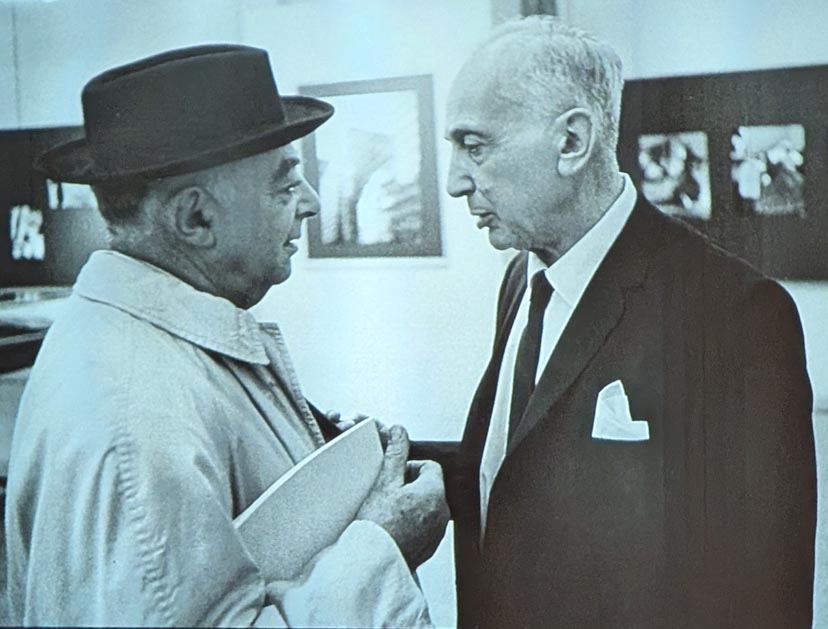
Robert Gurbo’s slide of Brassaï and Edward Steichen in conversation.
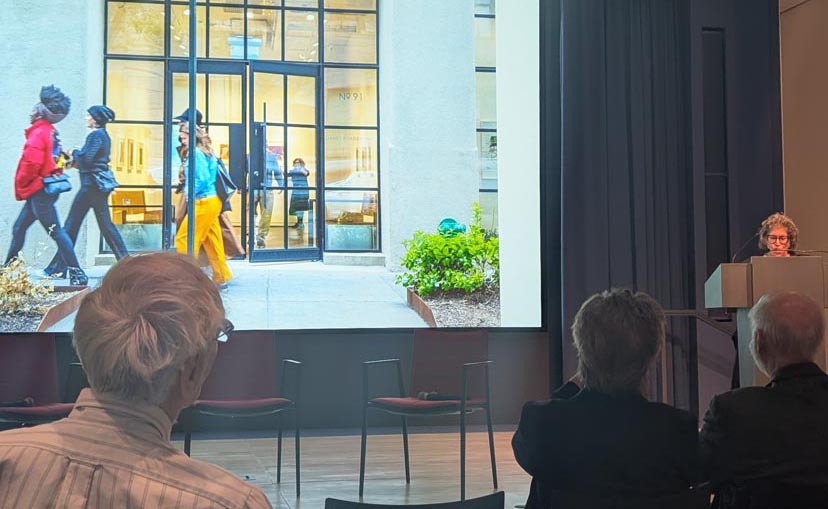
Janet Borden’s slide showing her “No 91 / Janet Borden, Inc.” gallery storefront.
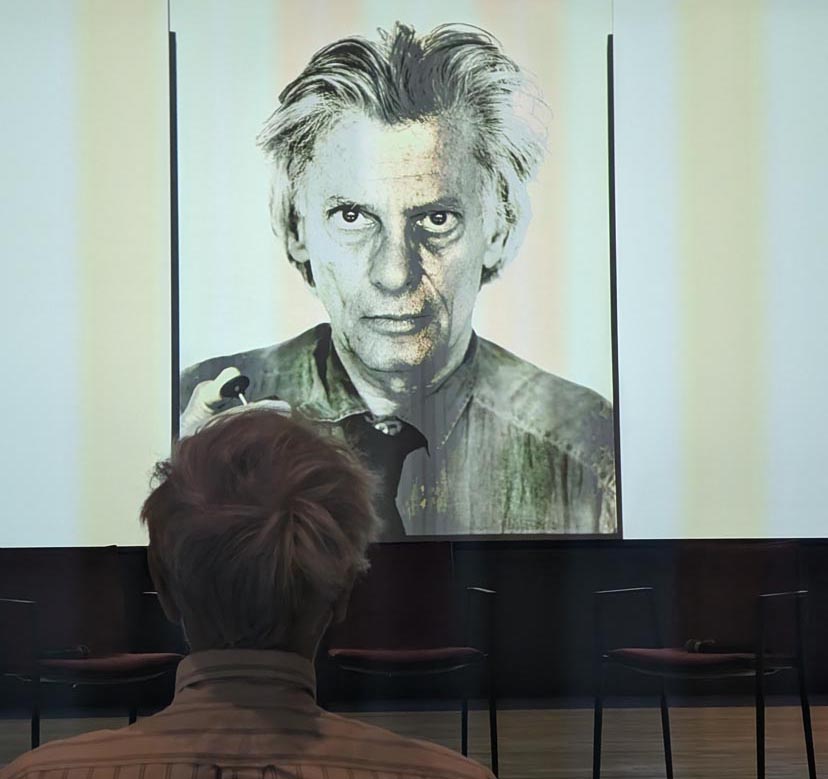
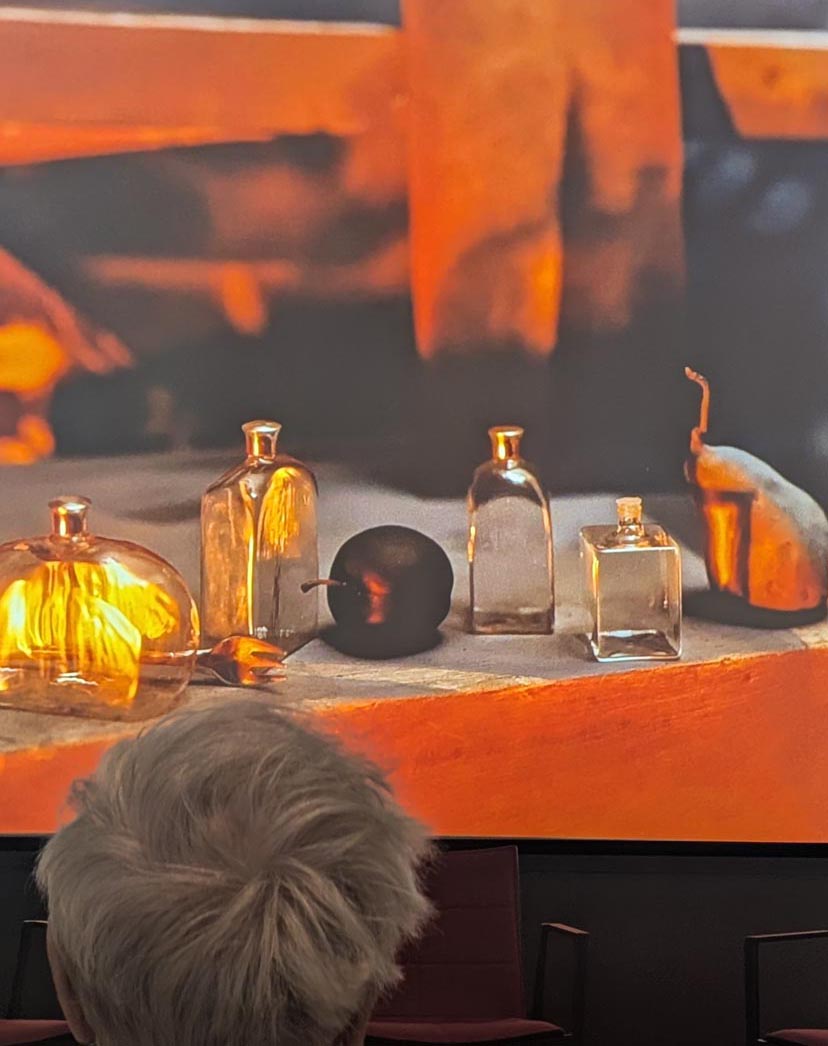
Janet Borden’s slide of the beautiful, amber-lit Jan Groover still life.
A.D. Coleman on Photography Criticism and 50 Years of The Photo Review
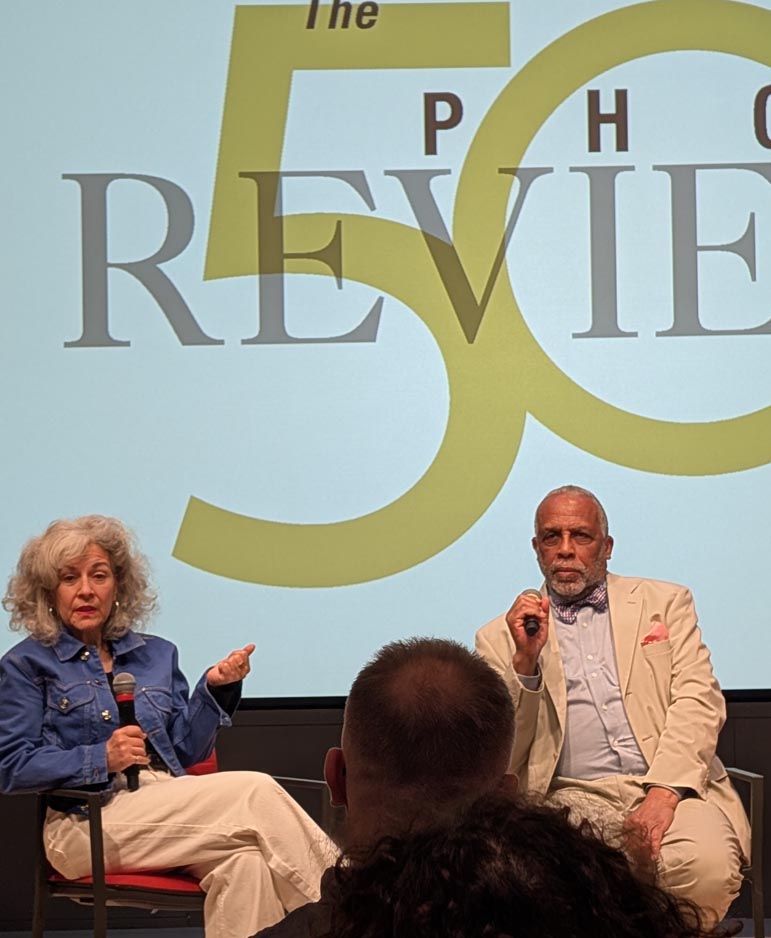
Things wrapped with discussion and Q&A between Perloff and A.D. Coleman, an “OG” critic who has published over 2,500 essays for the Village Voice and more. Wish this was longer too.
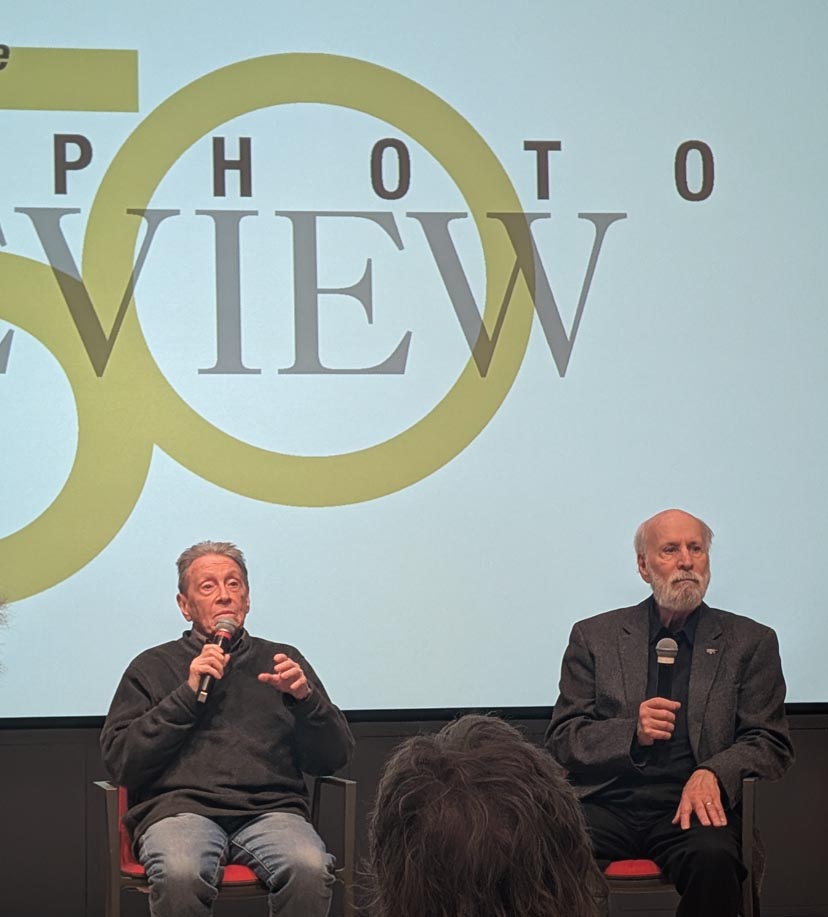
A.D. Coleman and Stephen Perloff panel discussion.
The Future of Fine Art Photography: AI Tools and Image-Making
I do wish there was a discussion about the near future state of photography. It was touched on briefly at the very end with a question, but we ran out of time. Friends and colleagues have noticed declining photo department enrollment, and that is worrying. Also, there is the advent of AI.
While auctions produce record sales, there are major questions. Who will replace aging out dealers and collectors? Will there be a need for an artistic vision using a camera, or will computational image-making suffice? After all, a camera is a mechanical device, so would artists replace one machine for another?
There is nothing like conducting deep research on a place like Greenland, planning logistics, setting foot on a place, and exploring physical land features—absorbing it all, and somehow reflecting that into a photo. I am an advocate for using AI as a tool for artists, which is invaluable summarizing text, conducting deep research, and helping with tasks, but it’s hard to replace witnessing the world firsthand.
Key Takeaways from The Photo Review 50th Anniversary Symposium
Looking back on the talks, highlights included:
- Dr. Deborah Willis’s discussion of her background: Quietly profound, she used simple, everyday family snapshots to anchor a massive, historically significant narrative. Her plain-spokenness gave a humanness.
- Discovering the foundational role Philadelphia played in early photography, including pioneering daguerreotype studios.
- Learning about the sudden explosion of new local photography departments at Philadelphia colleges in the 1970s.
- Hearing about the cutting-edge gallery shows that shaped the scene in its early days.
- Seeing the incredibly strong, evocative work presented by Andrea Modica and William Earle Williams.
- Getting a clear-eyed, behind-the-scenes look at the shifting realities of the auction, gallery, and archive world.
- The sharp, legendary wit of A.D. Coleman during the closing Q&A, and above all, celebrating the unwavering support of Stephen Perloff.
Philadelphia Street Photography and Back to New York
During breaks, I walked through Center City. I shot 19th-century brownstones, alleyway textures, and SEPTA train grates. On the Amtrak ride back to New York, I photographed my phone camera interface framing the sunset over a tied-arch bridge. It was a fitting, practical end to a weekend spent analyzing how we make, distribute, and sell images.
In the end, it was an intense, diverse dive into photography that was genuinely stimulating. Combining the symposium with all my museum and gallery visits around the city did exactly what I needed it to do—get me out of my own head and made me feel deeply connected to the broader community we’re all a part of.
Comments are closed.